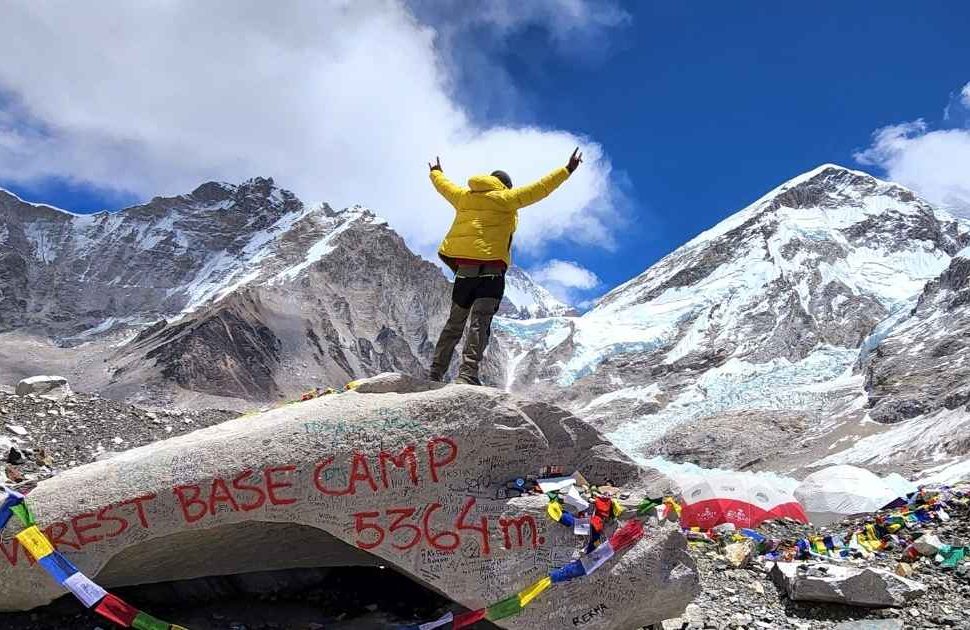
Everest Base Camp Trek altitude sickness is one of the most common challenges trekkers face because the trail reaches 5,364 meters (17,598 ft), where oxygen levels are much lower than at sea level. It can affect anyone, regardless of age or fitness level, but most cases are mild and can be prevented with proper acclimatization, a gradual ascent, and recognizing the early warning signs.
If you’re planning your adventure, our Everest Base Camp Trek guide covers the route, itinerary, permits, costs, the best time to visit, packing tips, and everything you need to know before trekking to Everest Base Camp.
Medical Review: The medical information in this guide was reviewed in consultation with a Kathmandu-based travel medicine clinic and cross-checked against international mountain medicine guidelines.
About the Author: This guide is written by Saligram Aryal, Founder of Mountain World Treks. With more than 30 years of experience guiding trekkers in the Everest region, he has safely led thousands of people to Everest Base Camp. The trekking advice throughout this guide is based on his first-hand experience helping trekkers acclimatize safely in the Himalayas.
Everest Base Camp Trek altitude sickness rarely begins with a dramatic emergency. More often, it starts with a mild headache, reduced appetite, or feeling more breathless than expected after reaching villages like Namche Bazaar or Dingboche. Many trekkers mistake these early symptoms for normal fatigue after a long day of walking, when in reality they can be the first signs that the body needs more time to adjust to the higher altitude.
One of the biggest misconceptions is that only inexperienced or unfit trekkers develop altitude sickness. In reality, altitude sickness is caused by lower oxygen levels, not by a lack of fitness. Even experienced hikers, marathon runners, and mountaineers can develop symptoms if they ascend too quickly or don’t allow enough time to acclimatize.
This guide explains everything you need to know about Everest Base Camp Trek altitude sickness, including what causes it, when symptoms usually begin, how acclimatization works, whether medications like Diamox can help, the role of an experienced guide, when to descend, and the warning signs that require immediate action. By understanding the risks before your trek begins, you’ll be better prepared to enjoy a safer, healthier, and more rewarding journey to Everest Base Camp.
Everest Base Camp Trek Altitude Sickness: Key Facts
- Everest Base Camp Trek altitude sickness can affect anyone, regardless of age, fitness level, or trekking experience.
- Fitness alone does not protect you from altitude sickness.
- Symptoms usually begin above 3,000 meters (9,842 ft) and become more common as you gain elevation.
- Most cases are mild and improve with rest, acclimatization, and avoiding further ascent until symptoms resolve.
- Following an itinerary with acclimatization days at Namche Bazaar and Dingboche significantly reduces the risk.
- Descending to a lower altitude is the most effective treatment if symptoms become moderate or severe.
- The Everest Base Camp Trek reaches 5,364 meters (17,598 ft), making altitude awareness an essential part of a safe trek.
Why Does Altitude Sickness Happen on the Everest Base Camp Trek?
Everest Base Camp Trek altitude sickness happens because the air becomes thinner as you climb higher into the Himalayas. As the altitude increases, your body receives less oxygen with every breath, making it harder for your heart and lungs to supply enough oxygen to your muscles and organs. This is why even simple activities, such as walking uphill or climbing stairs, can feel much more difficult than they do at lower elevations.
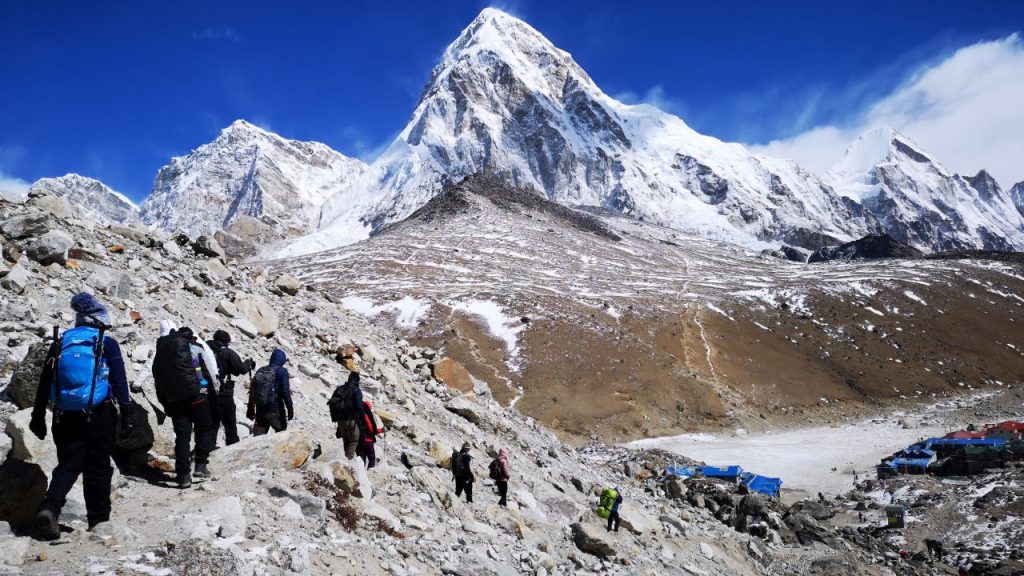
The Everest Base Camp Trek begins at Lukla (2,860 m / 9,383 ft) and reaches Everest Base Camp (5,364 m / 17,598 ft). Many trekkers also hike to Kala Patthar (5,545 m / 18,192 ft) for panoramic views of Mount Everest, making it the highest point of the trek for most people.
Your body needs time to adjust through a natural process called acclimatization. During this process, your breathing and circulation gradually adapt to the lower oxygen levels at higher altitudes. This adjustment takes time and cannot be rushed by physical fitness, age, or previous trekking experience.
Why the Risk Increases on the Everest Base Camp Trek
Several factors increase the risk of Everest Base Camp Trek altitude sickness:
- Rapid altitude gain from Lukla (2,860 m) to Everest Base Camp (5,364 m).
- Higher elevations provide less oxygen with every breath.
- Skipping acclimatization days or ascending too quickly.
- Dehydration, exhaustion, and poor nutrition, which can make symptoms worse.
- Individual body response, because altitude sickness can affect anyone, including experienced trekkers and elite athletes.
Understanding why altitude sickness happens is the first step toward preventing it. The good news is that most cases can be avoided by following a well-paced itinerary, allowing enough time to acclimatize, and recognizing the early warning signs before they become more serious.
Everest Base Camp Trek Altitude Sickness Symptoms: Mild, Moderate & Severe
Everest Base Camp Trek altitude sickness can affect anyone, regardless of age or fitness level. Symptoms usually begin above 3,000 meters (9,842 ft), although some trekkers may notice mild symptoms after reaching Namche Bazaar, while others don’t experience them until higher elevations above 4,000 meters. Recognizing the warning signs early is one of the best ways to prevent serious complications.
Mild Altitude Sickness (Acute Mountain Sickness)
Mild Acute Mountain Sickness (AMS) is common on the Everest Base Camp Trek and usually improves with rest and proper acclimatization. Common symptoms include:
- Mild headache
- Slight nausea
- Reduced appetite
- Unusual fatigue
- Difficulty sleeping
What to do: Stay at the same altitude for at least 24 hours, drink plenty of fluids, avoid alcohol, and allow your body time to acclimatize. Most trekkers recover within 24-48 hours without needing to descend.
Moderate Altitude Sickness
Moderate AMS requires immediate attention and should never be ignored. Symptoms include:
- Persistent headache that doesn’t improve
- Vomiting
- Increasing fatigue
- Dizziness
- Poor coordination
- Loss of appetite
What to do: Do not continue ascending. Descend 300-500 meters (1,000-1,600 ft) and monitor your symptoms. If they don’t improve or continue to worsen, seek medical assistance as soon as possible.
Severe Altitude Sickness (HACE & HAPE)
Severe altitude illness is rare, but it is a medical emergency that requires immediate descent and treatment.
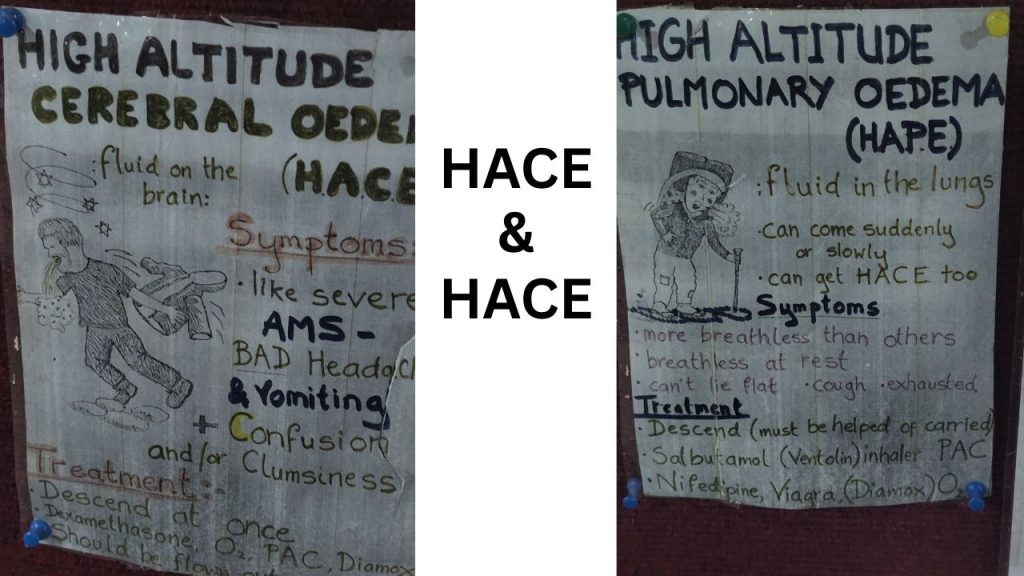
High Altitude Cerebral Edema (HACE)
HACE occurs when fluid builds up in the brain. Symptoms include:
- Severe headache
- Confusion
- Difficulty walking straight
- Loss of balance
- Extreme drowsiness
- Unusual behavior or personality changes
High Altitude Pulmonary Edema (HAPE)
HAPE occurs when fluid builds up in the lungs. Symptoms include:
- Shortness of breath, even at rest
- Persistent cough
- Gurgling or crackling sounds in the chest
- Chest tightness
- Blue lips or fingertips
Emergency
If you or someone in your group develops symptoms of High-Altitude Cerebral Edema (HACE) or High-Altitude Pulmonary Edema (HAPE), descend immediately. If supplemental oxygen is available, use it and arrange emergency evacuation as quickly as possible. Do not continue climbing or stay at the same altitude if severe symptoms are present.
The earlier altitude sickness is recognized, the easier it is to treat. Mild symptoms often improve with rest and proper acclimatization, but if symptoms get worse, the safest treatment is to descend to a lower altitude immediately. Many serious cases happen because trekkers ignore the early warning signs and keep climbing instead of stopping or descending.
How the Everest Base Camp Trek Itinerary Helps Prevent Altitude Sickness
A well-planned itinerary is one of the most effective ways to reduce the risk of Everest Base Camp Trek altitude sickness. The standard 12–14 days Everest Base Camp Trek follows internationally accepted acclimatization principles, giving your body enough time to adjust safely as you gain elevation.
Trying to complete the trek too quickly or skipping acclimatization days significantly increases the risk of developing Acute Mountain Sickness (AMS).
1. Climb High, Sleep Low
One of the most effective acclimatization strategies is “climb high, sleep low.” This means hiking to a higher elevation during the day before returning to a lower altitude to sleep. Spending a short time at a higher elevation encourages your body to adapt, while sleeping lower places less stress on your body.
A good example is the acclimatization day in Namche Bazaar, where trekkers hike to Hotel Everest View before returning to Namche for the night.
Benefits of this approach:
- Helps your body adjust gradually to higher altitude.
- Reduces the risk of Acute Mountain Sickness (AMS).
- Improves acclimatization before gaining more elevation.
- Increases the chances of reaching Everest Base Camp comfortably.
2. Built-in Acclimatization Days
Every standard Everest Base Camp Trek itinerary includes two important acclimatization days. These are:
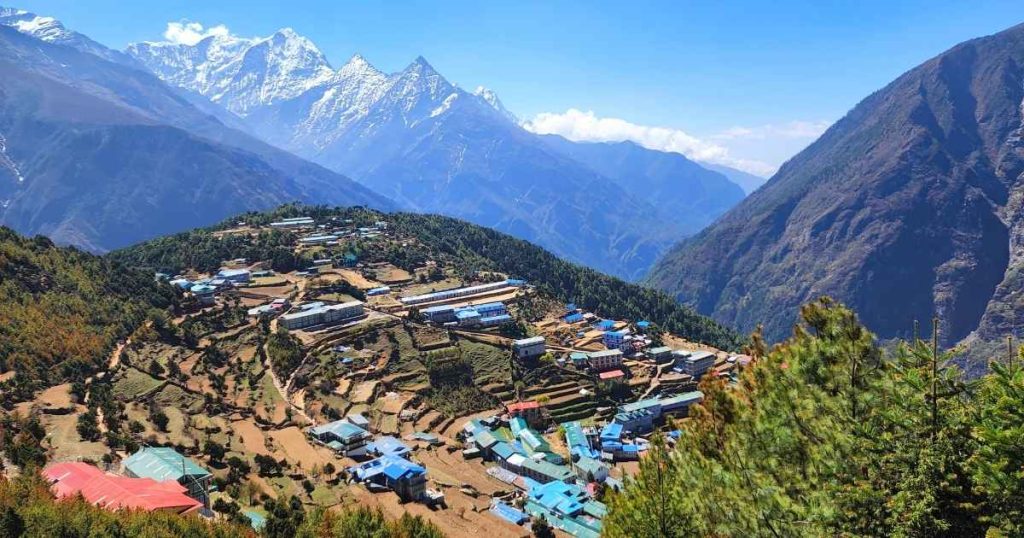
- Namche Bazaar (3,440 m / 11,286 ft) – The first acclimatization stops after entering the Khumbu region.
- Dingboche (4,410 m / 14,469 ft) – The second and most important acclimatization day before trekking above 5,000 meters.
These scheduled rest days are an essential part of the trek. They give your body time to adapt before continuing to higher elevations.
3. Don’t Rush the Trek
Many trekkers try to shorten their itinerary to save time, but rushing the Everest Base Camp Trek is one of the biggest reasons people develop altitude sickness. To reduce your risk:
- Follow a 12–14 days Everest Base Camp Trek itinerary.
- Never skip acclimatization days at Namche Bazaar or Dingboche.
- Listen to your guide if they recommend an additional rest day.
- Ascend gradually instead of trying to reach Everest Base Camp as quickly as possible.
If you’re planning your trek, read our complete Everest Base Camp Trek Itinerary for a day-by-day route designed for safe acclimatization.
Everest Base Camp Trek Acclimatization Schedule
| Day & Route | Elevation |
| Day 1: Lukla – Phakding | 2,860 m – 2,610 m |
| Day 2: Phakding – Namche Bazaar | 2,610 m – 3,440 m |
| Day 3: Namche Bazaar – Hotel Everest View – Namche Bazaar (Acclimatization Day) | 3,440 m – 3,880 m – 3,440 m |
| Day 4: Namche Bazaar – Tengboche | 3,440 m – 3,860 m |
| Day 5: Tengboche – Dingboche | 3,860 m – 4,410 m |
| Day 6: Dingboche – Nangkartshang Peak (optional hike) – Dingboche (Acclimatization Day) | 4,410 m – ~5,080 m – 4,410 m |
| Day 7: Dingboche – Lobuche | 4,410 m – 4,940 m |
| Day 8: Lobuche – Gorak Shep – Everest Base Camp – Gorak Shep | 4,940 m – 5,164 m – 5,364 m – 5,164 m |
| Day 9: Gorak Shep – Kala Patthar – Pheriche | 5,164 m – 5,545 m – 4,240 m |
Advice From Guide: After guiding trekkers in the Everest region for more than 30 years, I’ve found that the people who reach Everest Base Camp most comfortably are usually those who respect the itinerary and give their bodies enough time to acclimatize. In my experience, the trek isn’t a race. Walking at a steady pace, taking every acclimatization day seriously, and listening to your guide are the habits that lead to the safest and most enjoyable experience.
Diamox for Everest Base Camp Trek Altitude Sickness: What You Should Know
Guide’s Note: I’m not a medical doctor, but after guiding trekkers in the Everest region for more than 30 years, I’ve seen many people ask about Diamox before starting the Everest Base Camp Trek. The information below is based on my guiding experience and current travel medicine recommendations. Always consult your doctor or a travel medicine specialist before taking any prescription medication.
Diamox (Acetazolamide) is the most commonly recommended medication for helping prevent Everest Base Camp Trek altitude sickness. It works by helping your body acclimatize more quickly to lower oxygen levels at high altitude, reducing the risk of developing Acute Mountain Sickness (AMS).
Many trekkers begin taking Diamox one day before ascending above 3,000 meters (9,842 ft) and continue using it during the highest sections of the trek. However, whether you should take Diamox depends on your medical history, previous high-altitude experience, and your doctor’s advice.
What Diamox Does
Diamox can help your body adjust to high altitude more quickly, but it works best when combined with a gradual ascent and proper acclimatization. Diamox may:
- Help your body acclimatize faster.
- Reduce the risk and severity of Acute Mountain Sickness (AMS).
- Help reduce symptoms such as headaches, nausea, and fatigue.
- Make the early days at higher altitude more comfortable for some trekkers.
What Diamox Doesn’t Do
One of the biggest misconceptions is that Diamox completely prevents altitude sickness. It doesn’t. Diamox cannot:
- Guarantee that you won’t develop altitude sickness.
- Prevent HACE or HAPE once they develop.
- Replace acclimatization days.
- Make it safe to skip rest days at Namche Bazaar or Dingboche.
- Allow you to ascend faster than a standard Everest Base Camp Trek itinerary.
Even if you’re taking Diamox, following a gradual itinerary and listening to your guide remain the most effective ways to reduce your risk.
Common Diamox Side Effects
Most trekkers tolerate Diamox well, but mild side effects are fairly common. These may include:
- Increased urination.
- Tingling or numbness in the fingers and toes.
- A metallic or unusual taste, especially when drinking carbonated beverages.
- Mild fatigue or dizziness.
These side effects are usually temporary, but if they become severe or you have concerns, seek medical advice.
Should You Take Diamox on the Everest Base Camp Trek?
Whether Diamox is right for you depends on your medical history, previous high-altitude experience, and your doctor’s advice. Before your trek:
- Consult your doctor or a travel medicine specialist.
- Discuss whether preventive Diamox is appropriate for you.
- Understand the correct dosage and when to start taking it.
- Never start taking a prescription medication for the first time after arriving on the trek.
If your doctor recommends Diamox or any other prescription medication, make sure you have it before your trek begins. It’s also a good idea to carry any personal medications you may need during the journey. For a complete checklist of recommended gear and medications, see our Everest Base Camp Trek Packing List.
Diamox can help reduce the risk of altitude sickness for some trekkers when prescribed by a healthcare professional, but it should never replace proper acclimatization. A gradual ascent, scheduled acclimatization days, staying well hydrated, eating regular meals, and recognizing early symptoms remain the most effective ways to stay safe on the Everest Base Camp Trek.
How an Experienced Guide Helps Prevent Altitude Sickness on the Everest Base Camp Trek
An experienced guide does much more than lead the trail. One of their most important responsibilities is recognizing the early signs of Everest Base Camp Trek altitude sickness, often before a trekker realizes anything is wrong.
At high altitude, tiredness, poor judgment, and a desire to keep going can make it difficult to recognize when your body needs rest. An experienced guide monitors your condition throughout the trek and helps you make safe decisions before mild symptoms become more serious.
What Your Guide Monitors
During the trek, your guide will regularly check how you’re feeling and watch for early signs of Acute Mountain Sickness (AMS). They typically monitor:
- Persistent or worsening headaches.
- Loss of appetite or difficulty eating.
- Nausea or vomiting.
- Unusual fatigue or weakness.
- Poor sleep quality.
- Dizziness or balance problems.
- Changes in mood, behavior, or mental alertness.
- Difficulty walking normally or maintaining coordination.
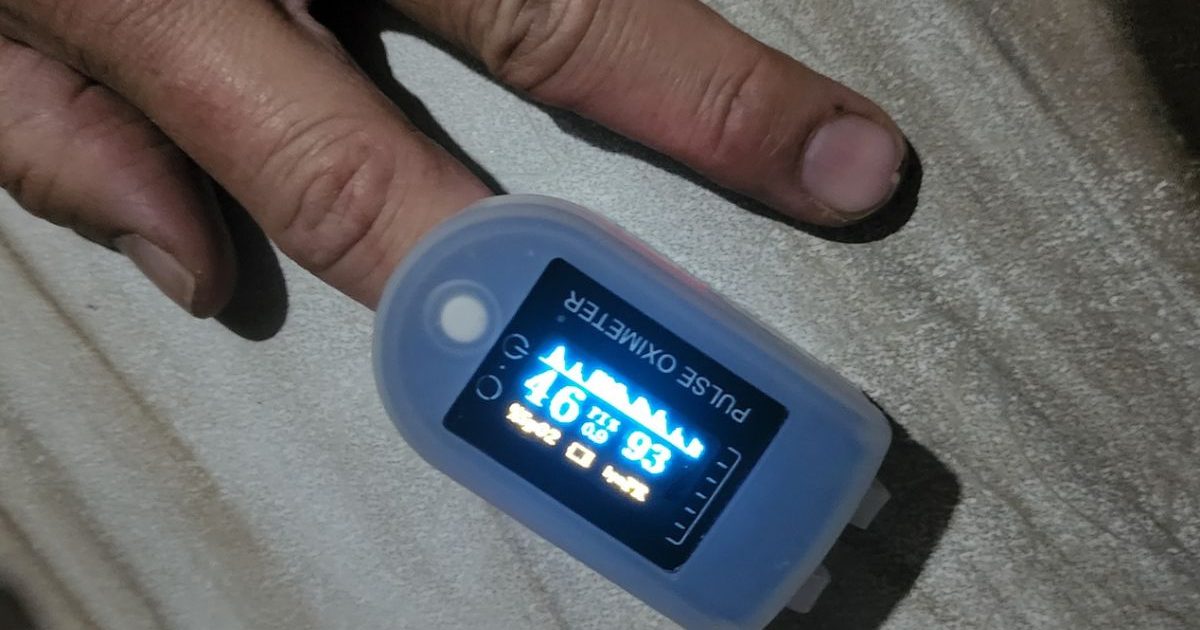
- Oxygen saturation (SpO₂) using a pulse oximeter, especially at higher elevations.
Many experienced guides also ask trekkers how they feel every evening instead of waiting for them to report symptoms. These regular check-ins help identify problems early, when they’re usually easier to manage.
How a Guide Helps Keep You Safe
If your guide believes you’re developing altitude sickness, they may recommend:
- Taking an additional acclimatization day.
- Slowing the pace of the trek.
- Remaining at the same altitude until symptoms improve.
- Descending to a lower altitude if symptoms worsen.
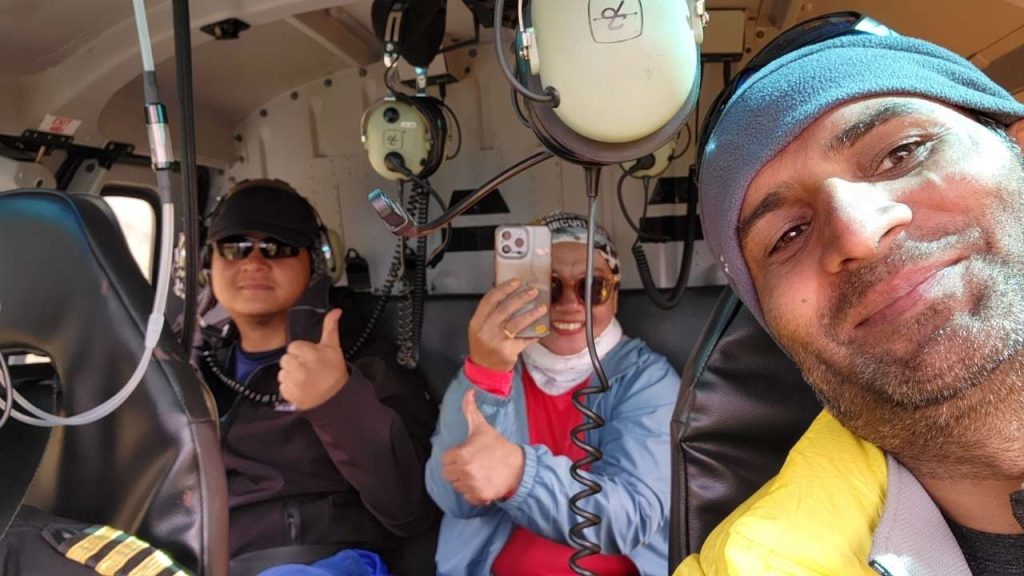
- Seeking medical assistance or arranging emergency evacuation when necessary.
These decisions are made to protect your health, even if it means changing the original itinerary. Reaching Everest Base Camp is never worth risking your safety.
Advice from an experienced guide: After guiding trekkers in the Everest region for more than 30 years, I’ve learned that the best outcomes come from good communication. I always encourage trekkers to tell me about even mild symptoms, such as a headache or loss of appetite, rather than trying to push through them. Small problems are usually much easier to manage when they’re recognized early, and speaking up at the right time can prevent a minor issue from becoming a serious medical emergency.
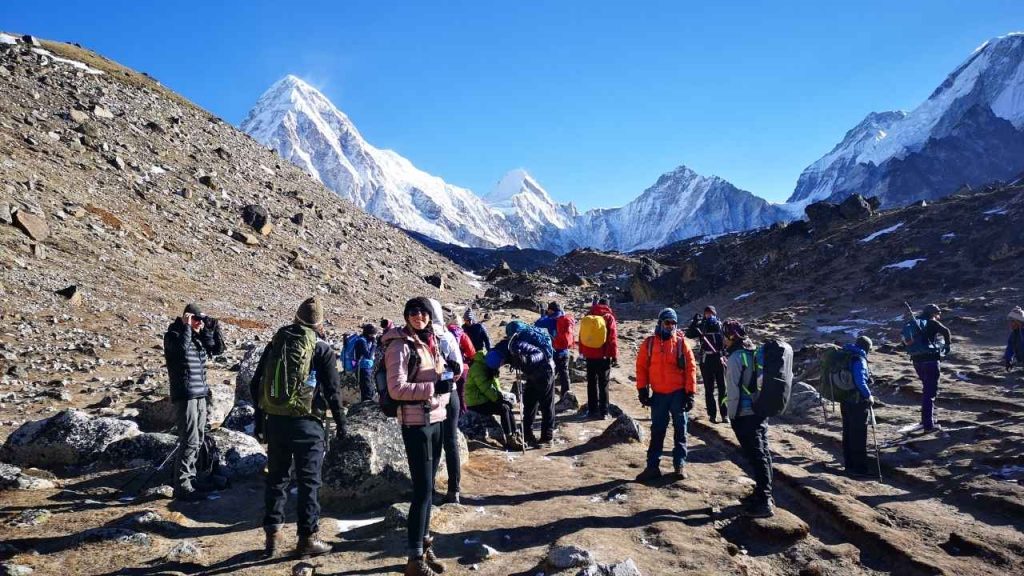
When Should You Descend During the Everest Base Camp Trek?
Knowing when to stop ascending and descend is one of the most important ways to prevent serious altitude illness on the Everest Base Camp Trek.
Stay at the Same Altitude If Symptoms Are Mild
If your symptoms are mild and do not get worse, it’s usually safe to remain at your current altitude while your body acclimatizes. What you should do:
- Stay at the same altitude for at least 24 hours.
- Drink plenty of fluids and eat regular meals.
- Avoid climbing higher until your symptoms have completely improved.
- Tell your guide how you’re feeling and continue to monitor your symptoms.
Descend Immediately If Symptoms Worsen
If your symptoms become more severe or don’t improve with rest, do not continue toward Everest Base Camp. Descend immediately if you experience:
- A worsening or severe headache.
- Persistent vomiting.
- Increasing dizziness.
- Difficulty walking or loss of coordination.
- Confusion or unusual behavior.
- Shortness of breath while resting.
- Chest tightness or a persistent cough.
These symptoms may indicate High Altitude Cerebral Edema (HACE) or High-Altitude Pulmonary Edema (HAPE), both of which require immediate descent and urgent medical attention.
Author Advice: One mistake I’ve seen over the years is trekkers trying to “push through” altitude sickness because they’re close to Everest Base Camp. The mountain will always be there, but your health comes first. If your guide tells you, it’s time to descend, trust their judgment. Making the decision early is often what prevents a minor problem from becoming a serious emergency.
The Golden Rule: Never continue ascending if you have symptoms of altitude sickness. The safest response is to stop climbing, monitor your condition, and descend if your symptoms worsen or fail to improve.
Travel Insurance for Everest Base Camp Trek Altitude Sickness
Although most trekkers complete the Everest Base Camp Trek safely, severe altitude sickness can require an emergency helicopter evacuation. For this reason, comprehensive travel insurance is an essential part of planning your trek. Choose a policy that includes:
- Emergency helicopter evacuation.
- High-altitude trekking coverage up to 5,364 meters (17,598 ft) or higher.
- Medical treatment for Acute Mountain Sickness (AMS).
- Hospitalization and emergency medical expenses.
- Trip interruption or cancellation coverage.
Without appropriate insurance, a helicopter rescue in the Everest region can cost US$4,000–US$8,000 or more, depending on the location, weather conditions, and the complexity of the evacuation.
Before You Travel
Before starting your Everest Base Camp Trek, make sure your travel insurance:
- Covers trekking up to Everest Base Camp (5,364 m) or higher.
- Includes emergency helicopter evacuation.
- Covers treatment for altitude-related illnesses.
- Has no exclusions for high-altitude trekking in Nepal.
Choosing the right insurance policy can be confusing, especially if it’s your first high-altitude trek. Our Everest Base Camp Trek Travel Insurance guide explains what coverage you need, recommended insurance providers, and what to look for before purchasing a policy.
Remember, travel insurance doesn’t prevent altitude sickness, but it can provide peace of mind and financial protection if an emergency occurs. Combined with a well-paced itinerary, proper acclimatization, and an experienced guide, it’s an important part of preparing for a safe Everest Base Camp Trek.
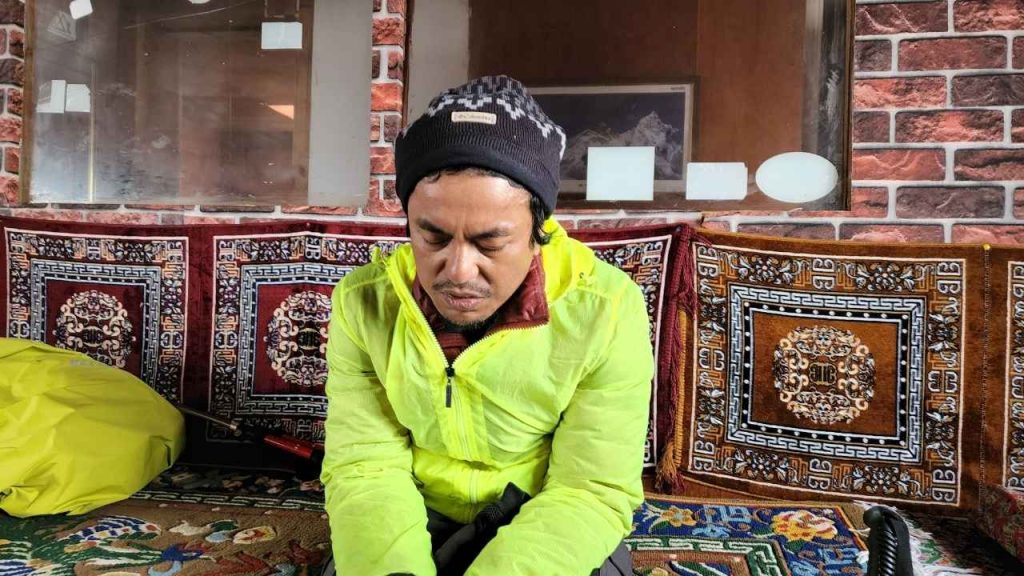
Is Altitude Sickness a Reason Not to Do the Everest Base Camp Trek?
No. Altitude sickness shouldn’t discourage you from taking on the Everest Base Camp Trek. With proper preparation, a well-paced itinerary, sensible acclimatization, and the support of an experienced guide, most trekkers complete the journey safely and successfully. If you’re planning your adventure, our complete Everest Base Camp Trek guide covers everything you need to know, including the itinerary, permits, costs, the best time to visit, packing tips, and how to prepare for the trek.
While Acute Mountain Sickness (AMS) is common, it is usually mild and manageable. A headache, slight fatigue, or reduced appetite doesn’t necessarily mean your trek is over. In many cases, these symptoms improve with rest, hydration, and giving your body enough time to acclimatize.
How to Reduce Your Risk
You can significantly lower your risk of altitude sickness by:
- Following a 12–14 days Everest Base Camp Trek itinerary.
- Taking every scheduled acclimatization day.
- Trekking with an experienced, licensed guide.
- Staying well hydrated and eating regular, nutritious meals.
- Avoiding rapid altitude gain.
- Recognizing the early symptoms of AMS and responding promptly.
- Descending immediately if symptoms worsen.
The key to a safe trek isn’t avoiding altitude, it’s respecting it. Most serious altitude-related emergencies occur when trekkers ignore symptoms and continue climbing instead of resting or descending.
Advice From Saligram (30+ Years of Guiding)
After guiding trekkers in the Everest region for more than 3 decades I’ve learned that reaching Everest Base Camp isn’t about being the fastest or the fittest. It’s about trekking at a steady pace, respecting the altitude, and making good decisions along the way.
The trekkers who enjoy the journey the most are usually the ones who listen to their bodies, communicate openly with their guide, and never hesitate to take an extra acclimatization day when needed.
With proper preparation, a well-planned itinerary, and the support of an experienced guide, the vast majority of trekkers reach Everest Base Camp safely without experiencing severe altitude sickness.
Remember: Altitude sickness is manageable for most people when it is recognized early. Prepare well, trek patiently, respect the mountain, and let your body adjust naturally. Those simple steps will give you the best chance of enjoying a safe, successful, and unforgettable Everest Base Camp Trek.
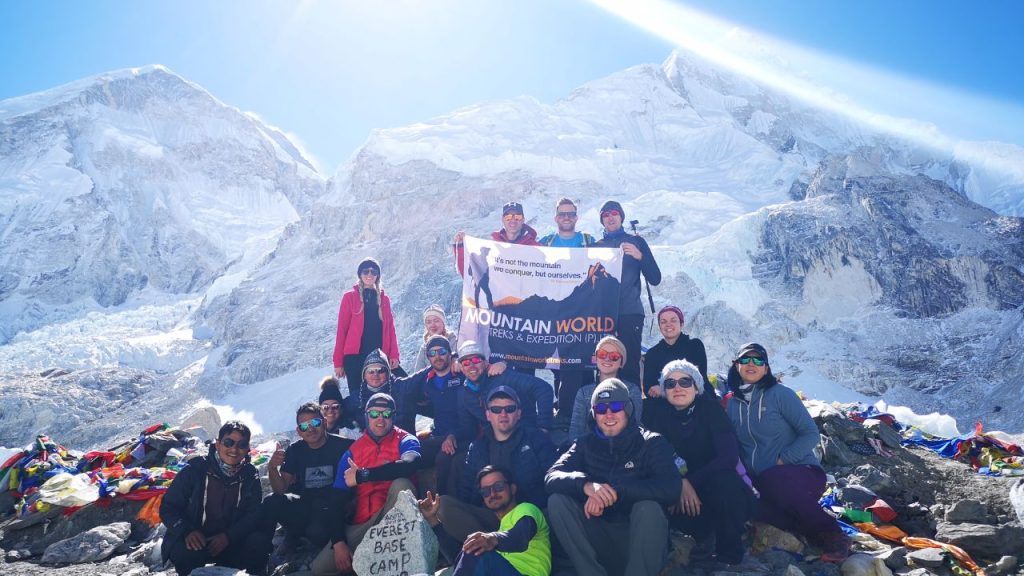
Frequently Asked Questions About Everest Base Camp Trek Altitude Sickness
1. What is altitude sickness?
Altitude sickness is a condition that occurs when your body doesn’t have enough time to adjust to higher elevations, where there is less oxygen available with each breath. It can affect anyone, regardless of age or fitness level. Early symptoms are usually mild, such as a headache, nausea, fatigue, or difficulty sleeping, but they can become serious if ignored.
2. What is Acute Mountain Sickness (AMS)?
Acute Mountain Sickness (AMS) is the most common and mildest form of altitude sickness. It usually develops after ascending above 2,500–3,000 meters, especially if you climb too quickly without proper acclimatization. Most cases improve with rest and hydration, but worsening symptoms require descent.
3. What causes altitude sickness on the Everest Base Camp Trek?
Altitude sickness happens because your body needs time to adjust to the lower oxygen levels at higher elevations. On the Everest Base Camp Trek, the risk increases as you climb above 2,500–3,000 meters. Ascending too quickly without proper acclimatization is the main cause of Acute Mountain Sickness (AMS).
4. What are the early symptoms of altitude sickness?
Early symptoms usually include a mild headache, reduced appetite, slight nausea, unusual fatigue, and difficulty sleeping. These symptoms are often mild but shouldn’t be ignored. Tell your guide how you’re feeling, stay at the same altitude, and allow your body time to acclimatize before continuing.
5. Is altitude sickness common on the Everest Base Camp Trek?
Yes. Mild Acute Mountain Sickness (AMS) is fairly common, especially above Namche Bazaar. Fortunately, most cases improve with rest and proper acclimatization. Serious altitude illness is much less common when trekkers follow a well-paced itinerary and listen to their guide’s advice. To better understand the full trekking route and altitude profile, see our complete Everest Base Camp Trek guide.
6. At what altitude does altitude sickness usually begin?
Symptoms usually begin above 3,000 meters (9,842 ft), although some trekkers notice mild symptoms after reaching Namche Bazaar, while others don’t experience them until they climb above 4,000 meters. Everyone acclimatizes differently, so there is no exact altitude where symptoms begin.
7. How can I prevent altitude sickness on the Everest Base Camp Trek?
The best way to reduce your risk is to follow a 12–14-day itinerary, take every scheduled acclimatization day, stay well hydrated, eat regular meals, avoid climbing too quickly, and pay attention to early symptoms. Trekking with an experienced guide also improves safety because they can recognize problems early.
8. Does physical fitness prevent altitude sickness?
No. Being physically fit may make the trek feel easier, but it does not protect you from altitude sickness. Even experienced hikers, marathon runners, and mountaineers can develop AMS if they ascend too quickly. Proper acclimatization is much more important than fitness.
9. Should I take Diamox for the Everest Base Camp Trek?
Diamox can help reduce the risk of altitude sickness for some trekkers by helping the body acclimatize more quickly. However, it isn’t necessary for everyone and should only be taken after consulting your doctor or a travel medicine specialist. It should never replace proper acclimatization.
10. What is the difference between AMS, HACE, and HAPE?
AMS (Acute Mountain Sickness) is the most common and usually causes headaches, fatigue, nausea, and poor sleep. HACE (High Altitude Cerebral Edema) affects the brain, while HAPE (High Altitude Pulmonary Edema) affects the lungs. Both HACE and HAPE are medical emergencies that require immediate descent and urgent medical treatment.
11. Can HACE or HAPE develop quickly?
Yes. HACE and HAPE can develop within hours, especially if early symptoms of AMS are ignored. This is why it’s important to tell your guide about any worsening symptoms and descend immediately if your condition deteriorates.
12. Can I still get altitude sickness with a guide?
Yes. A guide cannot prevent altitude sickness, but they can often recognize the warning signs before they become serious. An experienced guide will monitor your condition, recommend extra rest if need, and make the decision to descend if your symptoms worsen.
13. How many acclimatization days are recommended?
Most standard Everest Base Camp Trek itineraries include two acclimatization days, one at Namche Bazaar (3,440 m) and another at Dingboche (4,410 m). These rest days give your body time to adjust and significantly reduce the risk of altitude sickness.
14. What should I do if my symptoms get worse?
Stop ascending immediately and tell your guide how you’re feeling. If your symptoms don’t improve with rest or continue to worsen, descend to a lower altitude as soon as possible. Continuing to climb with worsening symptoms greatly increases the risk of serious altitude illness.
15. Can I continue trekking after mild altitude sickness?
Yes, in many cases. If your symptoms completely resolve after resting and acclimatizing, you can often continue the trek. However, you should only continue once you feel well again and your guide agrees it’s safe to do so.
16. Can altitude sickness be cured?
Yes. Mild altitude sickness often improves with rest, hydration, and allowing your body time to acclimatize. If symptoms become moderate or severe, the most effective treatment is to stop ascending and descend to a lower altitude. Early recognition and prompt action prevent most serious complications.
17. Does drinking alcohol increase the risk of altitude sickness?
Yes. Alcohol can contribute to dehydration and affect your sleep, making it harder for your body to acclimatize. It’s best to avoid alcohol while gaining altitude, especially above 3,000 meters.
18. Is it safe to take sleeping pills at high altitude?
It’s best to speak with your doctor before using sleeping medication at high altitude. Some sleeping pills can affect breathing during sleep, which may not be suitable when your body is already adjusting to lower oxygen levels.
19. Can altitude sickness be fatal?
Most cases of AMS are mild and improve with rest or descent. However, severe conditions such as HACE and HAPE can become life-threatening if they are not treated quickly. Recognizing symptoms early and descending promptly greatly reduces the risk of serious complications.
20. Will travel insurance cover a helicopter evacuation?
Only if your policy specifically includes high-altitude trekking and emergency helicopter evacuation. Always check your policy carefully before traveling to Nepal, as standard travel insurance may not provide this level of coverage.
21. Should I bring a pulse oximeter?
A pulse oximeter can be a useful tool for monitoring oxygen saturation during the trek, especially at higher elevations. However, it should never replace how you feel or your guide’s assessment. Symptoms are always more important than the number shown on the device.
22. Can children get altitude sickness on the Everest Base Camp Trek?
Yes. Children can develop altitude sickness just like adults because it is caused by reduced oxygen at high altitude, not by age. Parents should watch for symptoms such as headache, nausea, unusual tiredness, or changes in behavior. A gradual itinerary, proper acclimatization, and close monitoring are essential, and families should descend if symptoms worsen.
Medical Disclaimer: The information in this guide is intended for general educational and trip-planning purposes only and should not be considered medical advice. While every effort has been made to ensure the information is accurate and up to date, it should not replace advice from your doctor or a qualified travel medicine specialist. If you have a pre-existing medical condition or are considering prescription medications such as Diamox, consult a healthcare professional before traveling to high altitude.