
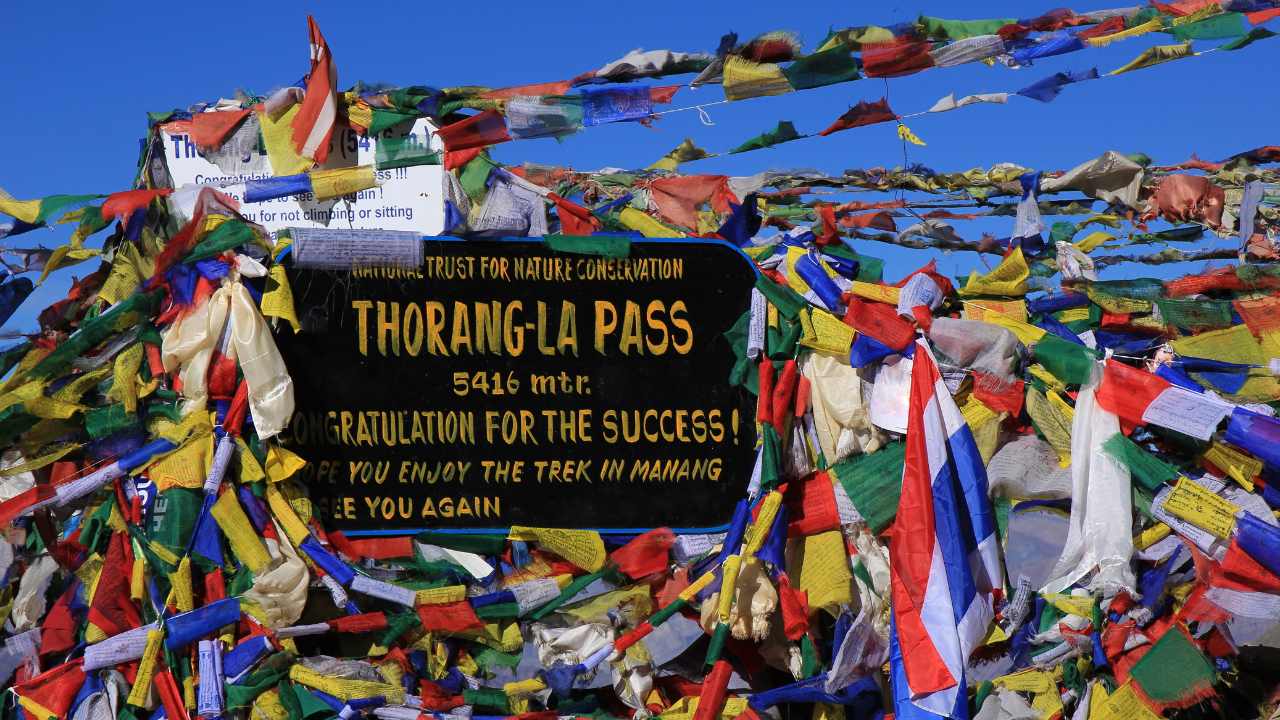
The best time for the Annapurna Circuit Trek is spring (March to May) and autumn (September to November). Both seasons offer stable weather, clear mountain views, and safe conditions for crossing Thorong La Pass (5,416m). Autumn, especially October, is considered the single best month, while spring brings blooming rhododendron forests to the lower Marsyangdi Valley.
Best Time For Annapurna Circuit Trek: Key Facts at a Glance
| Factor | Details |
| Best months | March to May and September to November |
| Best single month | October |
| Average trekking days | 12 days on the standard road-assisted itinerary; 15 to 18 with classic start points or the Tilicho Lake side trip |
| Highest point | Thorong La Pass (5,416m) |
| Coldest months | December to February |
| Wettest months | June to August |
| Road access | Jeep/bus to Chame or beyond; road head keeps shrinking the trekking route each year |
Why Timing Matters for the Annapurna Circuit Trek
The Annapurna Circuit is one of the most diverse treks in Nepal, passing through subtropical lowlands, pine and rhododendron forests, high alpine desert, and the Mustang rain-shadow region before crossing Thorong La Pass. Because the route changes elevation and climate so dramatically, from around 800m near Besisahar to over 5,400m at the pass, the right season affects almost everything whether Thorong La is safe to cross, whether lower sections are muddy or dry, how clear your views of Annapurna, Manaslu, and Dhaulagiri will be, and even how comfortable your nights feel at different elevations. A trek that feels easy and scenic in October can feel completely different in January or July, even on the exact same trail.
Unlike shorter treks, the Annapurna Circuit also crosses several distinct climate zones in a single trip. This means the “best season” isn’t uniform across the whole route. Conditions in the lower Marsyangdi Valley can differ sharply from conditions in Manang or the Mustang rain shadow, which is exactly why understanding regional microclimates matters as much as picking a broad season.
Table of Contents
Best Time For Annapurna Circuit Trek: Key Facts at a Glance
Why Timing Matters for the Annapurna Circuit Trek
How the Weather Changes Along the Trail: Marsyangdi Valley vs Manang vs Mustang
Spring Season (March to May): Best Time for Blooming Trails and Warmer Days
Autumn Season (September to November): The Most Popular Trekking Season in Nepal
Winter Season (December to February): Clear Skies for Experienced, Cold-Ready Trekkers
Monsoon Season (June to August): Why It’s Not Recommended for the Full Circuit
Month-by-Month Best Time Guide for the Annapurna Circuit
Best Time for Thorong La Pass (5,416m)
Best Time for the Tilicho Lake Side Trip
Temperature Guide by Altitude and Season
How Season Affects Road Access and Transport
Annapurna Circuit Permits and Guide Availability by Season
Annapurna Circuit Photography Tips by Season
What to Pack for the Annapurna Circuit by Season
Common Mistakes When Choosing a Trekking Season
Frequently Asked Questions About the Best Time for the Annapurna Circuit
How the Weather Changes Along the Trail: Marsyangdi Valley vs Manang vs Mustang
Lower Marsyangdi Valley (Besisahar to Chame): This subtropical to temperate zone gets the most rainfall on the entire route. It’s lush and green, but also the section most affected by monsoon mud, leeches, and landslide risk. Spring and autumn keep this section dry and pleasant.
Manang Valley (Chame to Manang): As the trail climbs past Pisang, the landscape shifts to high alpine terrain with drier air and dramatic views of Annapurna II, III, and Gangapurna. This zone is less affected by monsoon rain than the lower valley but still benefits enormously from clear autumn and spring skies for photography and acclimatization hikes.
Upper Mustang Rain Shadow (Manang to Muktinath, via Thorong La): Once you cross into the Mustang side of the range, you enter a high-altitude desert that sits in Annapurna’s rain shadow. This area actually stays relatively dry even during monsoon, but reaching it during monsoon still requires trekking through the wettest part of the route first which is why most trekkers don’t attempt the full circuit in June to August despite Mustang’s dry microclimate.
Understanding these three zones helps explain why some trekkers report very different experiences on the “same” trek depending on which month they went.
Spring Season (March to May): Best Time for Blooming Trails and Warmer Days
Spring is one of the two best seasons for the Annapurna Circuit Trek. The lower Marsyangdi Valley, between Besisahar and Chame, comes alive with blooming rhododendron, magnolia, and wildflowers. Nepal’s rhododendron forests are among the most photographed sights on this route in April. Days are warmer than autumn at lower elevations, while high-altitude sections around Manang and Thorong La stay cool and generally stable.
Why trekkers choose spring:
- Rhododendron and wildflower blooms along the lower valley trail
- Warmer daytime temperatures at lower and mid elevations
- Good visibility of Annapurna II, III, and Gangapurna from Manang
- Longer daylight hours for crossing Thorong La
What to watch for:
- Late April and May can bring afternoon haze and occasional pre-monsoon showers at lower elevations
- Early spring (March) can still see leftover snow on Thorong La, so check conditions before departure
Autumn Season (September to November): The Most Popular Trekking Season in Nepal
Autumn is widely considered the best overall season for the Annapurna Circuit Trek. Once the monsoon clears in early September, the entire route settles into weeks of dry trails, stable weather, and the clearest mountain visibility of the year. October in particular delivers consistently blue skies over the Annapurna range and the Mustang valley.
Why trekkers choose autumn:
- The most stable, predictable weather of the year
- Dry, well-maintained trails from Besisahar all the way to Muktinath
- Excellent visibility of Annapurna, Manaslu, and Dhaulagiri
- Safest and most reliable conditions for crossing Thorong La Pass
What to watch for:
- Teahouses in Manang, Yak Kharka, and Thorong Phedi fill up quickly in October
- Trails near Thorong La can be busy with trekkers attempting the pass on the same clear-weather days
- Nights get noticeably colder at higher elevations by late November
Winter Season (December to February): Clear Skies for Experienced, Cold-Ready Trekkers
Winter is possible on the Annapurna Circuit, but Thorong La Pass becomes the main obstacle. Heavy snowfall can close the pass entirely for days at a time, and temperatures at Thorong Phedi and High Camp regularly drop well below freezing. Lower sections of the trek, however, remain trekkable year-round and offer a quieter alternative for those not attempting the full pass crossing.
Why some trekkers choose winter:
- Crystal-clear mountain views with minimal haze
- Very quiet trails and teahouses, especially in the lower valley
- Lower prices at teahouses due to reduced demand
What to watch for:
- Thorong La Pass can close for days after heavy snowfall, sometimes forcing a full itinerary change
- Nighttime temperatures at Thorong Phedi (4,450m) can fall below -15°C
- Some teahouses at higher elevations close entirely during peak winter
Monsoon Season (June to August): Why It’s Not Recommended for the Full Circuit
Monsoon is the least suitable season for most of the Annapurna Circuit Trek. Heavy rainfall affects the lower and middle sections of the route, causing landslide risk, leech activity, and muddy trails between Besisahar and Manang. Interestingly, the upper Manang and Mustang region sits in a rain shadow and stays comparatively dry, but reaching it during monsoon still means trekking through the wettest part of the route first.
Why trekkers avoid monsoon:
- Landslide and road-blockage risk on the lower jeep/bus route to Besisahar and Chame
- Muddy, slippery trails and leech activity in the forested lower valley
- Poor visibility of Annapurna and Manaslu due to persistent cloud cover
- Higher chance of transport delays getting to and from the trailhead
Month-by-Month Best Time Guide for the Annapurna Circuit
| Month | Conditions | Best For |
| March | Weather stabilizing, some leftover snow on Thorong La | Early spring trekkers, fewer crowds |
| April | Peak rhododendron blooms, clear mornings | Spring’s most popular month |
| May | Warmer, occasional pre-monsoon showers | Trekkers who prefer warmer valley temperatures |
| June | Monsoon begins, rain increases in lower valley | Not recommended |
| July | Heavy monsoon rainfall, landslide risk | Not recommended |
| August | Continued monsoon, occasional clear windows in Mustang | Not recommended |
| September | Skies clearing after monsoon | Early autumn trekkers avoiding October crowds |
| October | Best weather of the entire year | Peak season; book teahouses early |
| November | Very clear skies, colder nights | Trekkers wanting autumn clarity with fewer crowds than October |
| December | Cold but clear at lower elevations | Experienced trekkers, Thorong La closure risk increases |
| January | Coldest month, high risk of Thorong La snow closure | Only for well-equipped, experienced trekkers |
| February | Still cold, occasional clear windows for the pass | Late-winter trekkers watching pass conditions closely |
Best Time for Thorong La Pass (5,416m)
Thorong La is the single most weather-sensitive point on the entire Annapurna Circuit, and it’s what most itineraries are built around.
- Best months for Thorong La: April to mid-May, and late September through November
- Avoid: Peak winter (late December to February), when heavy snow can close the pass for multiple days
- Always check locally: Ask teahouse owners in Thorong Phedi or High Camp about current pass conditions the night before your crossing; snow and wind conditions can change quickly at this altitude
Best Time for the Tilicho Lake Side Trip
Many trekkers extend the Annapurna Circuit with a side trip to Tilicho Lake (4,919m), one of the highest lakes in the world. This detour has its own seasonal considerations separate from the main circuit.
- Best months: April to May and October to November, matching the main circuit’s best seasons
- Trail conditions: The path to Tilicho Base Camp crosses an exposed, landslide-prone section that’s more dangerous in wet or snowy conditions, making autumn and spring significantly safer windows
- Winter access: Often difficult or closed due to snow accumulation on the approach trail
- Tip: If adding Tilicho Lake to your itinerary, build in one extra acclimatization and weather-buffer day, since the side trip trail is more exposed than the main circuit route
Temperature Guide by Altitude and Season
| Location & Altitude | Spring (Day/Night) | Autumn (Day/Night) | Winter (Day/Night) |
| Chame (2,670m) | 18°C / 5°C | 17°C / 3°C | 8°C / -5°C |
| Manang (3,540m) | 14°C / -2°C | 13°C / -4°C | 3°C / -12°C |
| Thorong Phedi (4,450m) | 8°C / -8°C | 7°C / -10°C | -3°C / -18°C |
| Muktinath (3,800m) | 12°C / -3°C | 11°C / -5°C | 2°C / -13°C |
Figures are general seasonal averages and can vary year to year.
How Season Affects Road Access and Transport
Unlike the Everest region, the Annapurna Circuit is reached by jeep or bus rather than flight, which changes how weather affects your trip start and end.
- Autumn: Most reliable road conditions, minimal delays on the drive to Besisahar or Chame
- Spring: Generally reliable, though occasional pre-monsoon showers can affect road conditions in May
- Winter: Roads stay open but can be cold and occasionally icy at higher points
- Monsoon: Least reliable, landslides can block roads to Besisahar and Chame, sometimes for days
Tip: Whichever season you trek in, build at least one buffer day into your itinerary before flights out of Pokhara or Kathmandu in case of transport delays on either end of the trek.
Annapurna Circuit Permits and Guide Availability by Season
Permit requirements for the Annapurna Circuit don’t change by season, but the practical experience of using them does.
- Peak season (October, April): ACAP and TIMS checkpoints can see longer queues due to trekker volume; booking your guide well in advance is essential, since a licensed guide is mandatory in the Annapurna region and guides get booked early
- Shoulder season (September, November): Similar permit process with noticeably shorter checkpoint waits and easier last-minute guide availability
- Winter and monsoon: Checkpoints are quiet, and guides are typically available on short notice, though fewer local guides operate the higher sections of the route during peak winter
Annapurna Circuit Photography Tips by Season
- Spring: Shoot rhododendron blooms in the morning light on the Besisahar to Chame section; afternoon haze at higher elevations means the best mountain shots come before 11 AM
- Autumn: The clearest skies of the year mean strong photo opportunities all day, though October’s crowds mean arriving early at viewpoints like the Ice Lake trail above Manang helps avoid people in the frame
- Winter: The clearest possible air for distant mountain shots, but pack spare batteries; cold drains them fast, especially above 4,000m
- Golden hour tip: Manang and Muktinath both offer excellent sunrise views of the Annapurna range with minimal cloud interference in autumn and spring
What to Pack for the Annapurna Circuit by Season
- Spring/Autumn: Layered clothing, a good down jacket for Manang and Thorong Phedi evenings, sun protection, and a sleeping bag rated to at least -10°C
- Winter: Expedition-grade down jacket, sleeping bag rated to -20°C or lower, insulated water bottles, and extra layers for the Thorong La crossing
- Monsoon (if trekking anyway): Waterproof trekking boots, dry bags for electronics, and leech socks for the lower Marsyangdi Valley
Common Mistakes When Choosing a Trekking Season
- Booking October without reserving teahouses in advance: Manang, Yak Kharka, and Thorong Phedi fill up fast in peak season
- Underestimating winter cold at Thorong Phedi and High Camp: many trekkers pack for “cold” but not for -15°C to -18°C nights
- Attempting Thorong La in peak winter without checking local conditions: snow can close the pass with little warning
- Trekking in monsoon to save money: landslide and road-blockage risk on the lower route rarely makes it worth the savings
- Not building in buffer days: road delays and pass-crossing weather can both affect your return timeline, so a rigid itinerary is risky
- Ignoring regional microclimate differences: packing only for Besisahar’s warm lower valley and being caught off guard by Thorong Phedi’s much colder nights
- Adding Tilicho Lake without an extra buffer day: the side trip’s exposed trail is more weather-sensitive than the main circuit
Frequently Asked Questions About the Best Time for the Annapurna Circuit
What is the best time for the Annapurna Circuit Trek?
The best time for the Annapurna Circuit Trek is spring (March to May) and autumn (September to November), when weather is stable, trails are dry, and Thorong La Pass is safest to cross.
What is the single best month to trek the Annapurna Circuit?
October is widely considered the single best month for the Annapurna Circuit Trek, offering the most consistent clear skies and safest Thorong La crossing conditions of the year.
Can you do the Annapurna Circuit Trek in winter?
Yes, the Annapurna Circuit Trek is possible in winter, but Thorong La Pass carries a high risk of snow closure, and temperatures at Thorong Phedi and High Camp can drop below -15°C.
Is the Annapurna Circuit Trek good in monsoon season?
No, monsoon (June to August) is not recommended for the Annapurna Circuit Trek due to landslide risk, muddy trails in the lower valley, and poor visibility of the Annapurna range.
When is Thorong La Pass safest to cross?
Thorong La Pass is safest to cross from April to mid-May and from late September through November, when snow accumulation is lowest and weather is most stable.
Is spring or autumn better for the Annapurna Circuit Trek?
Both spring and autumn are excellent for the Annapurna Circuit Trek. Autumn generally offers slightly clearer skies and safer pass conditions, while spring offers warmer temperatures and blooming rhododendron forests in the lower valley.
How cold does it get at Thorong Phedi and Manang?
At Thorong Phedi (4,450m), nighttime temperatures can drop to -10°C in spring and autumn and as low as -18°C in winter. Manang (3,540m) sees milder but still cold nights, often between -2°C and -12°C depending on the season.
Do I need to book teahouses in advance for the Annapurna Circuit Trek?
Yes, especially during October and April, when teahouses in Manang, Yak Kharka, and Thorong Phedi fill up quickly due to high trekking volume.
Is the Annapurna Circuit Trek affected by road blockages?
Yes, road access to Besisahar and Chame can be affected by landslides, most commonly during monsoon (June to August), while autumn offers the most reliable road conditions.
How many days does the Annapurna Circuit Trek take?
The Annapurna Circuit Trek typically takes 12 to 18 days, depending on your starting point, the number of acclimatization days, and whether you include side trips like Tilicho Lake.
What is the highest altitude reached on the Annapurna Circuit Trek?
The highest point on the Annapurna Circuit Trek is Thorong La Pass at 5,416m, connecting the Manang valley to Muktinath in Mustang.
Is the Annapurna Circuit Trek difficult?
The Annapurna Circuit Trek is considered moderately challenging due to the high-altitude Thorong La crossing and long trekking days, but it does not require technical climbing skills, making it accessible to fit trekkers with proper acclimatization.
Do I need travel insurance for the Annapurna Circuit Trek?
Yes, travel insurance covering high-altitude trekking up to at least 5,500m and emergency helicopter evacuation is essential for the Annapurna Circuit Trek, regardless of season.
What permits are required for the Annapurna Circuit Trek?
The Annapurna Circuit Trek requires the Annapurna Conservation Area Permit (ACAP) and the Trekkers’ Information Management System (TIMS) card, both arranged through a registered trekking agency, and since April 2023 foreign trekkers must trek with a licensed guide.
Can beginners do the Annapurna Circuit Trek?
Beginners with good fitness levels can complete the Annapurna Circuit Trek, but prior trekking experience and proper acclimatization planning are strongly recommended given the altitude of Thorong La Pass.
Is altitude sickness a risk on the Annapurna Circuit Trek?
Yes, altitude sickness is a real risk on the Annapurna Circuit Trek since the route crosses Thorong La at 5,416m. Proper acclimatization days in Manang, gradual ascent, and staying hydrated significantly reduce this risk in any season.
What is the weather like in Manang in autumn?
In autumn, Manang typically sees daytime temperatures around 13°C and nighttime lows near -4°C, with clear skies and excellent visibility of Annapurna II, III, and Gangapurna.
What is the weather like at Thorong Phedi in spring?
In spring, Thorong Phedi typically sees daytime temperatures around 8°C and nighttime lows near -8°C, with generally stable conditions for the pass crossing the following morning.
Which month has the clearest mountain views on this trek?
October has the clearest mountain views on the Annapurna Circuit Trek, with minimal haze, dry air, and consistently blue skies following the end of the monsoon.
Is trekking in November too cold for the Annapurna Circuit?
No, November remains a strong trekking month for the Annapurna Circuit Trek. Days stay clear and stable, though nighttime temperatures drop noticeably at Thorong Phedi and Manang compared to September and October.
Should I avoid crowds by trekking in September instead of October?
Yes, September is a good alternative for trekkers on the Annapurna Circuit who want autumn’s stable weather with noticeably fewer crowds in Manang and Thorong Phedi than peak-season October.
What is the coldest month to trek the Annapurna Circuit?
January is typically the coldest month for the Annapurna Circuit Trek, with the harshest overnight temperatures at Thorong Phedi and the highest chance of snow closing Thorong La Pass.
Can I shorten the Annapurna Circuit Trek using road access?
Yes, road access to Chame and beyond has shortened the traditional trekking route, allowing trekkers to start higher up the valley by jeep and reduce total trekking days if time is limited.
What is the best time to add Tilicho Lake to the Annapurna Circuit?
The best time to add Tilicho Lake to the Annapurna Circuit is April to May or October to November, since the exposed approach trail is significantly safer in dry, stable conditions than in winter or monsoon.
Should I trek early or late in autumn on the Annapurna Circuit?
Early autumn (September) offers fewer crowds with slightly less consistent skies, while late autumn (November) offers very clear skies but colder nights at high camps. October remains the balance point most trekkers prefer.


