Picture this. It’s 4 AM. You’re standing outside a stone teahouse somewhere above 4,800 meters, headlamp strapped on, breath turning to mist in the frozen air. Your boots crunch on ice as you take your first steps into the darkness. Somewhere above you, invisible in the pre-dawn black, is the Larkya La Pass. The highest point of your journey. The moment you’ve been building toward for two weeks.
Your legs are tired. Your lungs feel smaller than they did at home. And yet there is something electric about this moment, a kind of aliveness that’s almost impossible to describe to someone who hasn’t stood at altitude before sunrise, staring up at a mountain that doesn’t care how fit you are.
That moment is exactly why people do the Manaslu Circuit Trek.
But let’s be honest with each other before we get carried away by the romance of it. The Manaslu Circuit is not a walk in the park. It is not a casual holiday hike. It is considered moderate to challenging, requiring 6-7 hours of walking per day on rugged trails, with the high point being Larkya La Pass at 5,106 meters. The difficulty comes from long walking days, high altitude, remote trails, basic teahouse facilities, and the steep ascent to the pass itself.
The question isn’t whether Manaslu is hard. It is. The real question is: is it hard in a way that you can prepare for?
The answer is yes, absolutely yes. And this guide will show you exactly how.
So, How Difficult Is the Manaslu Circuit Trek, Really?
Let’s start with the official classification. The Manaslu Circuit Trek is considered a moderate to strenuous, high-altitude trek, recognized as one of the tough treks with a moderate to challenging level of difficulty. It involves 12–15 days of walking, often 5–8 hours daily, reaching a maximum altitude of 5,106 meters at Larkya La Pass.
But classifications only tell part of the story. What makes Manaslu genuinely challenging isn’t one single monster day, it’s the accumulation. Day after day of uphill. Day after day of thin air. The slow creep of fatigue in your legs as you push higher into the mountains. The difficulty in 2026 isn’t just one steep hill, it’s the growing fatigue.
Think of it like this: the trek starts at roughly 900 meters above sea level in Machha Khola, lower than many European cities. By the time you cross the Larkya La Pass, you’re above 5,100 meters. By the time you reach the Larkya La Pass, the air pressure is roughly 50% of what it is at sea level. Your lungs are working twice as hard to deliver the same amount of oxygen to your muscles. Everything (walking, sleeping, eating), takes more effort than it would at home.
That is the honest truth of Manaslu. And it’s also why finishing it feels like one of the proudest moments of a trekker’s life.
The Five Core Challenges of the Manaslu Circuit Trek
1. Altitude – The Invisible Enemy
If there’s one thing every experienced Himalayan guide will tell you, it’s this: altitude doesn’t care how fit you are.
Altitude sickness affects people regardless of their fitness level, age, or trekking experience. The marathon runner and the occasional hiker stand on equal footing above 4,000 meters. Your cardiovascular fitness helps enormously with the physical demands of the trail, but it does not make you immune to the effects of thin air.
The Manaslu Circuit Trek starts from Soti Khola at approximately 700 meters and gains altitude gradually to 5,160 meters at Larkya La Pass. This rapid altitude gain takes trekkers through different climatic zones, from dense forest to alpine areas, which makes the trek both a challenge and a thrill.
The altitude becomes truly significant above 3,000 meters, which is roughly where you’ll be by the time you reach villages like Namrung. From that point onward, your body is in a constant negotiation with the thin air. Mild symptoms of altitude sickness, headaches, loss of appetite, poor sleep, nausea, or unusual fatigue, commonly appear around places like Syala, Samagaun, or Samdo.
None of this is meant to frighten you. It’s meant to prepare you. Because the trekkers who struggle most on Manaslu are the ones who didn’t expect the altitude to hit them, who dismissed the warnings and pushed on when they should have rested. The trekkers who thrive are the ones who listened to their bodies, followed the golden rule of the mountains, and took things slow and steady.
2. The Larkya La Pass – The Day Everything Comes Together
Every challenge on the Manaslu Circuit builds toward one moment: crossing the Larkya La Pass.
The trek includes several demanding days, especially the climb from Dharamsala over the Larkya La to Bhimtang, a long 8 to 9-hour push. You’ll start in the dark, before the sun has warmed the trail, crunching over frozen ground with your headlamp lighting a narrow cone ahead of you. The climb is steep, sustained, and above 5,000 meters. There’s no shortcut. There’s no cable car. There’s just the mountain, your legs, and the slow rhythm of one foot in front of the other.
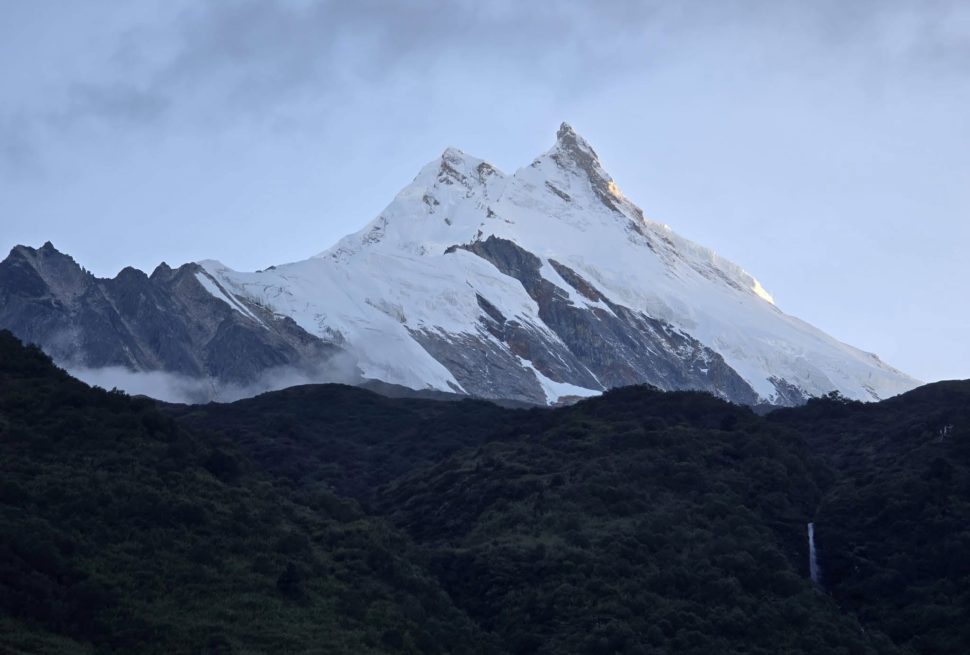
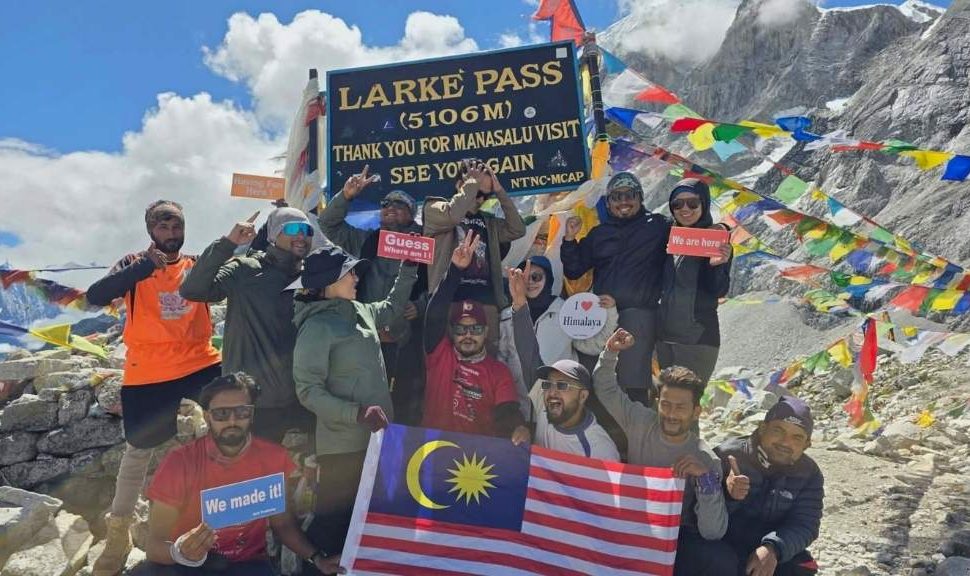
And then, when you reach the top the Himalayas open up in front of you like a reward you’ve been quietly earning for two weeks. The pass offers panoramic views of surrounding peaks like Himlung Himal, Cheo Himal, Kang Guru, and Annapurna II. Peaks that most people will only ever see in photographs. You’re standing among them.
The descent from Larkya La is also not easy, long, knee-testing, and relentless. But by the time you reach Bhimtang and sit down for a hot meal with the hardest day of the trek behind you, the sense of achievement is something that will stay with you for the rest of your life.
3. Terrain and Trail Conditions
The trail initially ascends from subtropical forests to high alpine terrain. Though not technically difficult, factors like steep terrain, basic teahouse accommodation, and changing weather contribute to this trek’s moderate-to-challenging rating.
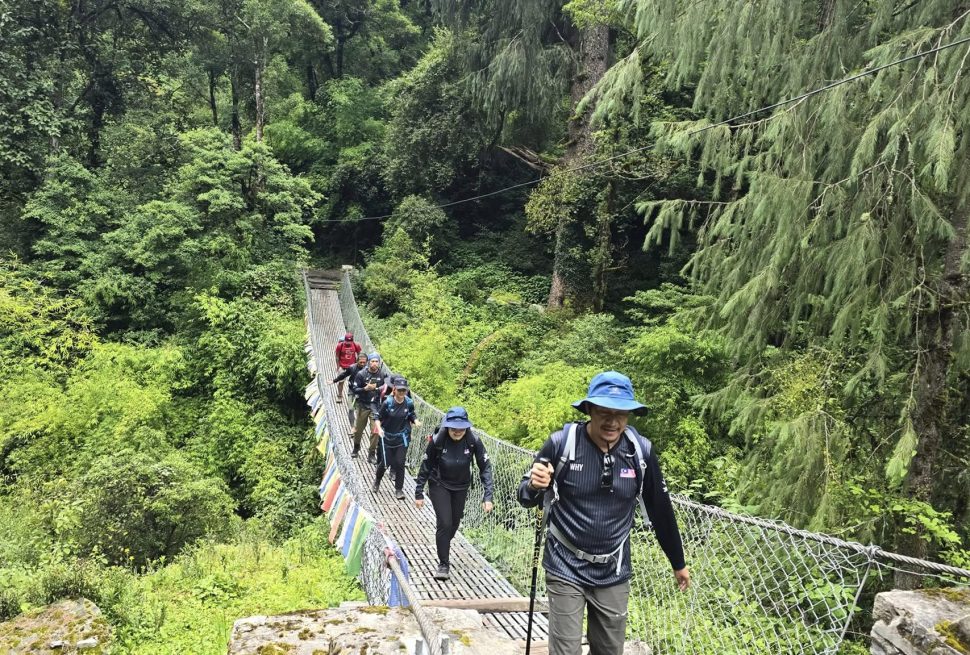
In the lower sections, the trail is warm and forested, almost gentle, even. The Budhi Gandaki River carves a gorge alongside you, and the path weaves through terraced villages, bamboo forests, and suspension bridges that sway cheerfully over raging water. It feels adventurous without being punishing.
But the higher you climb, the more the trail demands of you. Rocky switchbacks replace forest paths. Snow can appear on the trail even in spring and autumn. River crossings, narrow ridgelines, and long exposed stretches become part of the daily routine. The trek is most difficult in winter (December–February) due to snow-covered trails and closed lodges, and in monsoon (June–August) because of heavy rain, landslides, and leeches.
4. Remoteness – You Are a Long Way from Help
This is one of the things that separates Manaslu from the Annapurna Circuit or Everest Base Camp trekkers. If something goes wrong on Manaslu, you are deep in the mountains with limited options.
The Manaslu region is remote with limited options for quick evacuation if severe altitude sickness occurs. Helicopter rescue may be hampered by weather conditions. This is not said to alarm you, but to emphasize why travel insurance with helicopter evacuation cover is genuinely non-negotiable here, not a box to tick, but a real safety net you hope you never need.
The remoteness also means you can’t count on the infrastructure you might find on busier trails. Teahouses are simpler. Mobile signal is unreliable or absent for stretches. The nearest hospital is a helicopter ride away. Your guide isn’t just a route-finder, in an emergency, they are your first line of response. Choose an experienced one.
5. Physical Endurance Over Multiple Days
A single tough day in the mountains is something most fit people can handle through willpower alone. 12 consecutive days of trekking at altitude is an entirely different matter.
The Manaslu trek spans approximately 177 kilometers and typically takes 12 to 15 days, with daily hiking hours ranging from 6 to 8 hours. That means your body needs to perform day after day, recovering each night in a teahouse at altitude where sleep itself is less restorative than at sea level.
The trekkers who underestimate this cumulative physical demand are the ones who arrive strong and fade by week two. The trekkers who plan for it, who train properly, pack light, and hire a porter to carry their heavy gear, are the ones who cross the pass smiling.
Day-by-Day Difficulty Overview: Manaslu Circuit Trek (12 Days)
| Day | Route | Altitude | Walking Time | Difficulty | What to Expect |
| 1 | Kathmandu → Machha Khola | 870m | Drive (8–9 hrs) | Easy | Long bumpy drive through river valleys. No trekking. Save your energy. |
| 2 | Machha Khola → Jagat | 1,340m | 5–6 hrs | Easy–Moderate | First real trekking day. Warm, forested trail along the Budhi Gandaki River. Legs are fresh, spirits are high. |
| 3 | Jagat → Deng | 1,860m | 6–7 hrs | Moderate | Undulating forest paths, suspension bridges, mule trains. The trail starts showing its character. |
| 4 | Deng → Namrung | 2,630m | 6–7 hrs | Moderate | Altitude starts to matter here. Scenery shifts dramatically. First real Himalayan views begin to appear. |
| 5 | Namrung → Lho / Samagaun | 3,180m–3,530m | 6–7 hrs | Moderate | You’re in the mountains now. The air is noticeably thinner. Take it slow, drink more water than feels necessary. |
| 6 | Acclimatization Day: Samagaun | 3,530m | 4–5 hrs (side hike) | Easy–Moderate | Rest day but don’t rest. Hike up to Birendra Lake or Manaslu Base Camp (4,800m), then sleep low. This day could save your trek. |
| 7 | Samagaun → Samdo | 3,860m | 3–4 hrs | Moderate | Shorter day, higher altitude. Your body is working hard even when the trail doesn’t feel hard. |
| 8 | Samdo → Dharamsala (Larkya Phedi) | 4,460m | 4–5 hrs | Moderate–Hard | The last village before the pass. Cold, basic, and exciting. Sleep early. Your alarm is set for 4 AM. |
| 9 | Dharamsala → Larkya La Pass → Bhimtang | 5,106m → 3,720m | 8–9 hrs | Hard | The big day. Pre-dawn start, frozen trail, thin air, steep climb. And then — the top of the world. Long descent to Bhimtang. The hardest and most unforgettable day of the trek. |
| 10 | Bhimtang → Tilje | 2,300m | 5–6 hrs | Moderate | The hardest is behind you. Long descent on tired legs. The air gets richer with every step down. |
| 11 | Tilje → Dharapani → Besisahar | 1,400m–760m | 4–5 hrs trek + drive | Easy–Moderate | Last trekking day. Trail meets the road. Civilization slowly reappears. |
| 12 | Besisahar → Kathmandu | 1,400m | Drive (6–7 hrs) | Easy | Back to the city. Your legs will ache. Your smile will be bigger. |
Difficulty Key:
| Rating | What It Means |
| 🟢 Easy | Flat or gentle terrain, short hours, low altitude |
| 🟡 Moderate | Sustained uphill, 6–7 hours, altitude beginning to factor in |
| 🟠 Moderate–Hard | Long day, significant altitude gain, physical and mental demand |
| 🔴 Hard | Maximum altitude, pre-dawn start, 8–9 hours, everything tested at once |
Acclimatization: The Strategy That Makes or Breaks Your Trek
If there is one concept that every Manaslu trekker needs to understand before they set foot on the trail, it’s acclimatization. And the most important rule is deceptively simple:
Climb high. Sleep low. Go slow.
Above 3,000 meters, limit your daily altitude gain to 300–500 meters per day. Your body needs time to do something remarkable, quietly rebuilding itself from the inside, producing more red blood cells, adjusting its breathing, learning to function on less oxygen. That process cannot be rushed. The mountain doesn’t negotiate on this point.
Well-designed Manaslu itineraries build in acclimatization days at two key points along the route, Samagaun (3,530m) and Samdo (3,860m). The most critical of these is Samagaun, and this is not a day to waste lying in your teahouse scrolling through whatever patchy WiFi signal you can find.
Move. Hike up to Birendra Lake, a glacial jewel that sits quietly beneath the face of Manaslu with the mountain’s reflection trembling on the water. Or push higher to Manaslu Base Camp at 4,800 meters, where the glacier cracks and groans and the scale of the mountain above you becomes genuinely humbling. Gain altitude during the day, then come back down to sleep at Samagaun. Your body will do the adaptation work overnight while you rest.
This single day, used correctly, can be the difference between cruising over the Larkya La Pass and being turned back by altitude sickness two days before it.
Altitude Sickness: Know the Signs Before You Go
Understanding altitude sickness before you trek is not pessimism, it’s wisdom. The mountain rewards the prepared.
AMS (Acute Mountain Sickness), HAPE (High Altitude Pulmonary Edema), and HACE (High Altitude Cerebral Edema) can develop quickly if you ascend too fast or ignore early symptoms.
Early warning signs are your body’s way of asking you to slow down. They include headaches, nausea, dizziness, fatigue, and loss of appetite. These are common and manageable if you take them seriously.
The rule is simple: if symptoms are getting worse, descend. Not tomorrow. Not after a cup of tea. Immediately.
Symptoms typically begin to manifest between six and twenty-four hours after you ascend to higher altitudes, especially above 2,500 meters or 3,000 meters. If you have a headache and one other symptom at altitude, assume AMS.
Carry Diamox (acetazolamide) if your doctor recommends it, stay hydrated with 3 liters of water per day, avoid alcohol at altitude, and eat carbohydrate-rich meals. Your guide will know the signs, trust them when they tell you to rest.
Who Can Do the Manaslu Circuit Trek?
This is the question most people are really asking when they search for “Manaslu difficulty.” And the honest answer is broader than you might expect.
With proper preparation and support, even beginners can complete the Manaslu Circuit Trek. You don’t need to be a mountaineer. You don’t need previous Himalayan experience. What you do need is a genuine base level of fitness, several weeks of preparation, a willingness to go slowly, and the humility to listen to your guide when the mountain asks you to rest.
The Manaslu Circuit is not the right trek for someone who has never walked more than a few hours at a time and wants to do it in two weeks with no training. But for someone who is reasonably active, willing to train seriously for two to three months, and mentally prepared for the demands of remote high-altitude trekking, it is absolutely achievable, and it will be one of the most transformative experiences of their life.
How to Train for the Manaslu Circuit Trek
Training for Manaslu isn’t about becoming an athlete. It’s about building enough base fitness that your body can handle 6-8 hours of walking at altitude, day after day, without breaking down.
You should have a good level of physical fitness, be able to walk 6–8 hours a day with a light backpack, and ideally train with hikes, cardio, and strength exercises for at least 6–8 weeks before the trek.
Here’s what an effective training plan looks like:
Cardio (the foundation): Running, cycling, swimming, or fast walking, 4 to 5 sessions per week. Build up to sustained efforts of 60-90 minutes. The goal is aerobic endurance, not speed.
Hiking with a pack: Get out on actual trails with a loaded daypack at least once a week. If you can find hilly terrain, use it. The more time you spend going uphill with weight on your back before Nepal, the less shocking it will feel on the trail.
Leg strength: Squats, lunges, step-ups, and calf raises. Your knees will thank you on the long descent from Larkya La.
Staircase training: If you live in a city with no hills, find a tall building and use the stairs. Boring? Yes. Effective? Absolutely.
Start your training at least 8-10 weeks before your departure date. Consistency matters far more than intensity.
Gear That Makes a Difference
The right gear won’t make the trek easy. But the wrong gear will make it miserable in ways that are entirely avoidable.
Most trekking blogs give you the standard list, boots, rain jacket, trekking poles. All of that applies here. But Manaslu has one detail that catches even experienced trekkers off guard, and it’s worth saying clearly:
Above Samagaun, even in October, peak trekking season night time temperatures can drop to -10°C or more.
Not just cold. Not just chilly. We’re talking minus ten degrees Celsius. The kind of cold that seeps through teahouse walls, turns the water in your bottle to slush by morning, and makes a thin sleeping bag feel like a cruel joke. Teahouses at this altitude are basic stone or wood structures, they are not insulated, they are not heated through the night, and the blankets provided are rarely enough on their own. Most trekkers don’t expect this in autumn, and they pay for that assumption in miserable, sleepless nights before the hardest day of the trek.With that in mind, here’s what actually matters on Manaslu specifically:
Sleeping bag: Rated to at least -10°C to -15°C. Not the bag you used in the Alps. Not the summer bag from your camping trips. A real, cold-rated sleeping bag. This is the single most important piece of gear on this trek above 4,000 meters.
Boots: Waterproof, ankle-supporting, and already broken in before you arrive. The trail above Namrung is rocky, uneven, and sometimes icy. Brand-new boots on this terrain is a guaranteed blister story.
Layering system: A moisture-wicking base layer, a warm mid-layer (down or fleece), and a windproof waterproof outer shell. The temperature swings on Manaslu are extreme, you can be sweating on a steep climb in the afternoon and shivering within twenty minutes when the wind picks up near the pass.
Trekking poles: Non-negotiable for the descent from Larkya La. The downhill to Bhimtang is long, steep, and relentless on the knees. Poles aren’t optional here, they’re the difference between arriving in Bhimtang walking normally and limping into dinner.
Headlamp with spare batteries: You will start Day 9 in complete darkness. Cold kills batteries faster than you expect at altitude. Carry spares in an inner pocket close to your body.
If you don’t own this gear, Kathmandu’s Thamel district has solid rental options, sleeping bags for $1-2 per day, down jackets at similar rates. Just make sure you check the temperature rating before you hand over the money. A bag rated to 0°C is not the same as one rated to -15°C, and at Dharamsala the night before the pass, you will know the difference.
So, Is Manaslu Worth It?
The Manaslu Circuit Trek is hard. It will test your body, your patience, and your mental resolve on the days when the trail seems endless and the altitude is pressing down on you. There will be mornings when getting out of your sleeping bag in a cold teahouse feels like an act of pure willpower.
But here’s the thing about hard things done well: they give back in proportion to what they ask.
The Manaslu Circuit Trek is often compared to the Annapurna Circuit, but the Manaslu region offers more cultural and unique landscapes and mountainous experiences. The villages are older, quieter, and less touched by tourism. The views are just as extraordinary. And the sense of having walked somewhere genuinely remote, somewhere that demanded your full effort and rewarded it with equal generosity, is something that no easier trek can replicate.
So yes, Manaslu is difficult. Train for it. Respect it. Go slow. Listen to your guide. Hire a porter and save your energy for the mountains themselves.
And when you’re standing on the Larkya La at dawn, gasping and grinning and staring at a horizon full of Himalayan giants, you’ll know exactly why you chose this one.
Have questions about the difficulty or training for the Manaslu Circuit? Drop them in the comments below, we’re happy to help you plan your adventure.
Frequently Asked Questions: Manaslu Circuit Trek Difficulty
Q: How difficult is the Manaslu Circuit Trek?
The Manaslu Circuit Trek is rated moderate to challenging. It involves 12 to 15 days of walking, 5 to 8 hours daily, reaching a maximum altitude of 5,106 meters at Larkya La Pass. The difficulty comes from cumulative fatigue, high altitude, and remote terrain rather than any single technically hard day.
Q: Is the Manaslu Circuit Trek harder than Everest Base Camp?
They are comparable in difficulty but different in character. Manaslu is more remote, has fewer facilities, and the Larkya La Pass at 5,106 meters demands more from your body than most days on the Everest Base Camp trail. Manaslu also has fewer trekkers, which means less infrastructure if something goes wrong.
Q: What is the hardest day on the Manaslu Circuit Trek?
Day 9 without question. The crossing of Larkya La Pass starts at 3 to 4 AM in complete darkness, climbs steeply above 5,000 meters, and finishes with a long knee-testing descent to Bhimtang. Total walking time is 8 to 9 hours. It is also the most rewarding day of the entire trek.
Q: Can a beginner do the Manaslu Circuit Trek?
Yes, with proper preparation. You do not need mountaineering experience or previous Himalayan trekking history. What you need is a genuine base fitness level, 8 to 10 weeks of consistent training, a willingness to go slowly, and the humility to listen to your guide when the mountain asks you to rest.
Q: How many hours of walking per day is the Manaslu Circuit Trek?
Most days involve 5 to 8 hours of walking. Some shorter days like Samagaun to Samdo take 3 to 4 hours. The pass day is the exception at 8 to 9 hours. Rest days are built into the itinerary at Samagaun for acclimatization.
Q: What is the maximum altitude on the Manaslu Circuit Trek?
The highest point is Larkya La Pass at 5,106 meters above sea level. The trek starts at approximately 870 meters in Machha Khola, meaning your body gains over 4,000 meters of altitude across the journey. By the time you reach the pass, the air pressure is roughly 50 percent of what it is at sea level.
Q: How do I prevent altitude sickness on the Manaslu Circuit Trek?
Follow the golden rule: climb high, sleep low, go slow. Limit daily altitude gain to 300 to 500 meters above 3,000 meters. Use acclimatization days in Samagaun and Samdo wisely by hiking higher and sleeping lower. Stay hydrated, avoid alcohol, and tell your guide immediately if symptoms appear.
Q: What are the symptoms of altitude sickness on Manaslu?
Early symptoms include headache, nausea, dizziness, fatigue, and loss of appetite. These commonly appear around Syala, Samagaun, or Samdo. If you have a headache and one other symptom at altitude, assume AMS and stop ascending. If symptoms worsen, descend immediately. Do not wait until morning.
Q: Is the Larkya La Pass dangerous?
It is demanding but not technically dangerous for a prepared trekker. The pass is steep, snow-covered, and icy even in peak season. An early start is essential to avoid afternoon winds. Micro crampons, trekking poles, and a guide are non-negotiable. Most trekkers who prepare properly cross it without serious incident.
Q: What fitness level do I need for the Manaslu Circuit Trek?
You should be able to walk 6 to 8 hours per day with a light pack on consecutive days before you attempt this trek. Train for at least 8 to 10 weeks before departure with cardio, hiking, and leg strength exercises. If you can hike for 6 hours on hilly terrain without significant recovery needed the next day, you are ready.
Q: How do I train for the Manaslu Circuit Trek?
Focus on four things: cardio endurance through running or cycling 4 to 5 times per week, hiking with a loaded daypack on hilly terrain weekly, leg strength through squats and lunges, and staircase training if you live in a flat city. Start at least 8 to 10 weeks before your departure. Consistency matters more than intensity.
Q: Is a guide mandatory on the Manaslu Circuit Trek?
Yes. A licensed guide is a legal requirement enforced at every checkpoint on the route including Jagat, Samdo, and Larkya Phedi. No guide means being turned back at the checkpoint. As of March 2026, solo trekking without a partner is now permitted, but hiring a licensed guide remains non-negotiable regardless.
Q: What is the best season for the Manaslu Circuit Trek?
Autumn (September to November) offers the clearest skies, most stable weather, and best mountain views. Spring (March to May) is the second-best option with warmer lower valleys and blooming rhododendrons. Winter brings extreme cold and possible pass closure. Monsoon brings heavy rain, leeches, and landslide risk.
Q: How cold does it get on the Manaslu Circuit Trek?
Above Samagaun, even in October during peak trekking season, nighttime temperatures can drop to -10 degrees Celsius or below. Teahouses are basic stone structures with no insulation or heating. On pass day before dawn at Dharamsala, temperatures can feel significantly colder with wind chill factored in.
Q: Is the Manaslu Circuit Trek worth the difficulty?
Yes. The villages are older and quieter than anything on the Annapurna or Everest circuits. The trail sees a fraction of the trekkers. The cultural experience in the Nubri Valley is genuinely rare. And standing on the Larkya La at dawn surrounded by Himalayan giants is the kind of moment that stays with a person for life. The difficulty is exactly what makes it worth doing.