-
Car/Bus/Jeep
-
5,416 metres
-
Kathmandu
-
Spring/Autumn
-
Trekking
-
Breakfast/Lunch/Dinner
-
English
-
Good Fitness Required
-
1-16
-
Strenuous
-
Hotel/Teahouse
-
ACAP/TIMS
The Complete Annapurna Circuit - One Trek, Different Landscape, One Price
The Annapurna Circuit Trek with Tilicho Lake is one of the world’s most iconic and complete Himalayan trekking experiences. Combining the legendary Annapurna Circuit, a go-round of the entire Annapurna Massif, with a side hiking to Tilicho Lake (4,919m), the world’s highest lake by surface area, this 15-day adventure delivers an unmatched diversity of landscapes, cultures, and high-altitude challenges.
Beginning in the subtropical foothills near Besisahar and climbing through lush river valleys, alpine forests, and stark high-desert terrain to the thunder of Tibetan Buddhism, this trek crosses the mighty Thorong La Pass at 5,416m, one of the highest trek able passes on earth, before descending to the sacred pilgrimage town of Muktinath. The journey ends with a drive through the dramatic Mustang gorge to Pokhara.
This Annapurna Circuit with Tilicho Lake package is tailored for trekkers who want the full Annapurna story, not just the classic loop, but the complete picture including Tilicho’s mirror-still waters, the medieval citadel of Manang village, glacial moraines, high-altitude yak pastures, and the soul-stirring silence of the Himalayan rain shadow. Mountain World Treks offers this complete itinerary at USD 999, making world-class adventure accessible without compromise.
Whether you are a seasoned trekker checking off a bucket-list route or an adventurous traveler stepping into serious high-altitude trekking for the first time, the Annapurna Circuit with Tilicho Lake will leave a permanent mark on you.
Why Annapurna Circuit with Tilicho Lake?
The Most Diverse Trek in the Himalayas
Few treks on earth pack as much variety into a single journey as the Annapurna Circuit. In 15 days, you will pass through nearly every ecological and cultural zone Nepal has to offer, from rice terraces and rhododendron forests to juniper scrublands and the barren wind-carved highlands of the Tibetan plateau.
Adding Tilicho Lake transforms an already extraordinary route into something truly rare. The lake sits in a remote hanging valley above the Annapurna massif, accessible only through a dramatic high traverse across a crumbling scree ridge. Standing at its edge, ringed by 7,000m peaks and frozen moraines, you understand why ancient Hindu scriptures reference it as a sacred site. This is not a detour. It is the beating heart of the journey.
Why Combine This Annapurna Circuit Trek with Tilicho Lake? What Makes It So Special?
The Annapurna Circuit alone is magnificent. Tilicho Lake alone is breathtaking. Together, they create a trekking experience that is genuinely greater than the sum of its parts, for five compelling reasons:
1 – The Altitude Acclimatization Synergy The Tilicho Lake excursion from Manang is not simply an add-on, it is the perfect acclimatization exercise before the Thorong La crossing. By climbing to 4,919m at Tilicho, your body is optimally prepared for the 5,416m pass. Trekkers who do Tilicho statistically have lower rates of altitude sickness on Thorong La. It is smart trekking, not just beautiful trekking.
2 – The Complete Annapurna Story The northern flank of the Annapurna Massif, the high-altitude Manang Valley and the rain shadow desert, is a world apart from the lush southern approaches. Tilicho sits within this hidden world. Without it, you see the Annapurna from one side. With it, you inhabit its interior.
3 – Dual High Points – One Trek Very few single treks in Nepal allow you to stand above 4,900m twice on two separate objectives. The psychological and physical satisfaction of reaching Tilicho Lake and then, days later, crossing Thorong La is immense.
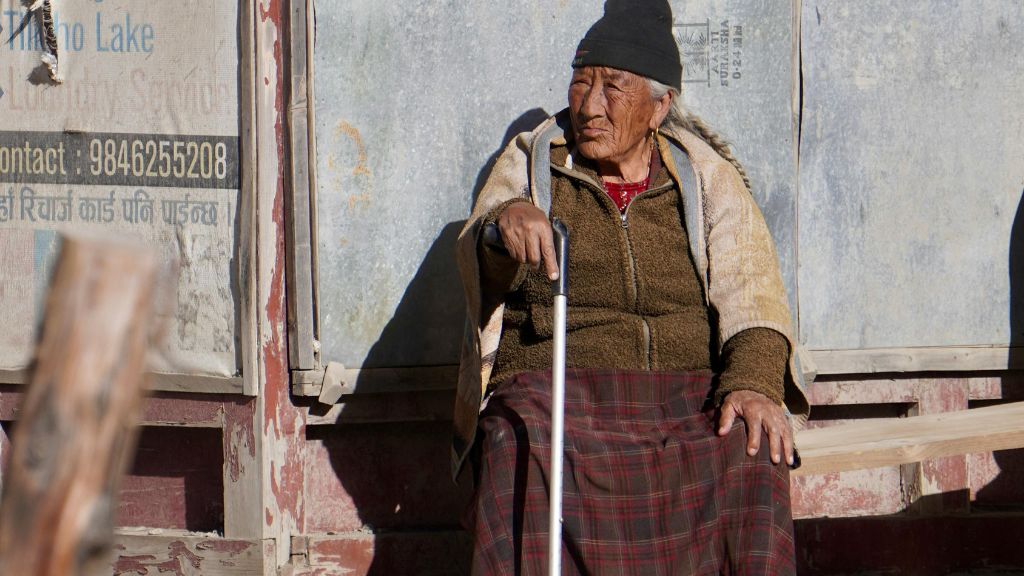
4 – Cultural Richness The route passes through Gurung, Magar, and Tibetan Buddhist communities. Manang – accessible only on foot or by a tiny STOL aircraft, is one of the most authentically preserved high-altitude communities in the Himalayas. Muktinath, with its Hindu and Buddhist temple complex, is among the most sacred pilgrimage destinations in Asia.
5 – Outstanding Value At USD 999, this is exceptional value for an 18-day guided, supported, full-service Himalayan trek. You receive permits, accommodation, meals on trek, a licensed guide, porter support, and all transport. Mountain World Treks has refined this package over years to deliver maximum quality at honest cost.
Manang – The High-Altitude Citadel
- Altitude: 3,519m (11,545ft)
- Valley: Marsyangdi River valley
- Ethnicity: Predominantly Nyishangba (Manang people)
- Religion: Tibetan Buddhism
Manang is the largest settlement in the upper Marsyangdi Valley and serves as the primary acclimatization base for trekkers preparing for Thorong La. But to call it merely a “stop” would be to miss its profound character.
The village is an architectural wonder, stone houses with flat roofs, stacked one above the other up the hillside, connected by narrow lanes and covered archways, overlooked by a whitewashed gompa (monastery) that rings morning bells across the valley. Mani walls, prayer wheels, and chortens line every path. The pace of life here has changed little in centuries.
The Nyishangba people of Manang have a unique history as long-distance traders who were granted special trading rights by royal decree centuries ago, traveling as far as Southeast Asia and Europe. Their homes reflect this history, richer and more elaborate than the typical highland village. Today, trekking has supplemented but not replaced this trading tradition.
In Manang you will:
- Visit the Bhraka and Manang Gompas (monasteries)
- Attend the Himalayan Rescue Association (HRA) altitude lecture, highly recommended for all trekkers
- Acclimatize with a day hike to Gangapurna Lake, Ice Lake (Kicho Tal), or the Praken Gompa viewpoint
- Sample local chang (barley beer), tongba (millet brew), and freshly baked bread from teahouse bakeries
Tilicho Lake – The Jewel of the Annapurna
- Altitude: 4,919m (16,138ft)
- Area: Approximately 4.8 km² Location: Manang District, Gandaki Province, Nepal
- Classification: World’s highest lake by surface area (Guinness World Record holder)
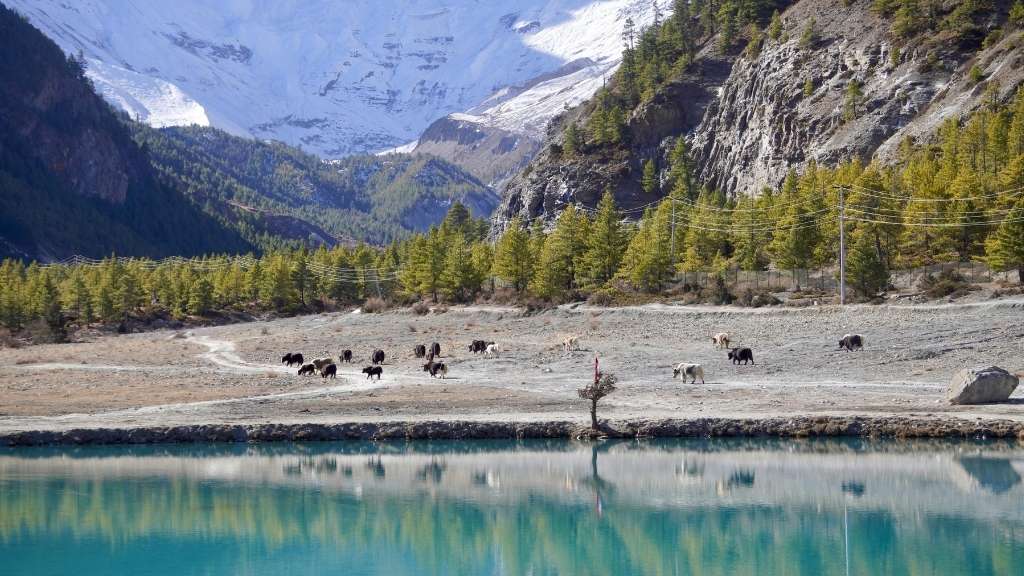
Tilicho Lake is fed by glacial meltwater from the surrounding peaks, Tilicho Peak (7,134m) towers directly above its southern shore. The lake surface freezes in winter and shifts from deep sapphire to pale turquoise depending on light and season. Its remoteness is part of its power, there are no roads, no cable cars, and no easy route to its shores. You earn it.
The trail to Tilicho passes through one of the most spectacular stretches of the entire journey: the exposed high traverse between Shreekharka and Tilicho Base Camp, a narrow path cut into loose shale cliffs above a 1,000m drop into the Marsyangdi valley. It demands sure footing and steady nerves, but rewards handsomely.
The area around the lake is a designated protected zone within the Annapurna Conservation Area (ACAP). Wildlife including Himalayan tahr, snow leopard (rare sightings), and golden eagles inhabit this landscape. Take nothing but photographs and leave nothing but footprints.
Tilicho in Hindu Mythology: The Skanda Purana references Tilicho Lake as “Trishul Tal”, the lake shaped by Shiva’s trident. For centuries, Hindu pilgrims have considered reaching its shores an act of great spiritual merit, making this trek a journey for the soul as much as the body.
Thorong La Pass – The Crown of the Circuit
- Altitude: 5,416m (17,769ft)
- Crossing Direction: East to West (Manang side to Muktinath side)
- Standard Crossing Time: 5–8 hours from Thorong Phedi / High Camp
- Best Crossing Window: Pre-dawn start (3:00–5:00 AM) recommended
Thorong La is the geographical and emotional climax of the Annapurna Circuit. It is not a technical mountain pass, no ropes, crampons, or climbing experience required, but at 5,416m it is high enough that altitude, cold, and weather demand absolute respect.
The ascent from Thorong High Camp gains approximately 500m vertical over roughly 4–5 km of switchbacking trail through snow, rock, and wind. The summit is marked by a cluster of prayer flags that shred and dance in the permanent gale that sweeps the ridge. On a clear morning, the panorama includes Thorong Peak, Khatung Kang, Yakawa Kang, and the vast plains of Mustang stretching north toward Tibet.
The descent to Muktinath is steep and long, nearly 1,600m of height loss over 9 km, but the satisfaction of the crossing carries you down. Muktinath at the bottom, with its 108 water spouts, eternal flame, and temple complex revered by both Hindus and Buddhists, feels like the precisely correct place to arrive after such an effort.
Key Thorong La Facts:
- Best months to cross: March–May and October-November
- The pass can close during heavy snowfall, always check conditions with your guide
- Start no later than 5:00 AM to avoid afternoon winds and reduced visibility
- Altitude sickness is the primary risk, prior acclimatization at Manang and Tilicho is essential
The Route – Detailed Breakdown
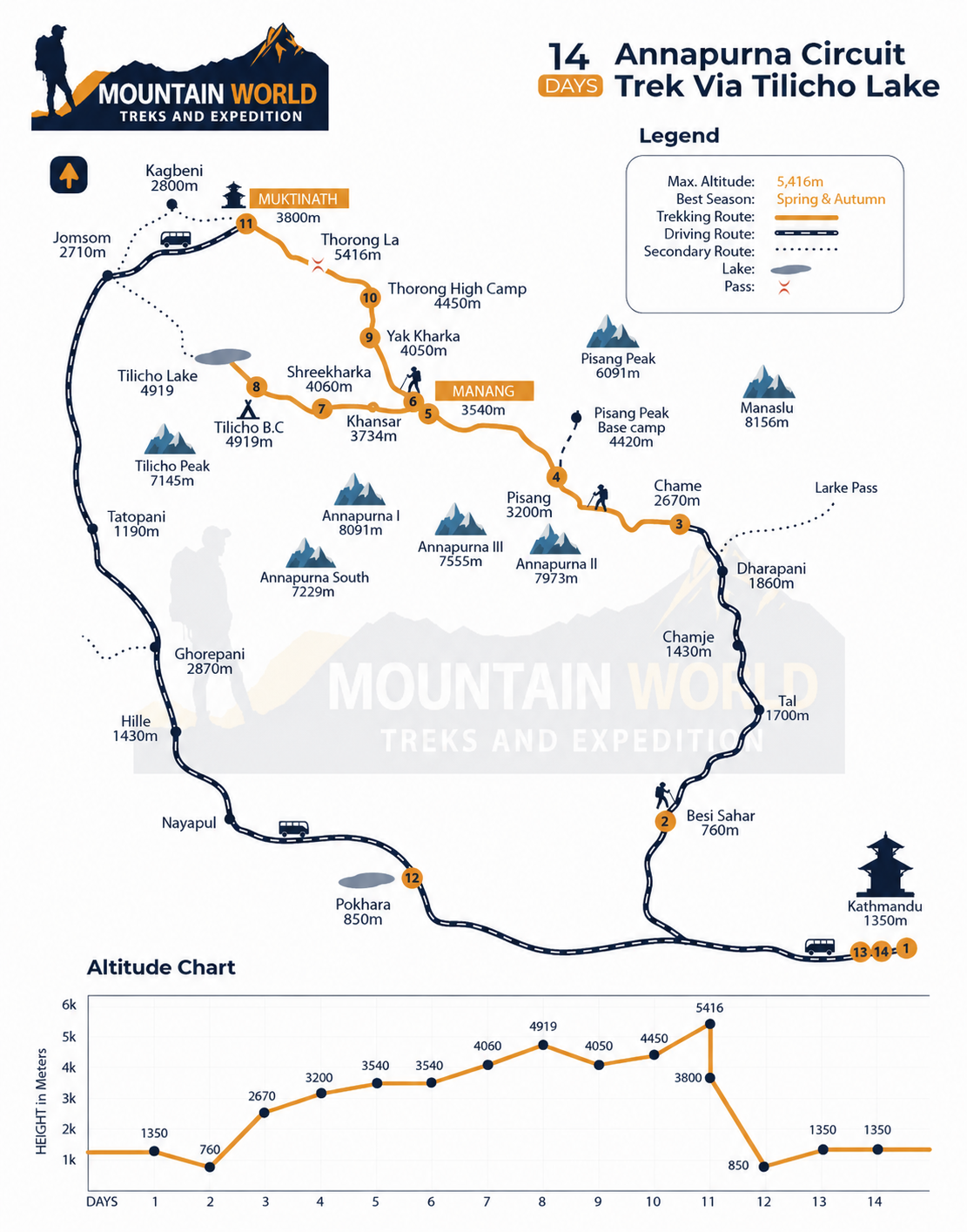
Kathmandu – Besisahar – Chame – Pisang – Manang – Shreekharka – Tilicho Base Camp – Tilicho Lake – Shreekharka – Yak Kharka – Thorong Phedi – Thorong La – Muktinath – Drive to Pokhara
This route follows the classic Annapurna Circuit in the anti-clockwise (east-to-west) direction, which is the standard for crossing Thorong La with the sun and wind in your favor, and then detours south from Manang into the Tilicho valley before returning to continue the main circuit.
Section 1 – Kathmandu to Chame (Days 1–3)
The journey begins in Kathmandu with a welcome briefing and kit check at The hotel. On day 2, a scenic bus or jeep drive follows the Prithvi Highway west along the Trishuli River before turning north into the Marsyangdi valley, arriving in Besisahar, the traditional starting point of the Annapurna Circuit, after approximately 6–7 hours.
Day 3 continues by road (jeep or local bus) from Besisahar to Chame, the district headquarters of Manang District, tracing the Marsyangdi River through subtropical gorges, terraced farmlands, and the market town of Jagat. The valley narrows progressively as the first high peaks, Lamjung Himal to the south and Manaslu to the east, appear above the ridgelines. Chame sits at 2,710m and marks the true gateway to the high country. The famous Paungda Danda rock face, a sheer 1,500m sweep of smooth stone, is visible just east of town.
Section 2 – Chame to Manang via Pisang (Days 5–7) Above Chame the valley opens dramatically. Upper Pisang, perched on a ridge at 3,300m with views of Annapurna II and Gangapurna, is one of the most photographed villages on the circuit. The trail continues through Bhraka and Hongde (where a small airstrip connects Manang to Pokhara) to the broad, wind-swept Manang valley. The landscape here is unmistakably Tibetan – arid, ochre, and vast.
Section 3 – Manang to Tilicho and Back (Days 8–10) From Manang the trail climbs steeply west, passing through Shreekharka to Tilicho Base Camp teahouses. The following morning’s push to the lake itself involves the famous high traverse — arguably the most dramatic single hour of walking on the entire trek. After the lake, trekkers retrace to Shreekharka and then continue upvalley toward the Thorong La approach.
Section 4 – Yak Kharka to Thorong La to Muktinath (Days 11–13) Yak Kharka (4,018m) and Thorong Phedi (4,450m) are the two final acclimatization and rest stops before the pass. High Camp (4,925m) is the preferred overnight for a shorter summit morning. The pass crossing, descent to Muktinath, and exploration of the temple complex fill the final high-altitude days.
Section 5 – Drive to Pokhara (Day 13/14) From Muktinath a jeep or shared vehicle descends through Kagbeni, Jomsom, and the stunning Kali Gandaki Gorge, the world’s deepest gorge by some measurements, to the airport or road connection to Pokhara.