Manaslu Circuit Trek packing list is not complicated, but it is unforgiving. There’s a specific kind of regret that only trekkers understand. It’s not the regret of going too slow or starting too late. It’s the regret of standing at 4,400 meters on a freezing October night, staring at your bag, realizing you left your proper sleeping bag at home because you thought the one you had would be “fine.” It is never fine.
Packing for the Manaslu Circuit Trek is very different from other popular routes like the Annapurna Circuit or Everest Base Camp. While those trails have frequent villages, gear shops, and easy access to supplies, Manaslu is a restricted and remote trekking region. You’ll start at just 710 meters and climb all the way up to Larkya La Pass at over 5,000 meters, experiencing everything from warm forests to freezing alpine conditions, sometimes in a single day.
There are no gear shops above Jagat. There is no Amazon delivery to Samagaun. Whatever you pack in Kathmandu is what you have for the entire trek. So getting your Manaslu Circuit Trek packing list right is essential.
This guide is built around how the trek actually unfolds, day by day and altitude by altitude, so you know not just what to pack, but why each item matters and exactly when you’ll need it.
Packing Ideas for Manaslu |Trek
Before the lists, one principle that overrides everything else:
Pack light. Trek happy.
Aim for a total pack weight of 10–15kg if using a porter, or under 12kg if self-carrying. Every item must serve a purpose, versatility and quality trump quantity.
Most first-time trekkers overpack by 3–5kg. That doesn’t sound like much until you’re climbing a steep switchback at 4,200 meters and your shoulders are screaming. Every gram above your waist at altitude costs you energy you cannot replace. Be ruthless when you pack. If something doesn’t serve at least two purposes on this trek, leave it behind.
Hire a porter. Seriously. Your personal daypack should ideally weigh around 3-5kg. The porter carries your main duffel bag. You carry your daypack with water, snacks, a rain jacket, and your camera. This is not laziness; it is smart trekking. The energy you save not carrying a 15kg pack is energy you spend actually enjoying the mountains.
Dividing Three Altitude Zones of Manaslu Circuit Trek
Here’s the key thing most packing guides miss: Manaslu isn’t one environment. It’s three completely different worlds stacked on top of each other, and your gear needs to work across all of them.
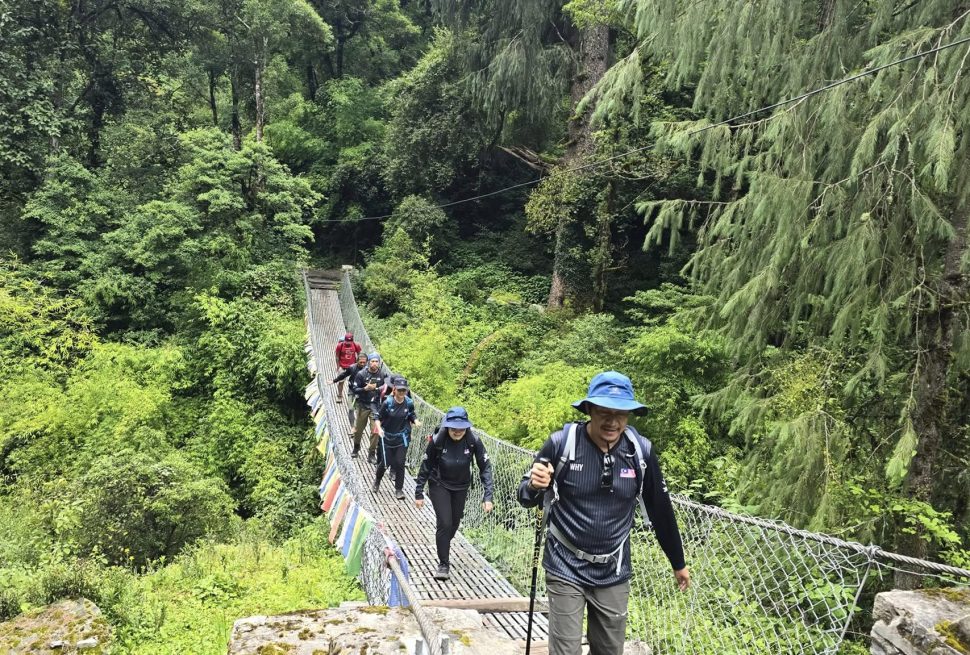
Zone 1 – The Lower Gorge (Days 1-4, 870m-1,860m) Warm, humid, forested. The Budhi Gandaki River thunders below you. You’ll be sweating on the climbs and grateful for lightweight, breathable layers. Heavy gear stays in your porter’s duffel.
Zone 2 – The High Valley (Days 5–8, 2,630m–4,460m) The air is thinner. Mornings and evenings are cold. Afternoons can still surprise you with warmth. This is where your layering system earns its place. This is also where most trekkers realize they under-packed warm gear.
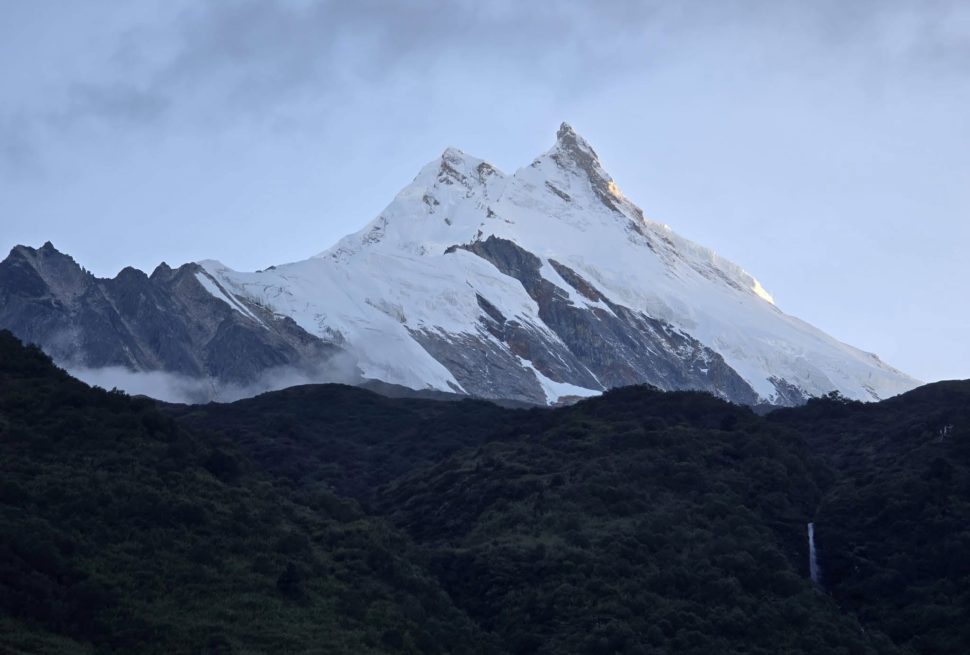
Zone 3 – The Pass and Beyond (Day 9, 5,106m) The Manaslu Circuit spans a 4,176m altitude range in 14 days. The layering system needs to work in humid, warm gorge conditions at 1,000m and in sub-zero, windswept conditions at 5,100m – sometimes within the same day on the pass crossing.
Keep these three zones in your mind as you pack. Every item you bring should answer the question: which zone does this serve?
Day-by-Day Gear Guide: What You’ll Actually Use and When
| Day | Route | Altitude | What You’ll Actually Need |
| 1 | Kathmandu – Machha Khola | 870m | Comfortable travel clothes, broken-in boots for short walk |
| 2 | Machha Khola – Jagat | 1,340m | Lightweight trekking shirt, sun hat, trekking poles, sunscreen |
| 3 | Jagat – Deng | 1,860m | Breathable layers, rain jacket on standby, trekking poles |
| 4 | Deng – Namrung | 2,630m | Mid-layer for morning start, sun protection, plenty of water |
| 5 | Namrung – Samagaun | 3,530m | Fleece mid-layer, warm hat, gloves for morning and evening |
| 6 | Acclimatization – Samagaun | 3,530m | Daypack only, sun hat, sunscreen (UV is intense at altitude) |
| 7 | Samagaun – Samdo | 3,860m | Full layering system, trekking poles essential |
| 8 | Samdo – Dharamsala | 4,460m | Down jacket for arrival, warm sleeping bag tonight is critical |
| 9 | Dharamsala – Larkya La – Bhimtang | 5,106m | Everything. Balaclava, gloves, gaiters, poles, headlamp, snacks |
| 10 | Bhimtang – Tilje | 2,300m | Poles for long knee-testing descent, camp shoes for evening |
| 11 | Tilje – Dharapani | 1,400m | Light layers, trail runners or camp shoes if feet are tired |
| 12 | Dharapani – Kathmandu | 1,400m | Comfortable travel clothes, everything else in the duffel |
The Complete Packing List For Manaslu Circuit Trek
Let’s get into the detail. Everything below has been organised by category, not alphabetically, not randomly, but in order of how much it matters on this specific trek. Some of these items you’ll use every single day. Others you’ll carry for twelve days and only need on day nine. But that’s the thing about Manaslu, the item you need least often is sometimes the one that matters most. Go through this list slowly. Check things off deliberately. And remember the golden rule: if you’re unsure whether something earns its place in your bag, it probably doesn’t.
1. Clothing – The Layering System
This is the most important category on this list. Get the layering system right and everything else becomes manageable.
The key is a three-layer system, not individual items – designed to work in humid, warm gorge conditions and in sub-zero, windswept conditions near the pass.
Base Layer (worn against skin):
- 2–3 merino wool or synthetic moisture-wicking thermal tops
- 2 thermal bottoms
- Avoid cotton entirely, it holds moisture and becomes dangerously cold when wet
Mid Layer (insulation):
- 1 fleece jacket or softshell, your workhorse from Namrung onward
- 1 down jacket, your most important clothing item above 3,500m.
- 3-4 quick-dry trekking shirts for the lower zones
- 2 pairs of trekking pants (convertible zip-off pants work brilliantly, shorts in the gorge, full pants above Namrung)
Outer Layer (weather protection):
- 1 waterproof hardshell jacket with hood, non-negotiable
- 1 waterproof or water-resistant trekking pant, essential for pass day
Head and Hands:
- Warm hat (beanie), worn from Namrung onward. Essential at Dharamsala and on the pass.
- Balaclava for the 3 AM Larkya La start. One of the most underrated items on the packing list.
- Sun hat or wide-brim cap for the lower gorge and high-altitude UV
- Warm gloves (fleece or softshell), worn from Samdo onward. Thin liner gloves underneath on the pass crossing.
Feet:
- 2-3 pairs of moisture-wicking trekking socks (wool or synthetic), plus liner socks worn under trekking socks to reduce friction and blister risk.
- Camp sandals or lightweight shoes, your feet will thank you every evening when you can finally take your boots off
2. Footwear – The Most Personal Decision You’ll Make
Your boots will either be your best friend or your worst enemy on this trek. There is no middle ground.
The requirements are simple but firm: waterproof, ankle-supporting, and most importantly, already broken in before you arrive in Kathmandu.
In addition to your main boots, pack lightweight camp shoes or sandals for relaxing at teahouses and airing out your feet after long hiking days.
Brand-new boots on the Manaslu Circuit is one of the most common and most painful mistakes trekkers make. The trail above Namrung is rocky, uneven, and sometimes icy. Blisters at altitude are not a minor inconvenience, they slow your pace, drain your energy, and on a remote trail with no pharmacies, they can become a genuine problem.
Wear your trekking boots on every hike you do in the weeks before Nepal. They should feel like old friends by the time you step onto the trail.
3. Sleeping Bag Must Carry
This is where most budget trekkers make their biggest mistake. Above Samagaun, even in October, peak trekking season, night time temperatures can drop to -10°C or below. That is not just cold. That is minus ten degrees Celsius. the kind of cold that seeps through teahouse walls, turns the water in your bottle to slush by morning, and makes a thin sleeping bag feel like a cruel joke. Teahouses at this altitude are basic stone and wood structures. They are not insulated. They are not heated through the night. The blankets provided are rarely enough on their own.
- Sleeping bag: Rated to at least -10°C. A sleeping bag rated for minus 10 degrees or lower is essential. This is the single most important piece of gear above 4,000 meters. Rent a good one in Kathmandu if you don’t own one but check the temperature rating before you hand over the money.
- Sleeping bag liner: Adds 3-5°C of warmth and keeps your bag clean. Lightweight and worth every gram.
- Inflatable pillow: Optional, but teahouse pillows are thin and often damp. Many experienced trekkers carry their own.
4. Trekking Equipment for Manaslu Circuit
Clothing keeps you warm. Equipment keeps you moving. These are the physical tools that will carry you across 177 kilometers of Himalayan terrain, protect your joints on the long descents, light your way at 3 AM on pass day, and keep your gear dry when the weather turns without warning.
Unlike clothing, most of these items don’t need to be expensive, but they do need to be right. A cheap headlamp with fresh batteries is infinitely better than an expensive one with dead ones. Trekking poles from Thamel’s rental shops will protect your knees just as well as carbon fibre ones that cost ten times more. Focus on function, not brand names. Here’s what you actually need:
- Trekking poles (2): Non-negotiable for the descent from Larkya La. The downhill to Bhimtang is long, steep, and relentless on the knees. Poles don’t just help, they protect joints you’ll want working properly for the rest of your life.
- Backpack (50–70L main): A capacity of 50–70 liters is ideal – sufficient space without being too bulky. Look for an adjustable harness system, padded shoulder straps, a supportive hip belt, and a rain cover.
- Daypack (25–35L): For what you carry yourself while your porter takes the main bag. Water, snacks, rain jacket, camera, first aid kit.
- Duffel bag: For your porter. Most agencies provide one, but confirm in advance.
- Headlamp + spare batteries: You will start pass day at 3-4 AM in complete darkness. Cold drains batteries faster than you expect. Keep spares in an inner pocket close to your body overnight.
- Trekking gaiters: Highly recommended for pass day when trail conditions can be icy or snowy even in autumn.
- Micro crampons / Yaktrax: At 5,167 meters, Larkya La Pass is usually snow-covered and icy. Micro crampons are often used on the descent. Lightweight, pack flat, and potentially lifesaving on icy trail sections.
5. Personal Care and Hygiene
The wilderness doesn’t care about your skincare routine. But it will destroy your skin if you don’t protect it.
- High SPF sunscreen (50+): UV radiation at altitude is brutal. At 5,000 meters you’re receiving significantly more UV exposure than at sea level. Reapply constantly.
- SPF lip balm: Your lips will crack and bleed above 4,000m without it. This is not vanity – it is comfort.
- Moisturizer: The cold, dry air at altitude dehydrates skin fast.
- Wet wipes / dry shampoo: Showers above Samdo are cold, infrequent, and cost extra. Wet wipes are your daily reset.
- Hand sanitizer: Teahouse hygiene varies. Use it before every meal, every time.
- Biodegradable soap and shampoo: The Manaslu Conservation Area has strict environmental rules. Use biodegradable products only.
- Personal toilet paper and small trowel: Above certain elevations, facilities are basic or nonexistent.
- Microfibre towel: Quick-drying, compact. Teahouses rarely provide towels above the lower villages.
6. First Aid and Health
Manaslu is remote. The nearest hospital is a helicopter ride away. Your first aid kit is not optional.
Essential medical kit:
- Diamox (acetazolamide) – consult your doctor before the trek. A standard precaution for high altitude.
- Ibuprofen and paracetamol – for headaches, muscle pain, fever
- Oral rehydration salts – dehydration at altitude is faster than you expect
- Blister kit – moleskin, compeed, antiseptic
- Antihistamines
- Diarrhea medication (loperamide) – stomach issues on the trail are common
- Antiseptic cream and wound dressings
- Pulse oximeter – a small device that measures blood oxygen saturation. Inexpensive, lightweight, and one of the most useful tools for monitoring altitude acclimatization. If your SpO2 drops below 80% and symptoms appear, it’s time to descend.
- Personal prescription medications – bring more than you think you’ll need
7. Documents and Money
This section is short but critical. Get it wrong and you don’t trek.
- Passport (original) – checked at every permit checkpoint
- Nepal visa
- Trekking permits (MRAP, MCAP, ACAP) – your agency handles these, but carry copies
- Travel insurance documents – including the emergency evacuation number. Keep this accessible, not buried in your bag.
- Cash in Nepali rupees: There are no ATMs on the Manaslu Circuit after you leave the road. None. Bring enough cash for the entire trek – meals, hot showers, WiFi, tips, and emergency expenses.
- Emergency contact card – kept on your person, not in your bag
8. Electricity and Charging Facilities
- Camera or smartphone – the landscapes will demand documentation
- Portable power bank (20,000mAh minimum) – charging costs $2–5 per session at teahouses and electricity above Samdo is unreliable
- Universal travel adapter for Kathmandu
- Waterproof phone case or dry bag – river crossings, rain, and sweat are real threats to electronics
- Offline maps downloaded (Maps.me or Gaia GPS with Manaslu Circuit loaded) – mobile signal disappears for long stretches above Philim
What to Rent vs. Buy in Kathmandu?
Most trekking gear such as sleeping bags, down jackets, and trekking poles can be rented in Kathmandu. Thamel district has dozens of gear shops with reliable rental and budget purchase options.
| Item | Rent or Buy? | Approximate Cost |
| Sleeping bag (-10°C rated) | Rent | $1–2/day |
| Down jacket | Rent | $1–2/day |
| Trekking poles | Rent – Buy | $1/day – $7 (cheaper one) |
| Duffel bag for porter | Often provided by agency | Free– |
| Gaiters | Rent – Buy | $0.50–1/day – $5 |
| Micro crampons | Buy (cheap, keep) | $5–15 |
| Waterproof boots | Buy (must be broken in) | $80–200 |
| Headlamp | Buy | $10–25 |
| Pulse oximeter | Buy | $15–30 |
One important note on rentals: Always check the temperature rating on sleeping bags. A bag labeled “good for cold weather” and a bag rated to -10°C are not the same thing. Ask specifically: “What is the comfort rating in Celsius?” The night before Larkya La Pass, that question will matter.
What to Leave Behind – Not Necessary Items on Trek
Just as important as what you pack is what you don’t.
- Jeans or cotton trousers – heavy, slow-drying, dangerously cold when wet
- More than 2 books – your phone has apps. One paperback is enough.
- Full-size toiletries – transfer to small containers only
- Jewelry or valuables – there’s nowhere to wear them and real risk of loss
- Excessive snacks from home – teahouses sell snacks. Pack a small personal stash but don’t overdo it.
- Hair dryer or electrical appliances – electricity above 3,500m is solar-dependent and expensive
- Anything you haven’t used in the last year – if it hasn’t earned its place in daily life, it won’t earn it on the mountain
The Honest Packing Truth
Here’s what fourteen days on the Manaslu Circuit actually teaches you about gear: the expensive stuff matters less than you think, and the basics matter more than you think.
The down jacket that cost $300 and the one that cost $50 both keep you warm if they’re rated correctly. The sleeping bag that came free with a credit card offer will fail you at 4,400 meters in a way that a properly rated rental bag never will.
Invest in the right sleeping bag. Break in your boots. Bring a balaclava even if it feels excessive. Carry a pulse oximeter even if you feel completely fine.
And when you’re standing on the Larkya La in the morning, warm enough to actually look around and take in what you’re standing in the middle of a horizon of Himalayan giants in every direction, the trail empty ahead and behind you, you’ll understand why none of this packing advice was excessive. It was just enough.
Does the Packing List Change by Trekking Season?
Short answer: Yes, It may change with the trekking season, slightly in the lower zones, not at all near the pass.
Autumn trekkers (September to November) get the clearest skies and most stable weather, but also the coldest nights above 4,000 meters. The full packing list above is built around autumn conditions.
Spring trekkers (March to May) will find the lower gorge warmer and more forgiving; you can get away with slightly lighter layers between Machha Khola and Namrung, and the rhododendron forests in full bloom make those early days genuinely beautiful.
However, and this is important: the pass day kit does not change between seasons. Larkya La at 5,106 meters is cold, windy, and potentially icy in both spring and autumn. The balaclava, micro crampons, warm gloves, and properly rated sleeping bag are non-negotiable regardless of when you go.
The only trekkers who can genuinely travel lighter on Manaslu are the ones who have already crossed the pass before and know exactly what to expect. If this is your first time, pack for the worst and enjoy being pleasantly surprised.
How Much Does Gear Actually Cost?
This is the question most packing guides quietly avoid. So, here’s an honest answer. If you already own good hiking boots, a waterproof jacket, and basic trekking clothes, your additional gear spend in Kathmandu will be relatively modest. If you’re starting from scratch, it adds up faster than you expect. Here’s a realistic breakdown:
| Scenario | What You Need to Spend | Estimated Cost |
| Already have boots, jacket, trekking clothes | Rent sleeping bag, down jacket, poles. Buy headlamp, pulse oximeter, micro crampons, first aid kit, sunscreen, personal items | $80 to $150 |
| Have some gear but missing key items | Rent sleeping bag and down jacket. Buy or rent poles, gaiters. Replace any worn-out clothing | $100 to $200 |
| Starting completely from scratch | Buy boots (essential, cannot rent). Rent sleeping bag, down jacket, poles, gaiters. Buy all personal items, electronics, first aid | $300 to $400 |
A few things worth noting. Boots are the one item you should always buy rather than rent, and buy them at home before you travel so you have time to break them in properly. Everything else can be rented perfectly well in Kathmandu’s Thamel district. The rental gear is generally reliable, just inspect each item before you take it, check zips on the down jacket, check the temperature rating on the sleeping bag, and test the headlamp with fresh batteries.
The total gear cost above does not include clothing you buy from scratch. A complete set of trekking clothing (base layers, mid layers, outer shell, trekking pants) bought new in Kathmandu adds roughly $100 to $250 depending on whether you buy local brands or imported gear. Local Nepali brands are perfectly adequate for a single trek and significantly cheaper.
Bottom line: budget $100 to $250 for gear on top of your trek package if you come reasonably equipped. Budget $300 to $400 if you’re starting from nothing.
You May visit the cost breakdown for Manaslu Circuit trek.
Quick-Reference Master Packing Checklist
Print this. Screenshot it. Check it off the night before you leave Kathmandu. Everything on this list has been mentioned in the guide above for a reason.
| Category | Item | Packed |
| Clothing | Merino wool or synthetic thermal tops (x3) | |
| Thermal bottoms (x2) | ||
| Fleece jacket or softshell | ||
| Down jacket (rated for cold) | ||
| Quick-dry trekking shirts (x2) | ||
| Trekking pants (x2, convertible preferred) | ||
| Waterproof hardshell jacket with hood | ||
| Waterproof trekking pants | ||
| Warm hat or beanie | ||
| Balaclava | ||
| Sun hat or wide-brim cap | ||
| Warm gloves (fleece or softshell) | ||
| Thin liner gloves | ||
| Trekking socks wool or synthetic (x3 pairs) | ||
| Liner socks (x2 pairs) | ||
| Camp sandals or lightweight shoes | ||
| Footwear | Waterproof trekking boots (broken in) | |
| Sleeping | Sleeping bag rated to -10 degrees C | |
| Sleeping bag liner | ||
| Inflatable pillow (optional) | ||
| Equipment | Trekking poles (x2) | |
| Main backpack 50 to 70L with rain cover | ||
| Daypack 25 to 35L | ||
| Duffel bag for porter | ||
| Headlamp with spare batteries | ||
| Trekking gaiters | ||
| Micro crampons or Yaktrax | ||
| Hygiene | Sunscreen SPF 50 or higher | |
| SPF lip balm | ||
| Moisturizer | ||
| Wet wipes and dry shampoo | ||
| Hand sanitizer | ||
| Biodegradable soap and shampoo | ||
| Toilet paper and small trowel | ||
| Micro Fibre towel | ||
| First Aid | Diamox (consult doctor first) | |
| Ibuprofen and paracetamol | ||
| Oral rehydration salts | ||
| Blister kit (moleskin, compeed, antiseptic) | ||
| Antihistamines | ||
| Diarrhea medication (loperamide) | ||
| Antiseptic cream and wound dressings | ||
| Pulse oximeter | ||
| Personal prescription medications | ||
| Documents | Passport original | |
| Nepal visa | ||
| Trekking permit copies (MRAP, MCAP, ACAP) | ||
| Travel insurance documents with emergency number | ||
| Cash in Nepali rupees (enough for full trek) | ||
| Emergency contact card | ||
| Electronics | Camera or smartphone | |
| Portable power bank 20,000mAh minimum | ||
| Universal travel adapter | ||
| Waterproof phone case or dry bag | ||
| Offline maps downloaded |
Planning your Manaslu Circuit Trek? Read our companion guides on Manaslu Circuit Trek Cost and Manaslu Circuit Trek Difficulty for everything else you need to know before you go.
Frequently Asked Questions: Manaslu Circuit Trek Packing List
Q: What is the most important item to pack for the Manaslu Circuit Trek?
A sleeping bag rated to -10 degrees Celsius. Above 4,000 meters, teahouses are unheated stone structures and October nights can drop to minus ten. Every other item has a workaround. A wrong sleeping bag does not.
Q: Can I rent all my gear in Kathmandu?
Most of it yes. Sleeping bags, down jackets, trekking poles, and gaiters are all available in Thamel at $1 to $2 per day. The one exception is boots, these must be bought and broken in before you arrive, not rented on arrival day.
Q: How heavy should my daypack be on the Manaslu Circuit Trek?
6 to 8 kilograms is the ideal daypack weight. That covers water, snacks, rain jacket, camera, and first aid. Your porter carries everything else. Every extra kilogram above that feels like three kilograms by day seven at altitude.
Q: Do I need crampons for the Larkya La Pass?
Micro crampons or Yaktrax are strongly recommended. The pass is frequently snow-covered and icy even in peak season. They weigh almost nothing, cost $5 to $15 in Kathmandu, and make the descent significantly safer.
Q: Is there anywhere to buy forgotten gear on the trek?
Basic supplies are available in lower villages but nothing reliable above Jagat. There are no proper gear shops on the high sections of the route. Whatever you need above 3,000 meters must be in your bag when you leave Kathmandu.
Q: How many pairs of socks do I need?
Three pairs of trekking socks and two pairs of thin liner socks for a 12 to 14-day trek. Liner socks reduce friction and blister risk significantly. Wash and dry socks on rest days in the lower villages while drying conditions are still good.
Q: What goes in my daypack versus my porter’s duffel?
Daypack carries what you need during walking hours – water, snacks, rain jacket, sunscreen, camera, permits, and daily cash. The duffel carries everything else – sleeping bag, spare clothing, toiletries, electronics, and full first aid kit.
Q: Is a sleeping bag liner necessary?
Yes. A liner adds 3 to 5 degrees Celsius of warmth and keeps your rental sleeping bag clean across two weeks of teahouse trekking. It weighs almost nothing and costs $15 to $30. It earns its place in your bag every single night above 4,000 meters.
Q: What should I absolutely not pack for Manaslu?
Cotton clothing in any form. Cotton holds moisture and dries slowly, which becomes a cold risk at altitude, not just a comfort issue. Also leave behind full-size toiletries, heavy books, valuables, and anything packed without a specific purpose in mind.
Q: How much cash should I bring for the trek?
Budget $10 to $15 per day for personal expenses like hot showers, WiFi, charging, and snacks. Food and accommodation are included in your package. Add extra for guide and porter tips at the end of the trek. There are no ATMs after the road ends, so bring more than you think you need.
Q: Can I do the Manaslu Circuit with just a carry-on bag?
Not recommended. A proper sleeping bag, down jacket, hardshell, layering system, and 14 days of gear simply does not fit in a carry-on without compromising on something important. Most Kathmandu hotels offer free luggage storage for items you do not need on the trail.