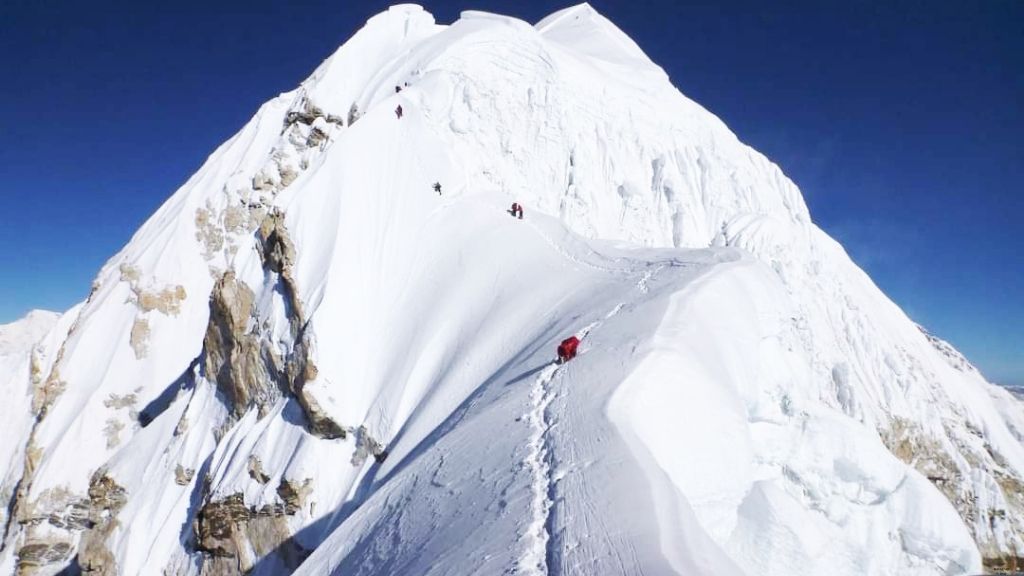
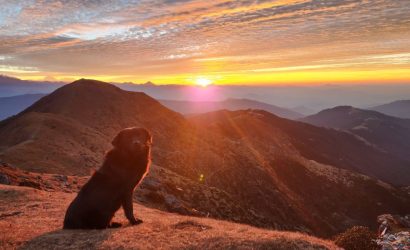
The Mera Peak Climb is a 15-day mountaineering adventure in Nepal that takes you to the summit of Mera Peak (6,476 m / 21,247 ft), the highest trekking peak in Nepal. No previous technical climbing experience is required, making it an excellent choice for fit trekkers looking to complete their first Himalayan peak. Guided Mera Peak climbing packages start from USD 2,399 per person.
Located in the remote Hinku Valley of the Everest region, Mera Peak offers one of the most rewarding climbing experiences in Nepal. The journey combines scenic trekking through rhododendron forests, alpine meadows, and traditional mountain villages before reaching high-altitude glaciers and the final summit ascent.
Although Mera Peak is considered a non-technical trekking peak, the climb requires good physical fitness, previous high-altitude trekking experience, and proper acclimatization. During the final summit push, climbers use basic mountaineering equipment such as crampons, an ice axe, a climbing harness, and a fixed rope under the guidance of experienced climbing guides.
Standing on the summit of Mera Peak rewards climbers with one of the finest panoramic views in the Himalayas. On a clear day, you can see five of the world’s highest mountains: Mount Everest (8,849 m), Lhotse (8,516 m), Makalu (8,485 m), Cho Oyu (8,188 m), and Kangchenjunga (8,586 m), along with countless snow-covered peaks stretching across eastern Nepal.
The best time for the Mera Peak Climb is during spring (March to May) and autumn (September to November), when the weather is generally stable, mountain views are clear, and climbing conditions are at their best.
Whether you’re preparing for higher Himalayan expeditions or simply chasing the dream of standing above 6,000 meters, the Mera Peak Climb offers an unforgettable first peak climbing experience in Nepal, combining adventure, stunning scenery, and a genuine sense of achievement.
Mera Peak Climbing Permit, Makalu Barun National Park Permit & Local Permit
Highest Sleeping Altitude
Khare (5,045 m)
Guide
Licensed Trekking & Climbing Guide
Altitude Gain
From 2,860 m (Lukla) to 6,476 m (Summit)
Additional Trip Facts
Airport: Kathmandu (TIA)
Region: Everest (Hinku Valley)
Peak Category: Trekking Peak
Fitness Level: Good to Excellent
Minimum Age: 16+ (recommended)
Travel Style: Guided Adventure
WiFi: Available in lower villages (limited)
Charging: Available at teahouses (extra fee)
Trip Starts: Daily departures during climbing seasons
Customization: Private and group climbs available
Mera Peak Climb Highlights
Summit Mera Peak (6,476 m / 21,247 ft), the highest trekking peak in Nepal.
Enjoy breathtaking panoramic views of Mount Everest, Lhotse, Makalu, Cho Oyu, and Kangchenjunga from the summit.
Experience your first Himalayan peak climbing adventure with basic mountaineering techniques.
Trek through the remote and less-crowded Hinku Valley in the Everest region.
Walk across beautiful rhododendron forests, alpine meadows, rivers, and glacial landscapes.
Stay in traditional Himalayan teahouses and experience the warm hospitality of local communities.
Learn to use climbing equipment, including crampons, harness, ice axe, and fixed ropes, under the guidance of professional climbing guides.
Enjoy a scenic mountain flight between Kathmandu and Lukla, the gateway to the Everest region.
Acclimatize gradually to increase your chances of a safe and successful summit.
Cross the Mera Glacier and reach High Camp (5,780 m) before your summit push.
Witness unforgettable sunrise and sunset views over the Himalayas.
Explore one of Nepal’s quieter trekking routes with fewer crowds than the Everest Base Camp Trail.
Climb with experienced, government-licensed trekking and climbing guides.
Suitable for fit trekkers with previous high-altitude trekking experience, even without technical climbing experience.
Earn the unforgettable achievement of standing on a 6,000-meter Himalayan peak.
Who Will Be Your Guide on the Mera Peak Climb?
Your safety and success on the Mera Peak Climb depend greatly on the experience of your guide. At Mountain World Treks, every expedition is led by government-licensed trekking and climbing guides with extensive experience in Nepal’s high mountains.
Our guides are trained in high-altitude trekking, mountaineering techniques, first aid, and emergency response. They will help you throughout the journey, from managing the trekking pace and monitoring acclimatization to providing climbing instruction and leading the final summit ascent.
Your Guide Will Help You With
Safe route planning and navigation
Proper acclimatization and altitude monitoring
Basic mountaineering training, including the use of crampons, harnesses, ice axes, and fixed ropes
Daily safety briefings and weather updates
Emergency decision-making if conditions change
Sharing local culture, history, and knowledge of the Everest region
Our goal is not only to help you reach the summit but also to ensure you have a safe, enjoyable, and memorable Himalayan climbing experience.
Why climb with Mountain World Treks?
Our experienced local Sherpa guides know Mera Peak inside and out, providing professional support, expert local knowledge, and a strong commitment to your safety throughout the expedition.
Who Is the Mera Peak Climb For?
The Mera Peak Climb is ideal for fit trekkers looking to summit their first Himalayan peak above 6,000 metres. While no previous technical climbing experience is required, good physical fitness, prior high-altitude trekking experience, and proper preparation are essential for a safe and successful climb.
The Mera Peak Climb Is Ideal For
Trekkers who have completed high-altitude hikes such as Everest Base Camp, Annapurna Circuit, Manaslu Circuit, or similar routes.
Adventurers with good cardiovascular fitness who can hike 6 to 8 hours per day over consecutive days.
Climbers looking for their first Himalayan peak climbing experience.
Travelers willing to learn basic mountaineering skills, including the use of crampons, a harness, and fixed ropes, under the guidance of experienced climbing guides.
Anyone committed to following a proper acclimatization schedule and safety instructions throughout the expedition.
You May Need More Preparation If You
Have never trekked above 4,500 metres.
Have previously experienced severe altitude sickness.
Have less than three months to prepare physically before your trip.
Are uncomfortable walking on snow, glaciers, or steep mountain terrain.
Not Sure If Mera Peak Is Right for You?
Every climber has a different level of fitness and trekking experience. If you’re unsure whether the Mera Peak Climb is the right adventure for you, our experienced team is happy to assess your experience and recommend the most suitable itinerary before you book.
Mera Peak Climb Preparation Guide for Beginners
Planning your first Mera Peak Climb? Proper preparation is the key to a safe and successful summit. While no previous technical climbing experience is required, you should have good physical fitness, previous high-altitude trekking experience, and enough time to train before your expedition.
Before You Go
Train for 8 to 12 weeks with cardio, hiking, and strength exercises.
Complete a high-altitude trek if possible before attempting Mera Peak.
Purchase travel insurance that covers peak climbing and helicopter evacuation.
Break in your trekking boots before arriving in Nepal.
Pack warm clothing in layers for changing mountain weather.
Carry enough Nepali Rupees, as ATMs are not available on the route.
During the Climb
Walk slowly and follow your guide’s pace.
Drink 3 to 4 litres of water each day.
Follow the acclimatization schedule carefully.
Eat regular meals to maintain your energy.
Tell your guide immediately if you experience symptoms of altitude sickness.
Summit Day
Start before dawn for the best climbing conditions.
Wear warm layers and use your climbing equipment correctly.
Follow your guide’s instructions on snow and fixed ropes.
Remember that a safe descent is just as important as reaching the summit.
Can Beginners Climb Mera Peak?
Yes. Many first-time climbers successfully summit Mera Peak every year. With proper training, gradual acclimatization, and the support of experienced Sherpa climbing guides, Mera Peak is considered one of the best first Himalayan peaks for aspiring mountaineers.
Why Choose the Mera Peak Climb? Top 8 Reasons
The Mera Peak Climb is one of Nepal’s most rewarding Himalayan adventures. Here are the top reasons why climbers from around the world choose Mera Peak as their first 6,000-meter expedition.
1. Summit Nepal’s Highest Trekking Peak : Reach the summit of Mera Peak (6,476 m / 21,247 ft), the highest trekking peak in Nepal open to non-technical climbers.
2. Incredible Himalayan Panorama: Enjoy breathtaking views of Mount Everest, Lhotse, Makalu, Cho Oyu, and Kanchenjunga from one spectacular summit.
3. Ideal First Himalayan Peak: No previous technical climbing experience is required. Your climbing guide will teach you the basic mountaineering skills needed for the summit.
4. Remote and Less Crowded Route: Trek through the peaceful Hinku Valley, where you’ll enjoy quieter trails, beautiful forests, and authentic Himalayan scenery.
5. Authentic Local Culture: Experience the warm hospitality of Sherpa communities, visit Buddhist monasteries, and discover the traditions of Nepal’s mountain people.
6. Well-Planned Acclimatization: The gradual ascent gives your body time to adjust to the altitude, helping improve safety and increasing your chances of a successful summit.
7. Excellent Preparation for Future Climbs: Mera Peak is an ideal stepping stone for climbers planning future adventures such as Island Peak, Lobuche East, or higher Himalayan expeditions.
8. Outstanding Value: A guided 15-day Mera Peak Climb offers an unforgettable Himalayan climbing experience with professional guides, stunning scenery, and excellent value for money.
Mera Peak Climb via Chatrala Pass – 15-Day Detailed Itinerary
The Mera Peak Climb via Chatrala Pass (15 Days) is a remote and adventurous route that combines high mountain passes, wild Himalayan valleys, and a safe ascent to Mera Peak (6,476m). The journey starts with a scenic flight to Lukla and follows a less crowded trekking trail via Chatrala Pass before joining the classic Mera Peak route.
Route: Kathmandu → Lukla → Chutanga → Chatrala Pass → Hinku Valley → Khare → Mera High Camp → Summit (6,476 m) → Return
Total trekking distance: ~120 km (approx. 75 miles)
Maximum altitude: 6,476 m (21,247 ft) - Mera Peak summit
Difficulty: suitable for fit trekkers with no prior technical climbing experience
Best seasons: Spring (March–May) and Autumn (September–November)
Day 01 :
Arrival in Kathmandu (1,400m)
Upon your arrival at Tribhuvan International Airport in Kathmandu, our team will warmly welcome you and transfer you to your hotel. After check-in, you can rest or explore the lively streets of Thamel depending on your arrival time.
In the evening, a detailed trek briefing will be conducted where your guide will explain the full itinerary, safety protocols, altitude awareness, and gear checklist. This is also the time for a final equipment check to ensure everything is ready for the climb ahead.
Day 02 :
Fly to Lukla 2,840 m & Trek to Chutanga | 3,050m | 7 km | 3-4 hours
Early in the morning, take a scenic mountain flight to Lukla, one of the most thrilling airports in the world. From here, your trekking adventure begins through peaceful forest trails filled with pine, rhododendron, and small Sherpa settlements.
The trail gradually ascends to Chutanga, a quiet alpine campsite surrounded by hills and fresh mountain air. This is your first night in the Everest region, allowing your body to begin adjusting to altitude.
Day 03 :
Chutanga to Thuli Kharka via Chatrala Pass | 4,600 m | 12 km | 7-9 hours
The most dramatic day of the approach. A steep climb through thinning alpine scrub reaches Chatrala Pass (4,600 m) - your first major viewpoint, with Numbur Himal (6,958 m) and Kongde Ri (6,187 m) dominating the horizon. The trail then descends 820 m to the yak grazing grounds of Thuli Kharka. Today's "climb high, sleep low" pattern kickstarts your acclimatisation.
Day 04 :
Thuli Kharka to Kothe | 3,600m | 10 km | 5-6 hours
The trail descends through dense rhododendron and pine forest into the Hinku Valley, one of Nepal's most pristine and uncrowded high-altitude valleys. You follow the Hinku Khola (river) downstream past yak caravans to the riverside settlement of Kothe. Wildlife including Himalayan tahr and musk deer are commonly spotted here.
Day 05 :
Day 05 – Kothe to Thangnak | 4,350m 8 km | 4-5 hours
The trail climbs steadily up the narrowing Hinku Valley alongside the river, crossing glacial streams on wooden bridges and boulder fields. At around 4,000 m, your first clear views of Mera Peak's broad snow dome appear above the valley head, a powerful moment for most climbers. Thangnak sits at the edge of the Dig Glacier moraine.
Day 06 :
Thangnak to Khare | 5,045m | 6 km | 5 hours
The trail crosses the Dig Glacier moraine and climbs steadily above 5,000 m to Khare, the last permanent settlement and base area for Mera Peak climbers. Pace slows noticeably here; this is normal at 53% of sea-level oxygen. Mera Peak's twin summits loom directly above. Your guide conducts a pulse oximeter check on arrival.
Day 07 :
Climbing Training and Acclimatization at Khare
A full rest and training day, essential before pushing higher. Your guide runs a hands-on skills session on the glacier above Khare covering crampon technique, ice axe use, harness fitting, jumar (ascender) operation, and roped-team protocol. Most first-timers feel confident within two hours of practice. The afternoon is free for rest, gear checks, and high-calorie preparation for summit day.
Day 08 :
Khare to Mera High Camp | 5,780m | 5 km | 5-6 hours
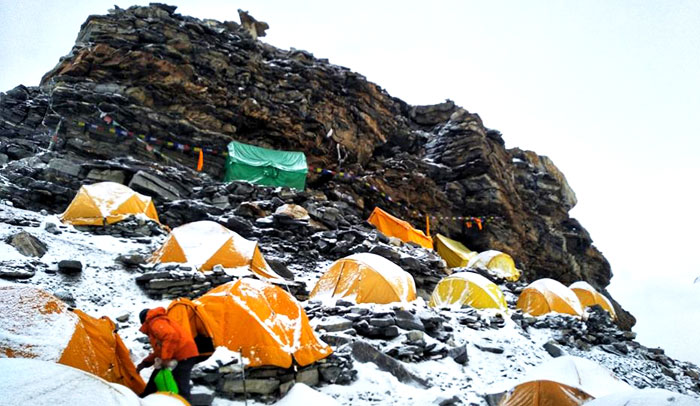
Crampons on, roped up, the team crosses the Mera Glacier to reach High Camp on a broad snow shelf at 5,780 m. The views already include Everest (8,849 m), Lhotse, Makalu, and Cho Oyu on the horizon. At camp, your guide briefs the summit push: departure at 01:00–02:00 AM, layering strategy for −15°C to −25°C, and rope-team order. Sleep by 18:00.
Day 09 :
Summit Mera Peak (6,476 m) & Descent to Khare | 5,045m | 8 km | 10-12 hours
The alarm sounds at 01:00 AM. By headlamp, the team ascends snow slopes (30–45° gradient) on fixed ropes to the summit ridge. From the top of Mera Peak, the highest trekking peak in Nepal, five of the world's six highest mountains are visible simultaneously: Everest (8,849 m), Kangchenjunga (8,586 m), Lhotse (8,516 m), Makalu (8,485 m), and Cho Oyu (8,188 m). After summit celebrations, the team descends carefully back to Khare for a well-earned rest.
Day 10 :
Reserve / Contingency Day at Khare | 5,045 m
A built-in buffer for the most common summit delays, adverse weather, a team member needing extra acclimatisation time, or Lukla flight disruptions. If the summit was completed on schedule and conditions are good, this becomes a rest and recovery day with optional glacier walks. This day meaningfully improves overall summit success rates.
Day 11 :
Khare to Kothe | 3,600m | 14 km | 5-6 hours
The long descent from Khare back to Kothe is one of the most satisfying days of the expedition. Every step downward brings thicker air, warmer temperatures, and a returning appetite. The route retraces the ascent path through Thangnak and along the Hinku Khola. What took two days going up is comfortably covered in one on the way down.
Day 12 :
Kothe to Thuli Kharka | 3,780m | 10 km | 5-6 hours
A steady climb back through rhododendron forest to the open pastures of Thuli Kharka. The ascent feels far gentler on acclimatised, post-summit legs. From the tea house terrace on a clear evening, Mera Peak is visible to the north, a satisfying view of the summit you have just stood on.
Day 13 :
Thuli Kharka to Lukla via Chatrala Pass | 2,840m | 16 km | 6-7 hours
The final trekking day crosses Chatrala Pass for the second and last time, then descends all the way to Lukla. The climb to the pass feels noticeably easier with acclimatised lungs, a reminder of how far your body has adapted. From the pass, a long final descent through forest and farmland brings you into Lukla, where the team traditionally celebrates a successful expedition over dinner.
Day 14 :
Lukla to Kathmandu by Flight | 1,400m 30 Min
An early morning weather-dependent flight returns you to Kathmandu. Be at Lukla airstrip check-in by 06:30 AM. On arrival in Kathmandu, transfer to your hotel. The rest of the day is free, hot shower, Thamel shopping, optional sightseeing at Boudhanath or Pashupatinath, and a farewell dinner hosted by Mountain World Treks.
Day 15 :
Final Departure
Your incredible Mera Peak Climbing adventure officially comes to an end today. According to your flight schedule, our representative will transfer you to Tribhuvan International Airport for your final departure.
Mera Peak Climbing Package: Cost Includes & Excludes
Cost Includes
All airport/hotel transfers in Kathmandu (private vehicle)
3-star hotel in Kathmandu (double/twin occupancy, breakfast included)
Group climbing equipment: ropes, snow stakes, ice screws, group hardware
Mountain World Treks & Expedition certificate and medal of summit completion
First aid kit and pulse oximeters
Cost Excludes
International flights to/from Kathmandu
Nepal visa fee USD 30 for 25 days, USD 50 for 30 days -obtainable on arrival)
Travel insurance (mandatory – must cover emergency helicopter evacuation above 6,000 m)
Personal climbing clothing (warm clothing need to have yourself)
Personal expenses and souvenirs
Alcoholic beverages, soft drinks, boiled water, and bottle water
Hot showers, battery charging, and WiFi fees at tea houses (typically NPR 100–300 per use)
Tips for guides and porters (strongly recommended: guide USD $15–$20/day; porter USD $8–$12/day)
Extra nights in Kathmandu due to personal delays
Evacuation costs & Medical expenses if not covered by insurance
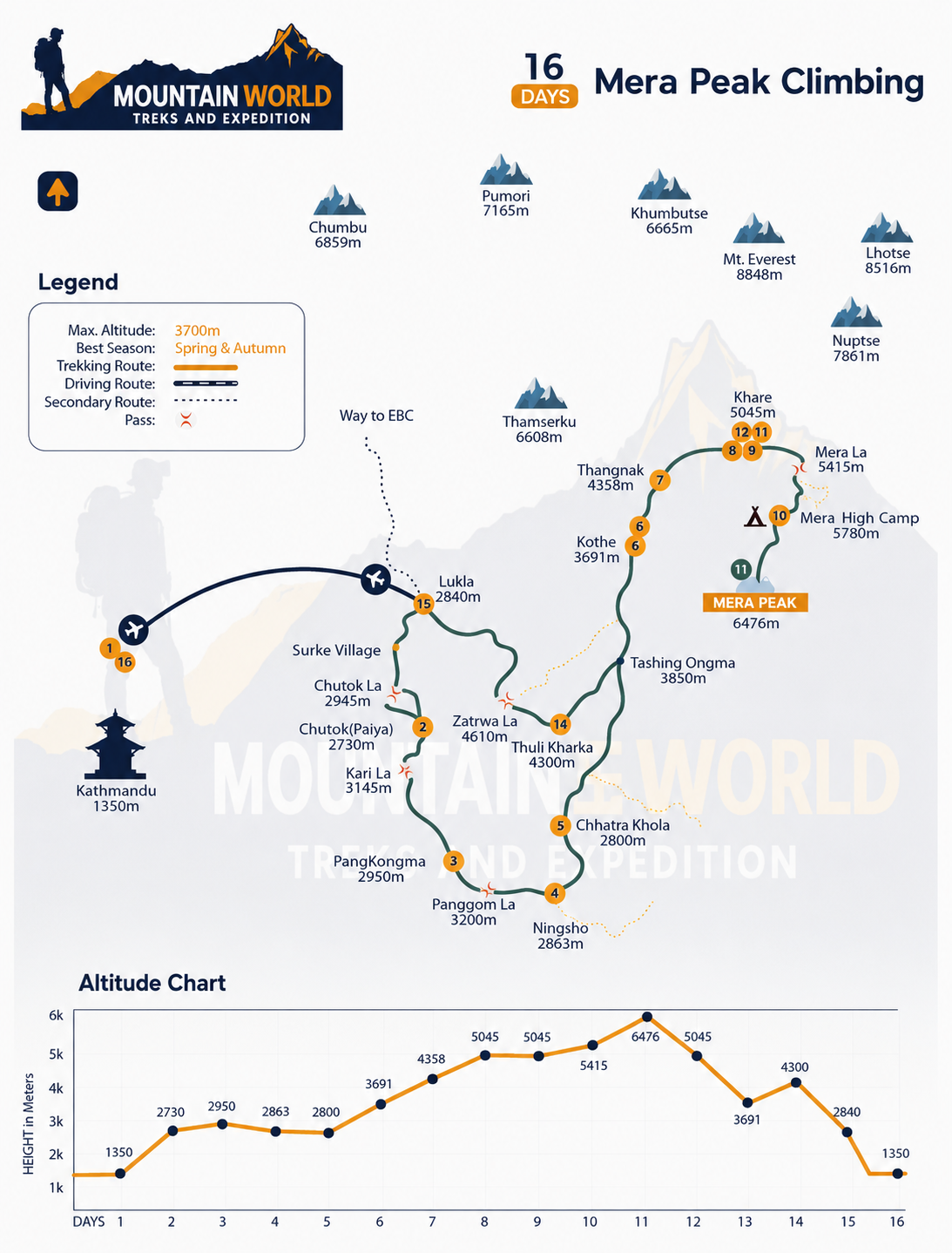
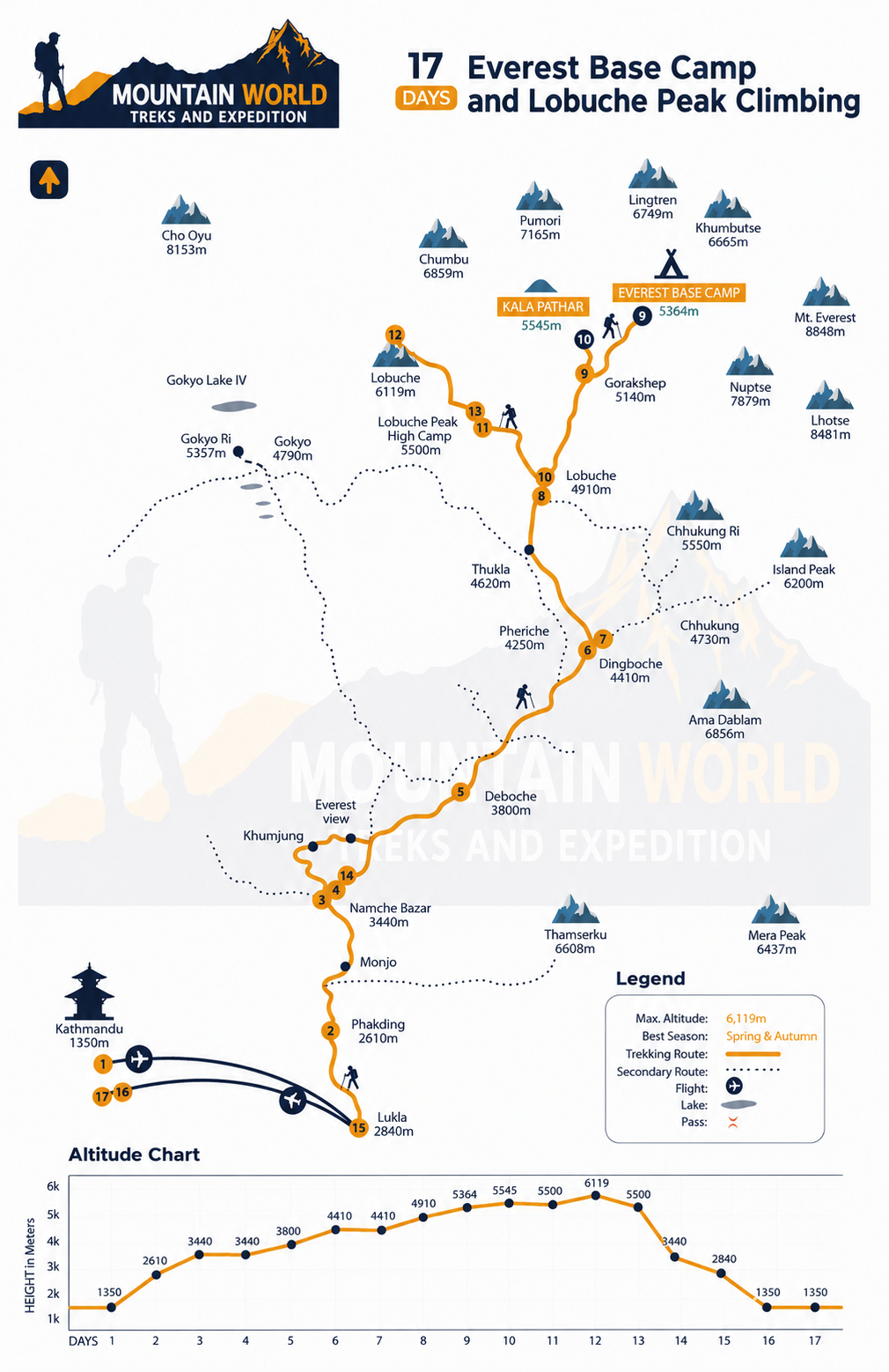
Mera Peak Map
Mera Peak Climb - Useful Information
How Much Does the Mera Peak Climb Cost?
The Mera Peak Climb with Mountain World Treks starts from USD 2,399 per person for a fully guided 15-day expedition. Our package includes the essential permits, domestic flights, experienced climbing guides, accommodation, meals during the trek, and the support needed for a safe and successful summit. The total cost may vary depending on your group size, itinerary, travel season, and the services included.
Mountain World Treks Mera Peak Climb Package
Our guided Mera Peak Climb offers excellent value by including the essential services required for a safe, comfortable, and memorable Himalayan climbing experience.
Package
Price
Mera Peak Climb (15 Days)
From USD 2,399 per person(Minimum 2 people in group)
Estimated Climbing Expenses
Expense
Estimated Cost
Kathmandu–Lukla Flights
Included in our package
Mera Peak Climbing Permit
Included
Makalu Barun National Park Permit
Included
Local Area Permit
Included
Licensed Climbing Guide
Included
Teahouse & High Camp Accommodation
Included
Meals During the Trek
Included
Group Climbing Equipment
Included
Airport Transfers
Included
Personal Climbing Gear Rental (Optional)
USD 100–200
Travel Insurance
USD 100–250
Personal Expenses
Depends on spending
For Solo trip (Single Supplementary)
USD 300
What’s Included in Our Guided Package?
Airport pickup and drop-off
Kathmandu hotel accommodation
Round-trip Lukla flights
Mera Peak climbing permit
Makalu Barun National Park Permit
Local area permit
Experienced licensed trekking and climbing guides
Porter service (depending on group size)
Teahouse accommodation and High Camp stay
Breakfast, lunch, and dinner during the trek
Group climbing equipment for the expedition
Government taxes and service charges
Note: The Mera Peak Climb cost can vary between trekking companies depending on the itinerary, group size, accommodation standard, guide-to-client ratio, and included services. At Mountain World Treks, our 15-day guided Mera Peak Climb starts from USD 2,399 per person, offering excellent value with no hidden costs.
For a complete cost breakdown, read our Mera Peak Climb Cost: Complete Price Breakdown (2026) to compare package prices, permits, flights, gear rental, insurance, and all the expenses you should budget for.
How Difficult Is the Mera Peak Climb?
The Mera Peak Climb is considered moderate to challenging. Although no advanced technical climbing experience is required, climbing to 6,476 m (21,247 ft) is physically demanding due to the high altitude, long trekking days, and cold mountain conditions. With good physical fitness, proper acclimatization, and the support of experienced climbing guides, many first-time climbers successfully reach the summit each year.
What Makes the Mera Peak Climb Challenging?
High altitude – The summit reaches 6,476 m (21,247 ft), where oxygen levels are much lower than at sea level, making every step more demanding.
Long trekking days – Most days involve 5 to 8 hours of trekking, while summit day can take 8 to 12 hours.
Cold mountain weather – Temperatures near the summit can fall below -20°C, especially during the early morning summit push.
Snow and glacier travel – The final ascent involves walking on snow and glaciers using crampons, a harness, and fixed ropes under the supervision of your climbing guide.
Physical and mental endurance – A successful climb requires good cardiovascular fitness, determination, and the ability to cope with high-altitude conditions.
Quick Tip
The greatest challenge on Mera Peak is the altitude, not the technical climbing. Climbing slowly, following the acclimatization schedule, staying hydrated, and listening to your guide are the best ways to improve your chances of reaching the summit safely.
For a detailed guide, read our Mera Peak Climb Difficulty Guide, where we explain the difficulty level, fitness requirements, altitude sickness, training plan, and everything beginners should know before climbing Mera Peak.
Recommended Pre-Trip Training
Preparing for the Mera Peak Climb before arriving in Nepal will improve your endurance, reduce fatigue, and increase your chances of reaching the summit. We recommend starting your training 8 to 12 weeks before your expedition.
Focus on These Areas
Cardiovascular Fitness – Running, cycling, swimming, or stair climbing to improve endurance.
Hiking Practice – Complete regular hikes with a 5–10 kg backpack on uneven terrain.
Strength Training – Build leg and core strength with squats, lunges, step-ups, and planks.
Endurance Training – Gradually increase your hiking distance and spend more time on your feet.
Flexibility & Recovery – Stretch regularly and allow enough time for rest and recovery between workouts.
Training Goal
Aim to exercise 4 to 5 days per week, combining cardio, strength training, and hiking. If possible, complete a multi-day hike or trek before your Mera Peak Climb to prepare for consecutive days of walking at high altitude.
Want a detailed training plan? Read our Mera Peak Climb Training Guide for a week-by-week fitness program, hiking tips, and expert advice to help you prepare for your expedition.
When Is the Best Time to Climb Mera Peak?
The best time to climb Mera Peak is during spring (March to May) and autumn (September to November). These seasons offer stable weather, clear mountain views, comfortable temperatures, and the highest chance of a safe and successful summit.
Mera Peak Climbing Seasonal Overview
Mera Peak can be climbed throughout the year, but each season offers a different experience in terms of weather, trail conditions, mountain views, and climbing difficulty. Choosing the right season is essential for a safe and enjoyable expedition. Below is a detailed overview of all four seasons to help you decide the best time for your Mera Peak climbing adventure.
Spring (March to May)
Best for: First-time climbers and clear mountain views.
Stable weather and mild temperatures
Blooming rhododendron forests
Excellent glacier and summit conditions
One of the most popular climbing seasons
Autumn (September to November)
Best for: The clearest skies and ideal climbing conditions.
Dry, stable weather
Outstanding visibility
Comfortable trekking temperatures
Highest summit success rates
Winter (December to February)
Best for: Experienced climbers only.
Extremely cold temperatures
Heavy snowfall possible
Fewer climbers on the route
More challenging summit conditions
Monsoon (June to August)
Generally, not recommended.
Frequent rainfall and muddy trails
Cloudy weather and limited mountain views
Slippery trekking conditions
Unpredictable weather at higher elevations
Best Seasons at a Glance
Best Overall: Spring (March to May)
Best Weather: Autumn (September to November)
Best Mountain Views: October and November
Best for Fewer Crowds: Late November and early December
Want a detailed month-by-month guide? Read our Best Time to Climb Mera Peak Guide to compare weather, temperatures, trail conditions, crowd levels, and expert recommendations before planning your expedition.
Mera Peak Climb Packing List
Packing the right gear is essential for a safe and successful Mera Peak Climb. You’ll experience changing weather, freezing temperatures, and high-altitude conditions, so bringing the right clothing and equipment will keep you comfortable throughout the expedition. Most technical climbing gear is provided or can be rented in Kathmandu.
Essential Clothing
Thermal base layers
Down jacket
Waterproof jacket and trousers
Fleece jacket or insulated mid-layer
Trekking shirts and trousers
Warm hat and sun hat
Insulated gloves and liner gloves
Wool or synthetic trekking socks
Footwear
Waterproof trekking boots (well broken in)
Camp shoes or sandals
Gaiters (recommended for snow)
Climbing Equipment
Climbing harness
Crampons
Ice axe
Climbing helmet
Carabiners and safety rope
Note: Most climbing equipment is included in our package or available for rent in Kathmandu.
Personal Essentials
UV sunglasses
Headlamp with spare batteries
Water bottles or hydration bladder
Sunscreen and lip balm
Personal first-aid kit
Trekking poles
Power bank and charging cable
Passport, permits, and travel insurance documents
Quick Packing Tips
Pack light but don’t compromise on warm clothing.
Dress in layers to adjust to changing mountain temperatures.
Break in your trekking boots before your expedition.
Keep important documents, cash, and valuables in your daypack.
Want the complete checklist? Read our Mera Peak Climb Packing List Guide for a detailed packing checklist, gear recommendations, rental information, and expert packing tips before your expedition.
Altitude Sickness on the Mera Peak Climb: What You Need to Know
Altitude sickness is one of the biggest challenges on the Mera Peak Climb because the summit reaches 6,476 m (21,247 ft). While anyone can be affected regardless of age or fitness, following a proper acclimatization schedule and climbing gradually greatly reduces the risk.
Common Symptoms of Altitude Sickness
Headache
Nausea or loss of appetite
Dizziness
Shortness of breath
Difficulty sleeping
Unusual fatigue
Never ignore these symptoms. Tell your guide immediately if you begin to feel unwell.
How We Help Prevent Altitude Sickness
At Mountain World Treks, your safety is our highest priority. Every Mera Peak itinerary is designed to help your body adapt gradually to the altitude.
Our Safety Measures
Carefully planned acclimatization days
Slow and steady climbing pace
Experienced licensed Sherpa climbing guides
Daily health and altitude monitoring
Flexible itinerary when required for safety
Immediate response if altitude-related symptoms develop
How You Can Reduce the Risk
Drink 3 to 4 litres of water daily.
Walk slowly and avoid rushing.
Eat regular meals to maintain your energy.
Avoid alcohol and smoking at high altitude.
Follow your guide’s instructions throughout the expedition.
Want to learn more? Read our Mera Peak Altitude Sickness Guide to understand the symptoms, prevention tips, acclimatization strategy, and emergency procedures before your climb.
Insurance for the Mera Peak Climb
Yes, comprehensive travel insurance is strongly recommended for the Mera Peak Climb. Your policy should cover high-altitude trekking and peak climbing up to 6,476 m (21,247 ft), as well as emergency helicopter evacuation, medical treatment, and trip interruption. Medical assistance in the mountains is limited, making insurance an essential part of your expedition.
Why Is Helicopter Rescue Important?
Helicopter evacuation is the fastest and safest way to reach medical care if you develop severe altitude sickness, suffer an injury, or become seriously ill in the remote Everest region. Many sections of the Mera Peak route are inaccessible by road, so helicopters are often the only practical rescue option.
How Much Does a Helicopter Rescue Cost?
The cost of a helicopter evacuation can range from USD 4,000 to USD 8,000 or more, depending on your location, weather conditions, and the complexity of the rescue. Without suitable insurance, you may be responsible for paying these costs yourself.
What Should Your Insurance Cover?
Choose a policy that includes:
Peak climbing up to 6,476 m
Emergency helicopter evacuation
High-altitude medical treatment
Hospitalization and emergency medical expenses
Trip cancellation or interruption
Lost or delayed baggage (recommended)
Important: Always check your policy carefully, as some standard travel insurance plans exclude trekking or climbing above certain altitudes.
Want to learn more? Read our Mera Peak Climb Travel Insurance Guide to compare insurance requirements, helicopter rescue coverage, recommended policy features, and tips for choosing the right insurance before your expedition.
Is the Mera Peak Climb Safe? Main Risks and How We Manage Them
Yes. The Mera Peak Climb is considered safe when you climb with experienced guides, follow a proper acclimatization schedule, and prepare well before your expedition. The table below highlights the main risks and how we help manage them.
Main Risk
How We Manage It
Altitude sickness
Gradual acclimatization, daily health checks, experienced Sherpa guides
Report any symptoms of altitude sickness immediately.
Follow your guide’s instructions throughout the climb.
Want to learn more? Read our Mera Peak Climb Safety Guide for detailed information on altitude sickness, weather conditions, emergency procedures, and expert safety tips.
Accommodation During the Mera Peak Climb
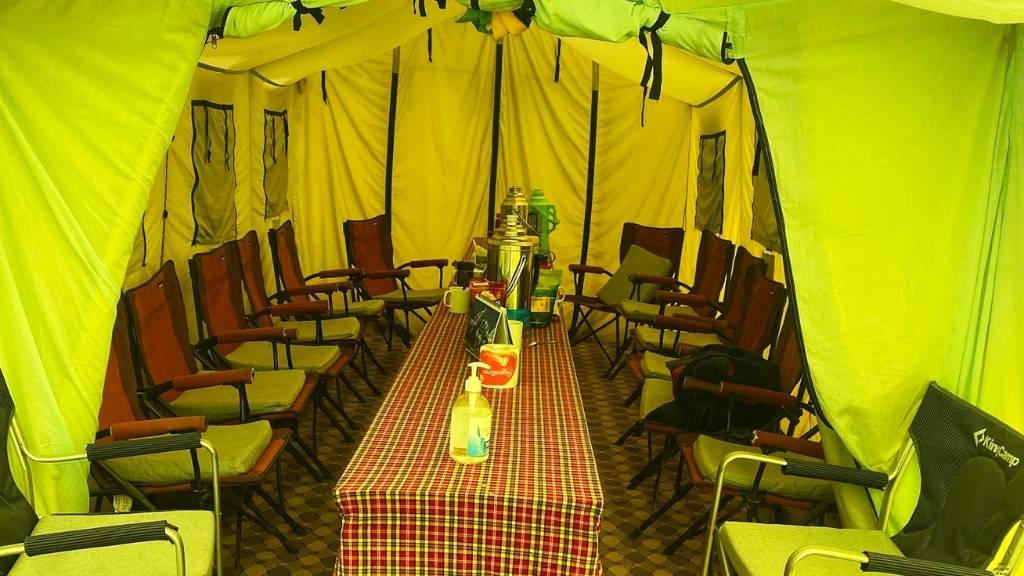
Accommodation on the Mera Peak Climb includes comfortable teahouses for most of the trek and a tented camp at Mera High Camp before the summit. While facilities are basic in the higher mountains, they provide a warm and comfortable place to rest after each day’s trek.
What to Expect
Comfortable local teahouses from Lukla to Khare
Twin-sharing rooms with basic beds and blankets
Shared toilets in most teahouses
Dining halls with a stove for warmth
One night in a tent at Mera High Camp before the summit
Stunning mountain views throughout the journey
Tip: Bring a warm sleeping bag for extra comfort, especially at higher elevations.
Food During the Mera Peak Climb
You’ll enjoy freshly prepared meals throughout the Mera Peak Climb to help maintain your energy at high altitude. Teahouses serve a variety of Nepali, Tibetan, and international dishes, while meals at High Camp are prepared by the expedition team.
Meals You Can Expect
Breakfast, lunch, and dinner served daily
Traditional Dal Bhat (rice, lentils, vegetables, and curry)
Fried rice, noodles, pasta, potatoes, soups, and momos
Eggs, porridge, pancakes, bread, and tea or coffee for breakfast
Hot drinks including tea, coffee, and hot lemon
Vegetarian meals are widely available
Food Tips
Drink 3 to 4 litres of water each day.
Choose freshly cooked meals.
Avoid alcohol at high altitude.
Eat regularly to maintain your energy during the climb.
Want to know more? Read our Mera Peak Climb Food & Accommodation Guide to learn about teahouses, meals, drinking water, and what to expect each day on the trail.
Permits Required for the Mera Peak Climb
Yes, permits are mandatory for the Mera Peak Climb. If you book your expedition with Mountain World Treks, all required permits are included in your package price, so you don’t need to arrange them yourself. The exact permits may vary slightly depending on the trekking route, but the standard Mera Peak itinerary requires the following:
Permit
Included in Our Package
Mera Peak Climbing Permit
Yes
Makalu Barun National Park Entry Permit
Yes
Khumbu Pasang Lhamu Rural Municipality Permit
Yes
What Do These Permits Cover?
Mera Peak Climbing Permit – Official permission to climb Mera Peak (6,476 m). The permit fee varies by season.
Makalu Barun National Park Permit – Allows entry into the protected national park through which the standard Mera Peak route passes.
Khumbu Pasang Lhamu Rural Municipality Permit – Supports local trail maintenance, conservation, and community development in the Everest region.
Good to Know
All permits are arranged before your expedition.
You don’t need to visit government offices or complete permit paperwork.
Our team handles the entire permit process, allowing you to focus on preparing for your climb.
Want to learn more? Read our Mera Peak Climbing Permit Guide for detailed information about permit fees, seasonal costs, required documents, and the latest climbing regulations in Nepal.
Mera Peak Climb Weather, Temperature & Trail Conditions
Weather, temperature, and trail conditions are among the most important factors to consider when planning a Mera Peak climb. These conditions vary significantly throughout the year, influencing trekking comfort, climbing difficulty, visibility, and overall safety.
Understanding the seasonal differences will help you choose the best time for your expedition and prepare with the appropriate gear. The tables below provide a season-by-season overview of Mera Peak’s weather, temperature, and trail conditions.
Mera Peak Climb Weather
Month
Weather Conditions
January
Very cold, dry, frequent snowfall
February
Cold, mostly clear, occasional snow
March
Warmer, stable weather begins
April
Clear skies, mild temperatures
May
Warm days, some afternoon clouds
June
Monsoon begins, frequent rain
July
Heavy rainfall and cloudy skies
August
Wet, humid, poor visibility
September
Rain decreases, improving weather
October
Clear, dry, and very stable
November
Cold with excellent visibility
December
Cold, dry, and generally clear
Mera Peak Temperature by Month
Month
Approx. Summit Temperature
January
-25°C to -15°C
February
-25°C to -15°C
March
-20°C to -10°C
April
-18°C to -8°C
May
-15°C to -5°C
June
-10°C to 0°C
July
-8°C to 2°C
August
-8°C to 2°C
September
-12°C to -3°C
October
-18°C to -8°C
November
-22°C to -12°C
December
-25°C to -15°C
Note: Temperatures are approximate and can vary depending on weather conditions, altitude, and the time of day.
Mera Peak Trail Conditions by Month
Month
Trail Conditions
January
Snow-covered, challenging
February
Snowy with icy sections
March
Improving, some snow remains
April
Dry trails, excellent climbing conditions
May
Mostly dry with stable conditions
June
Wet and slippery due to rain
July
Muddy trails and poor visibility
August
Slippery, frequent rainfall
September
Trails drying after the monsoon
October
Dry, stable, and ideal for climbing
November
Firm trails with cold mornings
December
Frozen sections and fresh snowfall
Mera Peak vs. Island Peak: Which Nepal Trekking Peak Is Right for You?
Mera Peak and Island Peak are the two most popular “trekking peaks” in Nepal’s Khumbu region, giving trekkers a taste of proper mountaineering without needing technical expedition experience.
They’re commonly compared because both sit in a similar altitude range and both are done with a guide rather than a full expedition team. Here’s the full breakdown:
Feature
Mera Peak
Island Peak
Height
6,476 m
6,189 m
Region
Hinku Valley
Near Everest Base Camp
Difficulty
Difficult
Challenging
Technical Difficulty
Snow slopes with basic glacier travel
Fixed ropes, steep headwall, and glacier travel
Trek Duration
15 days
18 days (including EBC trek)
Crowds
Quieter and less crowded
Busier during peak seasons
Acclimatization
Longer, gradual approach
Usually via Everest Base Camp trek
Mountain Views
Everest, Makalu, Kanchenjunga, Cho Oyu & Lhotse
Everest, Lhotse, Nuptse & Ama Dablam
Best Seasons
March–May & September–November
March–May & September–November
Required Gear
Crampons, ice axe & harness
Crampons, ice axe, harness & jumar
Ideal For
First 6,000 m Himalayan peak
First technical 6,000 m Himalayan peak
If you’re deciding between the two: pick Mera Peak if you want a quieter trail and don’t mind a longer, steadier walk to altitude.
Pick Island Peak if you’re already doing the Everest Base Camp trek and want to add a proper climbing day with ropes and a headwall to make it more of a mountaineering challenge.
Many climbers who want both do Mera first as a warm-up, then move on to Island Peak or bigger objectives later.
Mera Peak vs. Lobuche Peak: Which Nepal Trekking Peak Is Right for You?
Mera Peak and Lobuche East Peak are two of Nepal’s most sought-after trekking peaks, but they offer very different climbing experiences.
Mera Peak is the highest trekking peak in Nepal and is known for its gradual ascent and non-technical route, making it an excellent choice for first-time Himalayan climbers.
Lobuche East Peak, on the other hand, is lower in elevation but features steeper terrain, fixed ropes, and a more technical summit climb.
If you’re deciding between the two, the comparison below highlights the key differences to help you choose the peak that best matches your experience and goals.
Feature
Mera Peak
Lobuche East Peak
Height
6,476 m
6,119 m
Region
Hinku Valley
Khumbu (near Everest Base Camp)
Difficulty
Moderate
Moderate–Hard
Technical Difficulty
Gentle snow slopes with basic glacier travel
Steep snow and ice, fixed ropes, exposed ridge
Trek Duration
15–18 days
16–18 days (including EBC)
Crowds
Quieter and less crowded
Busier during peak seasons
Acclimatization
Gradual approach through Hinku Valley
Usually via Everest Base Camp
Summit Day
Longer but less technical
Shorter but steeper and more technical
Mountain Views
Everest, Makalu, Lhotse, Cho Oyu & Kanchenjunga
Everest, Lhotse, Nuptse, Ama Dablam & Pumori
Best Seasons
March–May & September–November
March–May & September–November
Required Gear
Crampons, ice axe, harness
Crampons, ice axe, harness & jumar
Ideal For
First-time 6,000 m Himalayan climbers
Climbers seeking a more technical alpine challenge
Which peak should you choose?
Choose Mera Peak if your goal is to reach your first Himalayan summit with a less technical climb and excellent acclimatization.
Choose Lobuche East Peak if you’re looking for a greater mountaineering challenge, want to practice technical climbing skills, or are preparing for higher peaks such as Ama Dablam or 7,000–8,000 m expeditions.
Internet, Charging & Communication on the Mera Peak Climb
Mobile network coverage on the Mera Peak route is extremely limited and should not be relied upon. Most teahouses provide paid WiFi and charging facilities, allowing you to stay in touch with family and friends during the trek. However, internet speeds are generally slow and may not always be available due to weather or power supply.
WiFi Availability
Paid WiFi is available at most teahouses along the route.
Internet speed is generally slow and suitable for basic messaging only.
Connection quality may vary depending on the location and weather conditions.
Mobile Network
Mobile phone coverage is very limited on the Mera Peak route.
Do not rely on mobile data or phone signals during the expedition.
WiFi is the primary way to communicate while trekking.
Charging Facilities
Charging is available at most teahouses for an additional fee.
Expect to pay approximately USD 2–5 per device, depending on the location.
Charging may not be available at High Camp, so carrying a power bank is highly recommended.
Tips for Staying Connected
Carry a fully charged 10,000–20,000 mAh power bank.
Download offline maps and important documents before your trek.
Inform your family that communication may be limited during the expedition.
Keep electronic devices warm, as cold temperatures reduce battery life.
Good to know: Although WiFi is available in most teahouses, connection speeds can be slow and occasional outages may occur due to weather or power supply in the mountains.
Culture & Local Experience on the Mera Peak Climb
The Mera Peak Climb is more than reaching a 6,476 m summit, it’s an opportunity to experience the unique culture and traditions of Nepal’s remote Hinku Valley. Along the trail, you’ll pass through traditional mountain villages, visit Buddhist monasteries, meet local Sherpa and Rai communities, and experience the warm hospitality of family-run teahouses.
What You’ll Experience
Traditional Sherpa and Rai mountain communities
Ancient Buddhist monasteries, prayer flags, and mani walls
Friendly local hospitality in family-run teahouses
Authentic Nepali and Sherpa cuisine
Yak caravans transporting supplies through the mountains
Peaceful trails away from the crowds of the Everest Base Camp route
Stunning views of glaciers, forests, and Himalayan peaks
Respecting Local Culture
To help preserve the region’s traditions, we encourage all trekkers to:
Dress respectfully in villages and monasteries.
Ask permission before photographing local people.
Walk clockwise around stupas and mani walls.
Respect local customs, religious sites, and wildlife.
Help protect the environment by leaving no trace.
The Mera Peak Climb offers more than a summit, it provides an authentic Himalayan experience where breathtaking landscapes, local culture, and warm mountain hospitality come together to create memories that last a lifetime.
Mera Peak Climb – Lukla Flight Delays
Flights to Lukla are weather-dependent and can occasionally be delayed or cancelled due to poor visibility, strong winds, or rapidly changing mountain weather. During the peak trekking seasons, most Lukla flights operate from Ramechhap Airport instead of Kathmandu. While delays are a normal part of Himalayan travel, our experienced team will assist you every step of the way to minimize disruption to your expedition.
Why Are Lukla Flights Delayed?
Lukla Airport is one of the world’s most challenging mountain airports, where flights rely heavily on favorable weather conditions. Delays or cancellations are usually caused by:
Poor visibility and low cloud cover
Strong winds around Lukla Airport
Rapidly changing mountain weather
Air traffic congestion during peak trekking seasons
Kathmandu or Ramechhap Departure?
Spring (March–May) and Autumn (September–November): Due to heavy air traffic at Kathmandu’s Tribhuvan International Airport, most Lukla flights operate from Ramechhap Airport (Manthali Airport). Ramechhap is about a 4–5 hour drive from Kathmandu and helps reduce airport congestion, allowing airlines to operate more flights during the busy trekking season.
Winter (December–February) and Monsoon (June–August): With fewer trekkers and less airport congestion, Lukla flights are more likely to operate directly from Kathmandu, although schedules may still change depending on weather and airline operations.
Good to know: If your Lukla flight departs from Ramechhap, Mountain World Treks will arrange your ground transportation according to your itinerary.
What Happens if Your Flight Is Delayed or Cancelled?
If your Lukla flight is delayed or cancelled, our operations team will monitor the situation closely and help you choose the best available option.
We will:
Monitor airline schedules and weather updates
Rebook you on the next available flight
Adjust your itinerary if required
Assist with accommodation and logistics during unexpected delays
Helicopter Upgrade Option
If fixed-wing flights are cancelled due to weather but helicopter flights are operating, you may choose to upgrade to a helicopter flight (subject to weather and seat availability).
Benefits of a helicopter upgrade:
Reach Lukla faster and avoid lengthy delays
Ideal for travelers with limited time
The helicopter cost can often be shared with other trekkers, making it more affordable
Additional charges apply and are not included in the standard package price
How to Prepare
Keep 1–2 extra buffer days after your expedition before your international flight.
Purchase travel insurance that covers trip delays and helicopter evacuation.
Be flexible, as mountain weather can change quickly.
Follow your trekking company’s advice regarding flight arrangements and alternative options.
Good to know: Lukla flight delays are a normal part of trekking in the Everest region. Most delays are temporary, and flights usually resume once weather conditions improve. With experienced local support and a flexible itinerary, your Mera Peak adventure can continue smoothly.
Want to learn more? Read our Lukla Flight Delay Guide for detailed information about weather conditions, Ramechhap departures, helicopter upgrade options, and expert tips for planning your Mera Peak expedition.
Tipping Guide for the Mera Peak Climb
Tipping is not mandatory, but it is a long-standing tradition in Nepal and a meaningful way to thank your guides and support crew for their hard work. If you are happy with the service you receive, tipping is always appreciated.
Team Member
Suggested Tip (Per Day)
Trekking Guide
USD 10–15 per day
Climbing Guide (Sherpa)
USD 20– 50 per day (2 days climb)
Porter
USD 5–10 per day
Kitchen/Camp Crew
USD 3–5 per day (per crew member)
Note: These are general guidelines only. You are free to tip more or less depending on the quality of service, group size, and your overall experience.
When and How to Tip
Tipping is usually done on the last day of the expedition.
Cash (USD or Nepali Rupees) is the preferred method.
If trekking in a group, many climbers choose to collect a group tip and present it together.
You may tip individuals directly or ask your guide to help distribute tips fairly among the support team.
Why Tip?
Your trekking guide, climbing guide, porters, and camp crew work hard to ensure your expedition is safe, enjoyable, and successful. A tip is a thoughtful way to recognize their professionalism, dedication, and support throughout your Mera Peak adventure.
Good to know: At Mountain World Treks, we believe tipping should always be voluntary and based on your satisfaction with the service provided.
Mera Peak Climb FAQs: Everything You Need to Know Before You Go
About Mera Peak
The Mera Peak Climb is a popular trekking peak expedition in Nepal that takes you to the summit of Mera Peak (6,476m). It combines trekking through remote valleys with basic mountaineering, offering stunning Himalayan views.
Mera Peak stands at 6,476 meters (21,247 ft), making it the highest trekking peak in Nepal.
Mera Peak is located in the Makalu Barun region of eastern Nepal, inside a protected Himalayan wilderness area.
It is famous for its easy technical difficulty, high altitude, and panoramic views of five 8,000m peaks, including Everest, Lhotse, Makalu, Kanchenjunga, and Cho Oyu.
Yes, Mera Peak is officially the highest trekking peak in Nepal, classified under Nepal Mountaineering Association (NMA) trekking peaks.
Difficulty & Fitness
It is considered moderate to challenging. The trek is not highly technical, but the altitude makes it physically demanding.
Yes, beginners can climb Mera Peak if they have good fitness, trekking experience, and proper acclimatization support.
No advanced technical skills are required, but basic use of crampons, ropes, and ice axe training is provided during the climb.
You should be in strong cardiovascular shape, able to walk 6–8 hours daily in high altitude conditions.
Train with hiking, stair climbing, running, and strength training for at least 6–8 weeks before the expedition.
Itinerary & Trek
The Mera Peak Climb usually takes 15 to 18 days, including acclimatization and summit attempt.
On average, you walk 5 to 7 hours per day, depending on the trail and altitude gain.
Summit day is long and demanding, usually 8–12 hours round trip, starting early morning for sunrise views.
Yes, you carry a daypack with essentials, while porters carry the main luggage.
A porter typically carries 20–25 kg total for two trekkers combined.
Cost & Booking
At Mountain World Treks, the Mera Peak Climb package is priced at USD 2,399 per person for a 15-day itinerary (arrival to departure, including summit). This is a mid-range, all-inclusive package designed to cover major logistics such as permits, guides, accommodation, meals during the trek, and climbing support.
It generally includes permits, guide, porter, accommodation, meals, climbing training, and airport transfers.
Not included are international flights, travel insurance, personal gear, tips, and extra drinks/snacks.
Yes, most packages include Mera Peak climbing permit, Makalu Barun National Park entry, and TIMS card.
Booking with experts like Mountain World Treks ensures safe logistics, experienced guides, proper acclimatization, and high summit success rates.
Safety & Altitude
Yes, it is safe when guided properly, with trained guides, acclimatization days, and proper safety protocols.
Yes, altitude sickness can occur above 4,000m, so gradual ascent and hydration are essential.
We include rest days, slow ascent, monitoring, hydration, and emergency response planning.
If you cannot summit due to health or weather, you can still complete the trek safely without extra risk.
Yes, most guided expeditions carry emergency oxygen and first aid kits for safety.
Accommodation & Food
You will stay in teahouses/lodges during the trek and tented camps at higher altitudes.
Meals include dal bhat, noodles, soups, rice, vegetables, pasta, and simple high-energy foods.
Yes, but water must be filtered, boiled, or purified before drinking for safety.
Logistics
The best seasons are spring (March–May) and autumn (September–November) for stable weather and clear views.
You need Mera Peak climbing permit, and Makalu Barun National Park permit.
Yes, travel insurance is mandatory and must include high-altitude trekking and emergency helicopter evacuation.
Delays are common; we plan buffer days and alternative arrangements when needed.
Yes, you can rent crampons, boots, down jackets, ice axes, and harnesses in Kathmandu. At mountain World Trek we provide them all without extra cost.
Comparison
Mera Peak is less technical but higher in altitude, while Island Peak is more technical but lower.
Yes, Mera Peak is highly worth it for beginner climbers aiming for 6,000m+ Himalayan summit experience with world-class views.
Island Peak climbing (Imja Tse, 6,189m) in Nepal with expert Sherpa guides. 14-day itinerary, all in, included summit training. Packages from $1,999. Book now!