The Langtang Valley Trek is one of most popular short treks in Nepal, offering spectacular Himalayan scenery, authentic Tamang culture, and diverse landscapes just a few hours’ drive from Kathmandu. Unlike many popular trekking routes in Nepal, it requires no domestic flight, making it an excellent choice for trekkers with limited time.
The trail winds through lush rhododendron and bamboo forests, crosses glacial rivers and suspension bridges, and passes traditional Tamang villages before reaching the beautiful alpine settlement of Kyanjin Gompa, beneath the towering Langtang Lirung (7,227 m). Along the way, you’ll experience peaceful mountain trails, warm local hospitality, and breathtaking views of the Langtang Himalayas.
Short drive from Kathmandu – no domestic flight required
Ideal for trekkers with limited time
Rich Tamang culture and traditional mountain villages
Beautiful forests, rivers, glaciers, and alpine landscapes
Optional hikes to Kyanjin Ri or Tserko Ri for panoramic views
In short, the Langtang Valley Trek is the perfect choice for trekkers seeking spectacular Himalayan scenery, authentic mountain culture, and a rewarding trekking experience close to Kathmandu.
Want to see the trail before you go? Watch our Langtang Valley Trek video and experience the breathtaking landscapes, traditional villages, and stunning mountain views along the journey.
Langtang Valley Trek Trip Facts
Key details: 10-day Langtang Valley Trek @USD699
Detail
Information
Duration
10 Days
Trek Distance
Approximately 65–70 km (round trip)
Maximum Altitude
Kyanjin Ri: 4,400 m (14,436 ft)
Optional Hike
Tserko Ri: 5,033 m (16,512 ft)
Trek Difficulty
Moderate
Walking Hours
5–7 hours per day
Region
Langtang National Park
Starting Point
Syabrubesi
Ending Point
Syabrubesi
Best Time
Spring (March–May) & Autumn (September–November)
Accommodation
Teahouses/Lodges
Meals
Breakfast, Lunch & Dinner during the trek
Group Size
1–16 People (Private & Group Departures Available)
Enjoy spectacular views of Langtang Lirung (7,227 m), the highest peak in the Langtang region.
Visit Kyanjin Gompa, a traditional Buddhist monastery, and explore its famous yak cheese factory.
Hike to Kyanjin Ri (4,400 m) or Tserko Ri (5,033 m) for breathtaking panoramic Himalayan sunrise views.
Experience authentic Tamang culture and warm hospitality in traditional mountain villages rebuilt after the 2015 earthquake.
Trek through Langtang National Park, home to rhododendron forests, glaciers, waterfalls, and diverse wildlife.
Enjoy peaceful trails with fewer crowds than the Everest Base Camp or Annapurna Base Camp treks.
Extend your adventure by combining the trek with the sacred Gosaikunda Lakes.
Where Is Langtang Valley?
Langtang Valley is located within Langtang National Park in the Rasuwa District of north-central Nepal, close to the border with Tibet (China). It is one of the closest Himalayan trekking destinations to Kathmandu, making it an excellent choice for trekkers who want spectacular mountain scenery without the need for a domestic flight.
Location Highlights
Nearest City: Kathmandu (approximately 6–8 hours’ drive to Syabrubesi, the trek starting point)
Protected Area: Langtang National Park, Nepal’s first Himalayan national park
Border: Adjacent to the Tibet Autonomous Region of China
Nearby Treks: Gosaikunda Trek, Helambu Trek, and the Tamang Heritage Trail
Langtang Valley offers a perfect combination of breathtaking Himalayan landscapes, rich Tamang culture, glaciers, alpine meadows, and traditional mountain villages, all within easy reach of Kathmandu.
Want to learn more about the region? Read our complete Langtang Valley Guide to discover its history, culture, geography, wildlife, nearby attractions, and why it’s one of Nepal’s most rewarding trekking destinations.
Who Is the Langtang Valley Trek For?
The Langtang Valley Trek is ideal for trekkers looking for a rewarding Himalayan adventure without committing to a long expedition. With moderate daily walking distances, comfortable teahouse accommodation, and no domestic flights required, it’s a great choice for beginners, families, and experienced hikers alike. The trek combines spectacular mountain scenery, authentic Tamang culture, and peaceful trails, making it one of Nepal’s best short trekking experiences.
First-time Himalayan trekkers looking for a manageable introduction to high-altitude trekking
Travelers with only 7–10 days who still want an authentic Himalayan adventure
Families with older children or teenagers comfortable with moderate daily walking
Culture lovers interested in Tamang traditions and Tibetan Buddhism
Experienced trekkers seeking a quieter alternative to Nepal’s busier trekking routes
Nature photographers looking to capture forests, glaciers, rivers, wildlife, and snow-capped peaks
Is the Langtang Valley Trek Right for You?
If you’re looking for a scenic, culturally rich, and less crowded Himalayan trek that’s easily accessible from Kathmandu, the Langtang Valley Trek is an excellent choice. However, if your goal is to reach Everest Base Camp or cross high mountain passes above 5,000 metres, you may prefer one of Nepal’s longer and more challenging trekking routes.
Preparation Guide for Beginners – Langtang Valley Trek
The Langtang Valley Trek is suitable for beginners with a reasonable level of fitness, but proper preparation will make your trek safer, more comfortable, and more enjoyable. While the trail is less demanding than some of Nepal’s longer trekking routes, you’ll still be walking at altitude for several days. A little planning before your trip can make a big difference.
Before You Go
Prepare your body and gear before arriving in Nepal to ensure a smooth trekking experience.
Train with walking, hiking, cardio, and leg-strength exercises for 6–8 weeks before your trek.
Break in your trekking boots well before departure to avoid blisters.
Pack light and dress in layers, as teahouse rooms are unheated and temperatures can drop below freezing at night.
Learn the basics of altitude sickness and understand its symptoms before your trek.
Purchase travel insurance that covers high-altitude trekking and helicopter evacuation.
Carry enough Nepalese Rupees (NPR), as there are no reliable ATM facilities beyond Syabrubesi.
Arrive in Kathmandu 1–2 days before your trek to allow time for gear shopping and to accommodate any travel delays.
During the Trek
Following a few simple habits on the trail will help you stay healthy and enjoy the journey.
Walk at a steady, comfortable pace and avoid rushing.
Drink plenty of water throughout the day to stay hydrated.
Eat regular meals to maintain your energy levels.
Dress in layers to adapt to changing mountain weather.
Talk to your guide every day about how you’re feeling, especially if you notice any symptoms of altitude sickness.
Can Beginners Do the Langtang Valley Trek?
Yes. The Langtang Valley Trek is considered one of the best Himalayan treks for beginners. With good physical preparation, a sensible trekking pace, and the support of an experienced guide, most healthy and active people can complete the trek safely while enjoying the spectacular scenery and rich Tamang culture.
Who Will Be Your Guide on the Langtang Valley Trek?
Your guide plays an important role in making your Langtang Valley Trek safe, enjoyable, and memorable. At Mountain World Treks, every trek is led by experienced, government-licensed trekking guides with extensive knowledge of the Langtang region and years of Himalayan trekking experience.
Our guides are trained in high-altitude trekking, altitude awareness, first aid, and emergency response. Throughout the journey, they monitor your well-being, maintain a comfortable trekking pace, assist with acclimatization, and share fascinating insights into Tamang culture, local traditions, and the history of the Langtang Valley.
Your Guide Will Help You With
Safe route planning and trail navigation
Managing a comfortable trekking pace
Monitoring acclimatization and recognizing altitude sickness symptoms
Checking your oxygen saturation with a pulse oximeter during the trek, especially above 3,000 m
Providing weather and trail condition updates
Organizing accommodation and daily trekking logistics
Sharing the culture, history, and traditions of the Tamang people
Coordinating emergency assistance if required
Why Langtang valley Trek with Mountain World Treks?
When you choose Mountain World Treks for your Langtang Valley Trek, you’ll benefit from experienced local professionals, carefully planned itineraries, and personalized support from start to finish. Your safety, comfort, and overall trekking experience are our highest priorities.
Government-licensed and experienced trekking guides
First-aid and high-altitude safety trained guides
Local guides with extensive knowledge of the Langtang region
Well-planned itineraries with proper acclimatization
Daily health monitoring, including pulse oximeter checks above 3,000 m
24/7 office support before and during your trek
Friendly, personalized service from arrival to departure
Our goal is not only to help you complete the Langtang Valley Trek but also to ensure you enjoy a safe, comfortable, and unforgettable Himalayan adventure filled with spectacular mountain scenery, authentic Tamang culture, and lasting memories.
Why Choose the Langtang Valley Trek?
There are many reasons why trekkers choose the Langtang Valley Trek. It offers spectacular mountain scenery, rich Tamang culture, and a genuine high-altitude trekking experience, all within easy reach of Kathmandu.
Closest major Himalayan trek to Kathmandu – Spend less time traveling and more time trekking.
Perfect 10-day itinerary (arrival to departure) – Ideal for travelers looking for a complete Himalayan adventure in a shorter timeframe.
No domestic flights required – Avoid weather-related flight delays and cancellations.
Rich Tamang culture – Experience traditional mountain villages and Tibetan Buddhist monasteries.
Excellent value for money – Lower permit and logistics costs than many other Himalayan trekking routes.
A genuine high-altitude adventure – Enjoy glaciers, alpine valleys, and spectacular Himalayan views without technical climbing.
Whether you’re a first-time trekker or an experienced hiker, the 10-day Langtang Valley Trek offers an unforgettable combination of mountain scenery, cultural experiences, and peaceful trails close to Kathmandu.
A Complete 10 Days Langtang valley Trek Itinerary
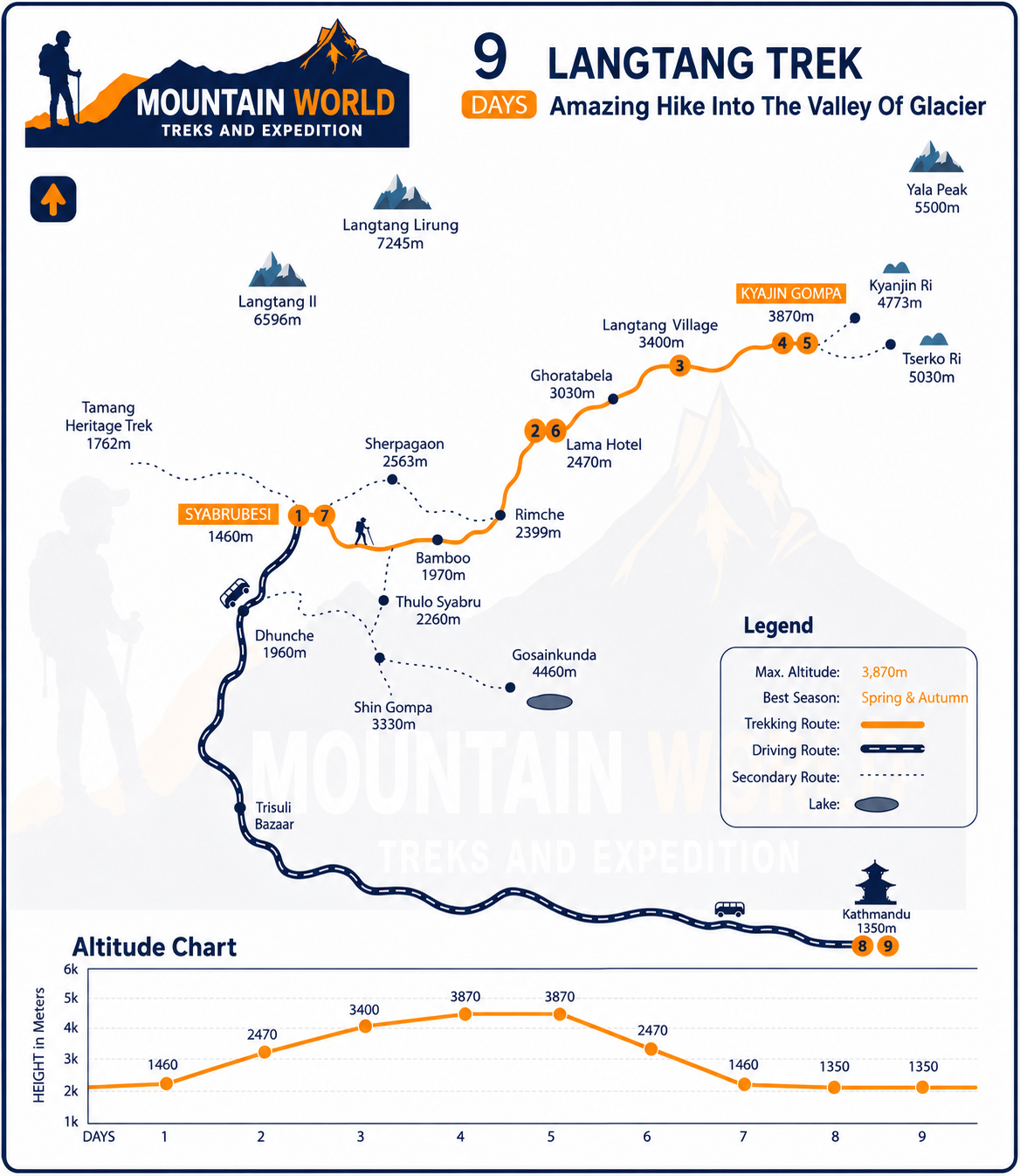
Our 10-day Langtang Valley Trek itinerary is designed to provide the perfect balance of adventure, acclimatization, and cultural immersion. Beginning with a scenic drive from Kathmandu to Syabrubesi, the trail passes through traditional Tamang villages, lush forests, and alpine landscapes before reaching Kyanjin Gompa, the trek's highest overnight stop. A hike to Kyanjin Ri (4,773 m) rewards you with spectacular Himalayan views before you descend along the same scenic route and return to Kathmandu. This well-paced itinerary is ideal for trekkers seeking an unforgettable Himalayan experience in just 10 days.
Day 1 :
Arrival in Kathmandu | 1,400 m (4,593 ft)
Welcome to Nepal! Upon arrival at Tribhuvan International Airport, a representative from Mountain World Treks will welcome you and transfer you to your hotel in Kathmandu. After check-in, you can relax from your journey or explore the vibrant streets of Thamel. In the evening, meet your trekking guide for a pre-trip briefing, where you'll review the itinerary, check your gear, and prepare for the adventure ahead.
Day 2 :
Drive from Kathmandu to Syabrubesi | 122 km (76 miles) | 7–8 hours | 1,503 m (4,931 ft)
After breakfast, leave Kathmandu behind and enjoy a scenic drive through terraced hills, traditional villages, and river valleys as you make your way to Syabrubesi, the gateway to the Langtang Valley Trek. The journey offers beautiful views of the Himalayan foothills before arriving at your tea house for the night.
Day 3 :
Trek from Syabrubesi to Lama Hotel | 11 km (6.8 miles) | 6–7 hours | 2,470 m (8,104 ft)
Your trek begins by crossing the Bhote Koshi River before following the Langtang Khola through lush forests of oak, bamboo, and rhododendron. The trail climbs gradually past waterfalls, suspension bridges, and small settlements, with opportunities to spot langur monkeys and native birdlife. After a rewarding day on the trail, you'll arrive at the peaceful village of Lama Hotel.
Day 4 :
Trek from Lama Hotel to Langtang Village | 14 km (8.7 miles) | 6–7 hours | 3,430 m (11,253 ft)
Continue ascending through the forest before emerging into the open Langtang Valley, where dramatic mountain views begin to unfold. Passing Ghodatabela and yak pastures, you'll reach Langtang Village, a traditional Tamang settlement rebuilt after the 2015 earthquake. Spend the evening enjoying the local hospitality and stunning Himalayan surroundings.
Day 5 :
Trek from Langtang Village to Kyanjin Gompa | 7 km (4.3 miles) | 3–4 hours | 3,870 m (12,697 ft)
Today's shorter trek allows for gradual acclimatization as you make your way to Kyanjin Gompa. The trail passes prayer wheels, mani walls, and yak grazing fields with spectacular views of the surrounding peaks. After arriving, visit the ancient monastery, explore the famous yak cheese factory, or simply relax and admire the breathtaking alpine scenery.
Day 6 :
Hike to Kyanjin Ri & Trek to Lama Hotel | 21 km (13 miles) | 8–9 hours | 4,773 m (15,659 ft)
Start early for the climb to Kyanjin Ri, one of the highlights of the Langtang Valley Trek. The summit rewards you with panoramic views of Langtang Lirung, Dorje Lakpa, Yala Peak, and the surrounding glaciers. After returning to Kyanjin Gompa for breakfast, descend through Langtang Village and Ghodatabela before spending the night back at Lama Hotel.
Day 7 :
Trek from Lama Hotel to Syabrubesi | 11 km (6.8 miles) | 5–6 hours | 1,503 m (4,931 ft)
Enjoy your final day on the trail as you descend through beautiful forests alongside the Langtang Khola. Crossing suspension bridges and passing familiar villages, you'll arrive back in Syabrubesi, where you can celebrate the successful completion of your trek.
Day 08 :
Drive from Syabrubesi to Kathmandu | 122 km (76 miles) | 7–8 hours | 1,400 m (4,593 ft)
After breakfast, return to Kathmandu by road, enjoying one last look at Nepal's scenic hills and river valleys. Upon arrival, transfer to your hotel and enjoy a free evening to relax, celebrate your adventure, or explore Thamel.
Day 09 :
Free Day in Kathmandu | 1,400 m (4,593 ft)
Enjoy a full day at leisure in Kathmandu. You can visit UNESCO World Heritage Sites, shop for souvenirs, relax in one of Thamel's cafés, or join an optional sightseeing tour. It's the perfect opportunity to experience Nepal's rich history and culture before your departure.
Day 10 :
Departure or Extend your stay
Depending on your flight schedule, we'll transfer you to Tribhuvan International Airport for your onward journey. If you'd like to spend more time in Nepal, we can help arrange additional trekking adventures, wildlife safaris, cultural tours, or scenic trips to destinations such as Pokhara or Chitwan National Park.
What's Included & Excluded in the Langtang Valley Trek Cost
The Cost Includes
Airport pick-up and drop-off by private vehicle.
3 nights hotel accommodation in Kathmandu (twin-sharing, breakfast included).
Round-trip transportation between Kathmandu and Syabrubesi
6 nights accommodation in comfortable tea houses during the trek.
Three meals a day (breakfast, lunch, and dinner) during the trek.
Seasonal fresh fruits after dinner during the trek.
Porter service (1 porter for every 2 trekkers, carrying up to 20 kg in total).
Salary, meals, accommodation, insurance, and equipment for guides and porters.
Langtang National Park Entry Permit.
Comprehensive first aid kit carried by your guide.
Oximeter for daily oxygen saturation checks at higher altitudes.
Duffel bag for use during the trek (returned after the trip).
Trek completion certificate.
All applicable government taxes and company service charges.
The Cost Excludes
International airfare to and from Nepal.
Nepal entry visa fees.
Lunch and dinner in Kathmandu (except breakfast at the hotel).
Travel insurance (must include high-altitude trekking and emergency helicopter evacuation).
Personal trekking equipment and clothing.
Snacks, soft drinks, alcoholic beverages, and bottled water.
Hot showers, WiFi, and device charging fees at tea houses.
Personal expenses such as laundry, shopping, and souvenirs.
Tips for your guide and porter (customary but optional).
Langtang Valley Trek Map
Langtang Valley Trek - Useful Information
Planning ahead is the key to an enjoyable and successful trek. Below you’ll find everything you need to know before your Langtang Valley Trek, including costs, difficulty, permits, weather, accommodation, food, packing, altitude sickness, travel insurance, internet access, local culture, and other essential travel tips.
Whether you’re trekking in Nepal for the first time or returning for another Himalayan adventure, these practical guides will help you prepare with confidence.
Langtang Valley Trek Cost
The cost of the Langtang Valley Trek depends on your travel style, group size, transportation, and whether you hire a guide or porter. Your main expenses include permits, accommodation, meals, transportation, and personal spending during the trek.
Estimated Cost Breakdown (2026/27)
Expense
Estimated Cost (USD)
Langtang National Park Entry Permit
$22
Kathmandu Hotel (2 nights)
$60–120
Public Bus (Round Trip)
$15
Private Jeep (One Way)
$150 per vehicle
Licensed Guide
$30–40/day
Porter
$20–25/day
Teahouse Accommodation
$5–10/night
Meals
$20–30/day
Hot Shower
$2–5
Wi-Fi & Charging
$2–5
Travel Insurance
Varies
Estimated Budget
Travel Style
Approximate Cost
Independent Trek
USD 550–750+
Guided Private Trek
USD 700–1,000+
Our (Mountain World Treks) 10-Day Langtang Valley Trek costs USD 699 per person, including the essential services needed for a safe and hassle-free trekking experience.
Want a complete cost breakdown? Our Langtang Valley Trek Cost Guide explains permit fees, transportation, accommodation, meals, guide and porter costs, and practical ways to save money.
How Much Cash Should You Bring?
There are no reliable ATMs beyond Syabrubesi, so bring enough Nepalese Rupees (NPR) before starting the trek. Even if your package includes accommodation and meals, you’ll still need cash for personal expenses.
Personal Expense
Typical Cost
Hot Shower
NPR 300–500
Device Charging
NPR 200–500
Wi-Fi
NPR 200–500
Tea, Coffee & Soft Drinks
NPR 150–400
Bottled Water
NPR 100–300
Snacks
NPR 100–500
Guide & Porter Tips
Optional
We recommend carrying around NPR 15,000-25,000 (approximately USD 110–185) per person for personal expenses.
Money-Saving Tips
Carry a reusable water bottle and water purification tablets or a filter.
Bring a power bank to avoid paying for charging every day.
Download offline maps before leaving Kathmandu.
Exchange your money in Kathmandu for the best rates.
How to Book the Langtang Valley Trek
Booking your Langtang Valley Trek is quick and secure. Simply complete our online booking form, and our team will confirm your reservation and provide all the information you need before your trip.
Booking & Payment
Step
Details
Deposit
A 20% deposit is required to confirm your booking.
Balance Payment
The remaining balance can be paid before your trip or upon arrival in Kathmandu.
Payment Methods
We accept credit/debit cards, bank transfers, and online payment options. Cash payment in Kathmandu is also available.
Cancellation Policy
Please refer to our Booking Terms & Conditions for our cancellation and refund policy.
Need a private trek or have special requests?Contact us before booking, and we’ll be happy to customize the itinerary to suit your schedule and preferences.
After You Book
Once your booking is confirmed, we’ll send you:
A booking confirmation and payment receipt
A detailed pre-trip information pack
Packing list and trek preparation guide
Arrival and airport pickup details (if included)
Contact information for your trek coordinator
10-Day Langtang Valley Trek Itinerary Overview
Our 10-Day Langtang Valley Trek is carefully designed to provide a smooth, comfortable, and hassle-free adventure from your arrival in Kathmandu to your final departure. The journey begins with a scenic drive from Kathmandu to Syabrubesi, followed by a rewarding trek through Langtang National Park via Lama Hotel and Langtang Village to Kyanjin Gompa.
You’ll also hike to Kyanjin Ri for breathtaking Himalayan views before retracing the same trail back to Syabrubesi and returning to Kathmandu.
The package includes airport transfers, hotel accommodation in Kathmandu, transportation, experienced trekking staff, and all the logistics needed for a memorable Himalayan adventure.
Why Is There a Free Day in Kathmandu?
The extra day in Kathmandu allows you to relax and recover after the trek before your international flight. You can visit the city’s UNESCO World Heritage Sites, enjoy authentic Nepali cuisine, shop for souvenirs, unwind at your hotel, or simply keep the day as a buffer in case of unexpected travel delays. It provides a comfortable and stress-free end to your Langtang Valley adventure.
A Typical Day on the Langtang Valley Trek
While each day varies depending on the itinerary and trail conditions, most trekking days follow a comfortable routine that allows plenty of time for walking, rest, and enjoying the spectacular mountain scenery.
Time
What to Expect
6:30–7:00 AM
Wake up and enjoy breakfast at the tea house before starting the day’s trek.
7:30–8:00 AM
Begin trekking while temperatures are cool and mountain views are at their best.
10:00–10:30 AM
Stop for tea, snacks, and a short rest.
12:00–1:00 PM
Enjoy lunch at a local tea house along the trail.
1:00–3:30 PM
Continue trekking with regular breaks for photos, water, and rest.
3:00–4:30 PM
Arrive at the day’s destination, check into your tea house, and relax or explore the village.
6:00–7:00 PM
Have dinner with your trekking group, followed by your guide’s briefing about the next day’s trek.
8:30–9:00 PM
Head to bed early for a good night’s rest and proper acclimatization.
What to Expect Each Day
Trek for 4–7 hours on most days, depending on the route and altitude.
Enjoy breakfast and dinner at your overnight tea house, with lunch served at a tea house along the trail.
Take regular breaks for tea, water, acclimatization, and photography.
Reach your destination by mid to late afternoon, leaving plenty of time to relax, explore the village, or enjoy the mountain views.
Get an early night’s sleep to stay well-rested and prepared for the following day’s trek.
Your experienced guide sets a comfortable pace with regular rest stops, ensuring everyone enjoys the journey safely while taking in the spectacular scenery of Langtang National Park.
How to Get to the Langtang Valley Trek Starting Point
The Langtang Valley Trek begins in Syabrubesi, a small mountain town located approximately 122 km (76 miles) north of Kathmandu. Unlike the Everest region, there are no domestic flights to the trailhead, so all trekkers travel by road.
The drive from Kathmandu to Syabrubesi usually takes 6–7 hours by private jeep or 7–9 hours by local bus, depending on traffic, weather, and road conditions. Along the way, you’ll enjoy beautiful views of rolling hills, terraced farmland, rivers, and traditional mountain villages before reaching the gateway to Langtang National Park.
Transportation Options
Transportation
Travel Time
Best For
Private Jeep
6–7 hours
Comfortable, faster, and ideal for most trekkers
Local Bus
7–9 hours
Budget travelers looking for a lower-cost option
While local buses are a more affordable option, most trekkers prefer a private jeep for its greater comfort, extra luggage space, flexibility, and smoother journey on the mountain roads.
Road Conditions
The road to Syabrubesi is mostly paved, although some mountain sections are rough and can become muddy during the monsoon season. Weather and road maintenance may occasionally cause delays, but our team monitors road conditions closely to ensure safe and reliable transportation throughout your journey.
Return Journey
After completing the Langtang Valley Trek, you’ll retrace the same trail to Syabrubesi before driving back to Kathmandu. All transportation arrangements are included in your itinerary and managed by Mountain World Treks, allowing you to enjoy a seamless and worry-free trekking experience from arrival to departure.
Here is the complete day-by-day Langtang Valley Trek itinerary, including daily walking hours, trekking distance, altitude, accommodation, meals, and highlights of what to expect each day.
HHow Difficult Is the Langtang Valley Trek?
The Langtang Valley Trek is considered a moderate trek, making it suitable for beginners with a reasonable level of fitness as well as experienced hikers. No technical climbing or mountaineering skills are required, but you’ll be trekking at high altitude for several consecutive days. For most people, the biggest challenge is adjusting to the altitude rather than the terrain itself.
Trek Difficulty at a Glance
Difficulty Level: Moderate
Daily Walking: 5–7 hours
Terrain: Forest trails, stone steps, suspension bridges, glacial moraine, and some steep uphill sections
Maximum Altitude: Kyanjin Ri (4,700 m) or Tserko Ri (5,033 m) (optional hikes)
Technical Skills: None required
One thing our guides often notice is that the climb from Lama Hotel to Langtang Village feels more challenging than many trekkers expect because of the long, steady uphill ascent. Taking your time, staying hydrated, and walking at a comfortable pace makes the day much more enjoyable.
If you choose the optional hike to Kyanjin Ri or Tserko Ri, the biggest challenge is usually the thinner air rather than the steepness of the trail. Starting early and walking slowly makes a big difference.
Most trekkers with average fitness complete the Langtang Valley Trek successfully with proper acclimatization and the support of an experienced guide.
Recommended Pre-Trek Training
Preparing before your trek will make the journey more comfortable and improve your overall experience. Aim to start training 6–8 weeks before your departure.
Cardio Training: Brisk walking, jogging, cycling, or swimming 3–4 times per week
Hill & Stair Training: Build leg strength for uphill and downhill trekking
Practice Hikes: Complete several hikes lasting 4–6 hours while carrying a daypack
Strength Exercises: Focus on your legs, core, and back to improve endurance
Break In Your Gear: Test your trekking boots, backpack, and trekking poles before arriving in Nepal
Most trekkers who prepare well, walk at a comfortable pace, and follow their guide’s advice complete the Langtang Valley Trek safely and enjoy every step of the journey.
Before you go, it’s worth reading our Langtang Valley Trek Difficulty Guide to understand the altitude, daily hiking distances, fitness level required, acclimatization, and practical tips that will help you prepare for the trek.
Essential Gear for the Langtang Valley Trek: Packing List
Packing the right gear is essential for a safe and comfortable trekking experience in the Himalayas. Mountain weather can change quickly, so it’s important to pack lightweight, layered clothing and reliable trekking equipment to keep you warm, dry, and comfortable throughout the journey.
Essential Gear Checklist
Waterproof, well broken-in trekking boots
3-season sleeping bag (rated to at least -10°C / 14°F)
Down jacket and warm fleece mid-layers
Waterproof and windproof outer shell jacket and trousers
Trekking poles for better balance and reduced strain on descents
Headlamp with spare batteries
Sun hat, warm beanie, UV-protection sunglasses, and sunscreen
Water bottles or a hydration bladder
Water purification tablets or a water filter
Basic first-aid kit and personal medications
Power bank (charging facilities are available at most teahouses for an additional fee)
Duffel bag for your porter and a comfortable daypack for your daily essentials
Not sure what to pack for the Langtang Valley Trek? This Langtang Valley Trek Packing Guide covers everything you’ll need, from clothing and trekking gear to essential accessories, seasonal packing tips, and practical advice for a comfortable trek.
When Is the Best Time for the Langtang Valley Trek?
The best time for the Langtang Valley Trek is during spring (March to May) and autumn (September to November). These seasons offer stable weather, comfortable temperatures, clear Himalayan views, and excellent trekking conditions, making them ideal for both first-time and experienced trekkers.
That said, the Langtang Valley Trek can be enjoyed throughout the year. Each season has its own unique charm, from colorful rhododendron forests in spring to snow-covered landscapes in winter. Choosing the right season depends on your preferences, fitness level, and the type of trekking experience you’re looking for.
Season
Highlights
Spring (Mar–May)
Blooming rhododendrons, pleasant temperatures, clear mountain views, and ideal trekking conditions.
Summer (Jun–Aug)
Lush green landscapes, fewer trekkers, dramatic monsoon scenery, and occasional rainfall.
Autumn (Sep–Nov)
Stable weather, dry trails, crystal-clear mountain views, and the most popular trekking season.
Winter (Dec–Feb)
Quiet trails, snowy landscapes, fewer crowds, and excellent views on clear days.
If you’re looking for the best overall trekking experience, we highly recommend planning your trip between March and May or September and November.
Not sure when to plan your trek? Our Best Time for the Langtang Valley Trek guide compares every season, explains what to expect month by month, and helps you choose the best time based on the weather, mountain views, crowds, and your trekking goals.
Langtang Valley Trek Weather, Temperature & Trail Conditions
Weather in the Langtang region changes significantly throughout the year and directly affects trail conditions, temperatures, mountain visibility, and the overall trekking experience. While spring and autumn provide the most reliable conditions, every season offers something unique.
Understanding what to expect before your trek will help you choose the best time to visit and prepare the right clothing and equipment.
Weather Overview by Season
Season
Weather Summary
Spring (March–May)
Best Overall
Temperature: Mild days and cool nights. Trail Conditions: Dry and comfortable with blooming rhododendron forests. Mountain Views: Excellent visibility. Crowds: Moderate.
Summer / Monsoon (June–August)
Suitable for Experienced Trekkers
Temperature: Warm with frequent rainfall. Trail Conditions: Wet, muddy, and occasionally affected by landslides. Mountain Views: Limited due to clouds. Crowds: Low.
Autumn (September–November)
Most Popular Season
Temperature: Pleasant days and cool nights. Trail Conditions: Dry, stable, and ideal for trekking. Mountain Views: Outstanding after the monsoon. Crowds: High, especially in October.
Winter (December–February)
Great for Solitude
Temperature: Cold days and freezing nights. Trail Conditions: Snow is possible at higher elevations. Mountain Views: Excellent on clear days. Crowds: Low.
No matter which season you choose, weather in the Himalayas can change rapidly. We recommend packing proper layers, waterproof gear, and following your guide’s advice throughout the trek.
Want a month-by-month breakdown? Our Best Time for the Langtang Valley Trek guide explains the weather, temperatures, trail conditions, mountain views, crowd levels, and what to pack for every month of the year, making it easier to choose the right time for your trek.
Altitude Sickness on the Langtang Valley Trek
The Langtang Valley Trek reaches elevations above 3,800 m, with optional hikes to Kyanjin Ri (4,700 m) and Tserko Ri (5,033 m). At these altitudes, Acute Mountain Sickness (AMS) is possible, making proper acclimatization essential.
Common Symptoms
Headache
Nausea or vomiting
Fatigue
Dizziness
Loss of appetite
Difficulty sleeping
Serious Symptoms (Descend Immediately)
Confusion or unusual behaviour
Loss of coordination
Breathlessness at rest
Persistent vomiting
Severe headache that doesn’t improve
How to Reduce the Risk
Walk at a steady pace.
Drink plenty of water.
Follow your guide’s acclimatization advice.
Never ignore or hide symptoms.
Don’t continue ascending if symptoms worsen.
Your Safety Comes First
At Mountain World Treks, our guides monitor your health throughout the trek using daily health checks and SpO₂ monitoring above 3,000 m. They’re trained to recognize the early signs of altitude sickness and will arrange a descent or emergency evacuation if necessary.
Heading to high altitude for the first time? Our Langtang Valley Trek Altitude Sickness Guide explains how to acclimatize properly, recognize the early signs of AMS, and reduce your risk so you can trek with confidence.
Accommodation During the Langtang Valley Trek
The Langtang Valley Trek is a traditional teahouse trek, with overnight stays in locally owned mountain lodges. The accommodation is simple, clean, and comfortable, offering a warm place to rest after each day’s trek while experiencing the genuine hospitality of the local Tamang community.
What to Expect
Twin-sharing rooms with comfortable beds
Mattresses, pillows, and warm blankets provided
Shared or attached bathrooms, depending on the teahouse
Hot showers available at most teahouses (additional fee)
Wi-Fi and charging facilities in most villages (additional fee)
Cozy dining halls with wood-burning stoves during colder months
One pleasant surprise for many trekkers is Kyanjin Gompa. Although it’s the highest overnight stop on the trek, several teahouses now offer attached bathrooms, hot showers, comfortable rooms, cafés, bakeries, and freshly brewed coffee. The facilities here are often better than many trekkers expect, making it one of the most comfortable places to stay along the route.
Curious about where you’ll stay during the trek? Our Langtang Valley Trek Food & Accommodation Guide explains what to expect from the teahouses, including rooms, bathrooms, meals, Wi-Fi, charging facilities, and other essential amenities.
Food During the Langtang Valley Trek
Meals are served in local teahouses throughout the trek and are freshly prepared to keep you energized during long days of hiking. You’ll find a good mix of traditional Nepali dishes and popular international favourites, although menu options become slightly more limited as you gain altitude.
What to Expect
Breakfast, lunch, and dinner served daily
Popular dishes include Dal Bhat, fried rice, noodle soup, momos, pasta, pancakes, eggs, potatoes, and porridge
Vegetarian meals are widely available
Tea, coffee, hot chocolate, and boiled drinking water are available at most teahouses
Food prices gradually increase at higher elevations due to transportation costs
Most of our guides recommend Dal Bhat for lunch or dinner because it’s freshly prepared, filling, and usually comes with free refills of rice and lentil soup, perfect after a long day on the trail.
When you reach Kyanjin Gompa, you’ll also find several cafés and bakeries serving fresh coffee, homemade cakes, apple pie, yak cheese pizza, and other baked treats. After hiking to Kyanjin Ri or Tserko Ri, relaxing with coffee and cake while enjoying the surrounding Himalayan views is one of the highlights of the trek.
Wondering what you’ll be eating on the trek? Our Langtang Valley Trek Food & Accommodation Guide covers the typical teahouse menu, meal prices, room facilities, Wi-Fi, charging, hot showers, and other practical tips to help you prepare.
Toilets, Hot Showers, Laundry & Drinking Water
Tea houses along the Langtang Valley Trek offer basic but comfortable facilities. Most villages have clean accommodation with the essential amenities you’ll need during the trek.
What to Expect
Facility
Details
Toilets
Mostly Western-style toilets, with a few traditional squat toilets in some teahouses.
Hot Showers
Available at most teahouses for an additional fee.
Laundry
Limited. Some lower villages offer laundry services, while many trekkers wash small items by hand.
Toilet Paper
Usually not provided. Bring your own toilet paper and hand sanitizer.
Drinking Water
Drink 3–4 litres of water per day to stay hydrated and help with acclimatization. Safe drinking water is available throughout the trek.
Recommended options:
Boiled water (small fee)
Water purification tablets
Filter bottle or water filter
Bottled water (available but more expensive at higher elevations)
Helpful Tips
Keep some Nepalese Rupees for showers and charging.
Carry a reusable water bottle.
Bring a quick-drying towel and clothing.
Pack toilet paper and hand sanitizer.
We know many trekkers are concerned about toilets, hot showers, laundry, and whether the drinking water is safe. Our Langtang Valley Trek Toilets, Hot Showers, Laundry & Drinking Water Guide covers everything you need to know before you go.
Wi-Fi, Charging & Mobile Network on the Langtang Valley Trek
Even though you’ll be trekking through a remote Himalayan valley, it’s still possible to stay connected for much of the journey.
What to Expect
Mobile Network:Nepal Telecom (NTC) provides coverage along most of the trekking route, although the signal may be weaker in some sections.
Wi-Fi: Available at many teahouses for an additional fee, but speeds can be slow and less reliable at higher elevations.
Charging: Most teahouses offer charging facilities for a small fee using hydropower, solar energy, or generators.
Stay Prepared: Carry a power bank and charging cables in case charging isn’t available.
While it’s easy to stay connected, the Langtang Valley Trek is also a great chance to switch off for a while and enjoy the mountains.
Culture & Local Experience on the Langtang Valley Trek
The Langtang Valley Trek is more than just a Himalayan adventure. It’s a chance to experience the rich culture of the Tamang people, whose traditions are deeply influenced by Tibetan Buddhism. As you pass through traditional villages, you’ll encounter ancient monasteries, prayer flags, and a warm mountain hospitality that makes this trek truly special.
What You’ll Experience
Local Etiquette – Dress modestly around monasteries, greet people with a friendly “Namaste,” and ask permission before taking photographs.
Authentic Tamang Culture – Meet local families and learn about their traditions and way of life.
Buddhist Heritage – Walk past prayer flags, mani walls, chortens, and prayer wheels. Remember to pass mani walls and chortens on your left as a sign of respect.
Kyanjin Gompa – Visit one of the region’s most important Buddhist monasteries.
Yak Cheese Factory – Stop at the famous cheese factory in Kyanjin Gompa and sample locally made yak cheese.
A Story of Resilience – Discover how the local community rebuilt Langtang after the 2015 earthquake.
Permits Required for the Langtang Valley Trek
All trekkers need a Langtang National Park Entry Permit. If you book your trek with Mountain World Treks, we’ll arrange all the necessary permits and paperwork before your trek begins.
Permit
Foreign Nationals
SAARC Nationals
Langtang National Park Entry Permit
NPR 3,000
NPR 1,500
Important Information
The Langtang National Park Entry Permit is mandatory.
A government-licensed guide is required under current trekking regulations.
TIMS Card is no longer required for the Langtang Valley Trek.
Carry your original passport, as permits are checked at several points along the trail.
Want to know how the permit process works? Our Langtang Valley Trek Permits Guide explains the latest regulations, permit fees, required documents, and everything you need to know before your trek.
Travel Insurance For Langtang valley Trek
Although the Langtang Valley Trek is considered a moderate trek, we strongly recommend comprehensive travel insurance. The trail reaches over 4,000 m, and in the event of altitude sickness, injury, or another medical emergency, helicopter evacuation may be necessary.
Your policy should cover:
Medical treatment and hospitalization
High-altitude trekking
Emergency helicopter evacuation
Wondering if you really need travel insurance? We highly recommend it. Adventure travel is unpredictable, and it’s always better to be prepared. Our Langtang Valley Trek Insurance Guide explains why insurance is essential, what your policy should cover, and how to choose the right plan before your trek.
Is the Langtang Valley Trek Safe?
Yes. The Langtang Valley Trek is considered one of Nepal’s safest and most beginner-friendly Himalayan treks. With an experienced guide, proper acclimatization, and sensible preparation, most trekkers complete the trek safely.
How We Keep You Safe
Potential Risk
Our Safety Measures
Altitude sickness
Gradual ascent, acclimatization, daily health checks, and SpO₂ monitoring above 3,000 m
Slips and falls
Experienced guides and a safe trekking pace
Changing weather
Flexible itinerary and local weather updates
Landslides & river crossings
Guides choose the safest available route
Medical emergencies
Emergency evacuation coordination, including helicopter rescue if required
Our licensed local guides monitor your health throughout the trek and make safety the priority. If weather, trail conditions, or altitude require changes to the itinerary, they’ll make the right decision to ensure everyone has the safest possible experience.
Nepal Visa Information
Most travelers visiting Nepal for the Langtang Valley Trek can obtain a visa on arrival at Tribhuvan International Airport in Kathmandu. The process is straightforward, but it’s important to check the latest visa requirements for your nationality before traveling.
Visa Requirements
Visa on Arrival: Available for most nationalities at Kathmandu’s Tribhuvan International Airport.
Visa Duration: Choose from 15, 30, or 90 days, depending on the length of your stay.
Required Documents: A passport valid for at least 6 months, a completed arrival form, and the applicable visa fee.
Visa Fees: Paid separately from trekking permits. Payment can usually be made in cash (major currencies accepted) or by card, subject to availability.
Advance Visa: Citizens of some countries must obtain a visa from a Nepali embassy or consulate before traveling. Check the latest requirements before your departure.
Obtaining a Nepal tourist visa is usually quick and straightforward, allowing you to begin your Himalayan adventure with minimal hassle.
Not sure if you need a visa for Nepal? Our Nepal Visa Guide explains the visa-on-arrival process, fees, required documents, eligible nationalities, and everything you need to know before you travel.
Porters on the Langtang Valley Trek
Hiring a porter makes the trek much more enjoyable, allowing you to hike with just a light daypack while your main duffel bag is carried for you. At Mountain World Treks, we work with experienced local porters and follow ethical trekking practices, including fair wages, proper equipment, insurance, and reasonable carrying loads.
During the day, you’ll only need a small daypack with essentials such as:
Important documents
Water bottle
Rain jacket
Snacks
Sunscreen
Camera or phone
Personal medication
Tipping for Guides & Porters
Tipping isn’t mandatory, but it’s a common way to thank your guide and porter for their hard work and support throughout the trek.
Staff
Recommended Tip
Trekking Guide
USD 10–15 per day
Porter
USD 5–10 per day
Good to know:
Tip at the end of the trek.
You can tip in NPR or USD.
For group treks, tips are often collected and presented together.
Not sure how much to tip? Our Langtang Valley Trek Tipping Guide explains recommended amounts, tipping etiquette, and answers the most common questions.
Langtang Valley Trek vs Other Popular Treks
Choosing the right trek depends on your available time, fitness level, and the experience you’re looking for. Here’s a quick comparison of Nepal’s most popular trekking routes.
Duration & Maximum Altitude
Trek
Duration
Max Altitude
Langtang Valley Trek
7–10 days
4,773 m
Everest Base Camp Trek
12–14 days
5,364 m
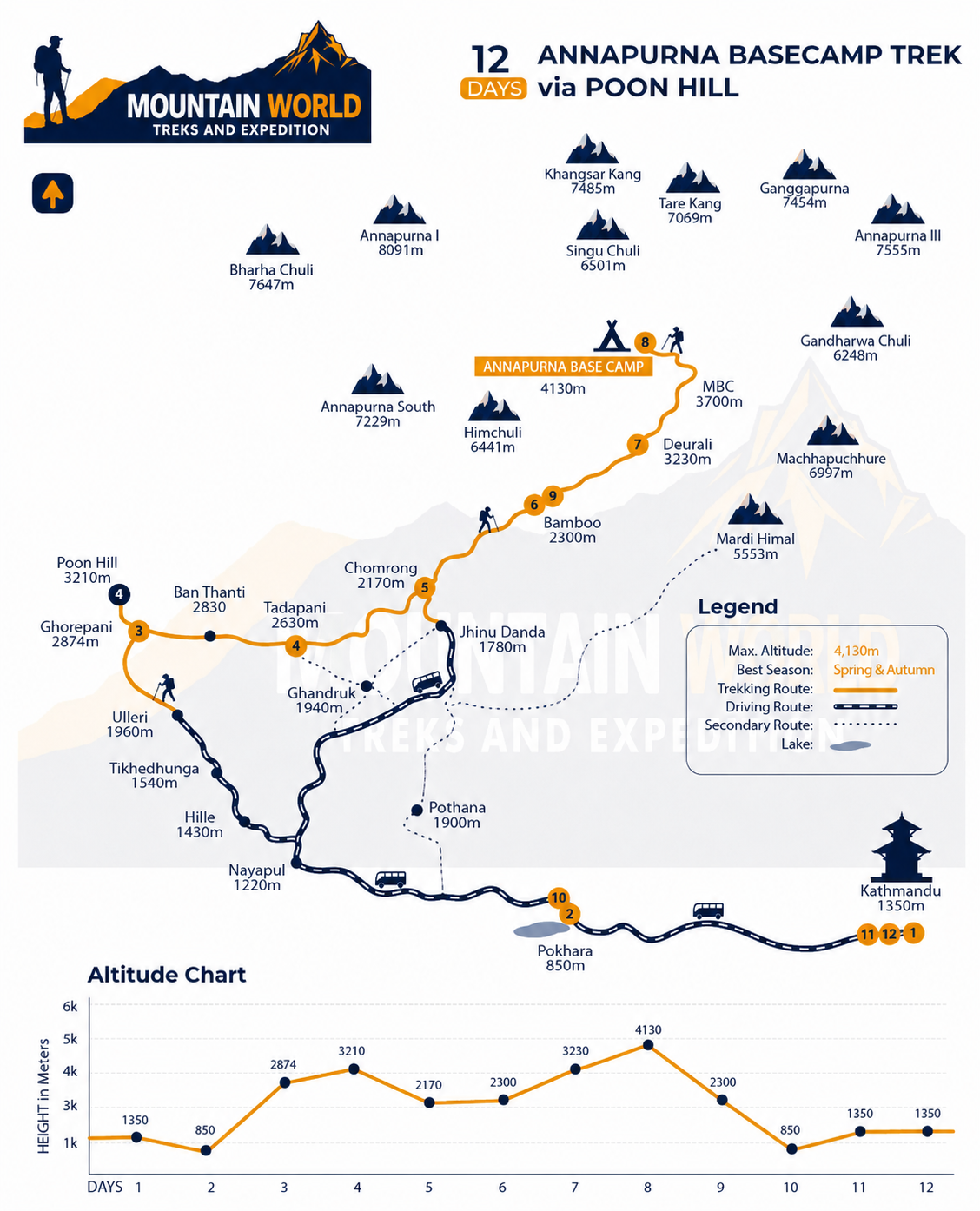
Annapurna Base Camp Trek
7–12 days
4,130 m
Mardi Himal Trek
5–7 days
4,500 m
Difficulty & Best For
Trek
Difficulty
Best For
Langtang Valley Trek
Moderate
Less crowded trails, Tamang culture, glaciers & mountain views
Everest Base Camp Trek
Challenging
Iconic Himalayan adventure and Everest views
Annapurna Base Camp Trek
Moderate
Diverse landscapes, villages, forests & mountain scenery
Mardi Himal Trek
Moderate
Short trek with spectacular ridge and sunrise views
Want a More Detailed Comparison?
Read our in-depth guides to compare trekking routes and find the one that’s right for you:
Langtang Valley Trek vs Everest Base Camp Trek – Compare difficulty, altitude, cost, scenery, accommodation, and who each trek is best suited for.
Langtang Valley Trek vs Annapurna Base Camp Trek – Discover the key differences in trail conditions, mountain views, culture, and overall experience.
Langtang Valley Trek vs Mardi Himal Trek – See which trek offers better value, accessibility, and panoramic Himalayan views.
Tip: If you’re looking for a trek that’s less crowded, closer to Kathmandu, rich in Tamang culture, and achievable in just 7–10 days, the Langtang Valley Trek is an excellent choice for both first-time and experienced trekkers.
Responsible Tourism on the Langtang Valley Trek
At Mountain World Treks, we believe trekking should benefit both travelers and the local communities that make these incredible journeys possible. We are committed to responsible and sustainable tourism practices that help preserve the natural beauty and cultural heritage of the Langtang region.
Our Commitment
What We Do
Why It Matters
Employ Local Guides & Porters
Supports local families and provides authentic knowledge of the Langtang region.
Support the Local Economy
Stay in locally owned tea houses and purchase supplies from local businesses whenever possible.
Follow Leave No Trace Principles
Help protect trails, forests, wildlife, and mountain landscapes for future generations.
Reduce Plastic Waste
Encourage trekkers to carry reusable water bottles and use water purification methods instead of buying single-use plastic bottles.
Respect Local Culture
Promote responsible behavior by respecting local customs, traditions, and religious sites.
How You Can Help
Carry a reusable water bottle and avoid single-use plastics.
Dispose of waste responsibly or pack it out whenever possible.
Respect local customs, monasteries, and cultural traditions.
Stay on designated trails to protect the environment.
Support local businesses by purchasing goods and services from village tea houses and shops.
By trekking responsibly, you’re helping preserve the Langtang Valley while supporting the communities that call these mountains home. Together, we can ensure this remarkable destination remains beautiful and welcoming for future generations.
FAQs
General Questions
The Langtang Valley Trek is a moderate Himalayan trek in Langtang National Park, north of Kathmandu. It combines spectacular mountain scenery, traditional Tamang villages, glaciers, and the beautiful Kyanjin Gompa, making it one of Nepal's most rewarding short treks.
The Langtang Valley Trek is located in Langtang National Park, about 120 km (75 miles) north of Kathmandu near the Nepal–Tibet border. The trek begins in Syabrubesi, which is reached by a scenic 5-6-hour drive from the capital.
The Langtang Valley Trek is famous for its breathtaking Himalayan views, authentic Tamang culture, peaceful trails, and diverse landscapes. It offers an excellent alternative to the busier Everest and Annapurna regions while remaining easily accessible from Kathmandu.
Most Langtang Valley Trek itineraries take 7–10 days. Our standard itinerary is 10 days, including arrival and departure in Kathmandu, transportation, trekking, and a hike to Kyanjin Ri (4,773 m).
The highest point of the trek is Kyanjin Ri at 4,773 m (15,659 ft), offering panoramic views of Langtang Lirung and the surrounding Himalayan peaks. The highest overnight stop is Kyanjin Gompa at 3,870 m (12,697 ft).
Absolutely. The Langtang Valley Trek offers spectacular mountain scenery, rich local culture, fewer crowds, and excellent value. Its proximity to Kathmandu also makes it one of Nepal's most accessible and rewarding trekking adventures.
Difficulty & Fitness
The Langtang Valley Trek is considered moderately difficult. You'll walk 4–7 hours a day on well-established mountain trails, with gradual altitude gain and a maximum elevation of 4,773 m (15,659 ft) at Kyanjin Ri.
Yes. The Langtang Valley Trek is suitable for beginners with good physical fitness. No technical climbing or previous trekking experience is required, making it a popular choice for first-time trekkers in Nepal.
You should be able to walk 4-7 hours a day on uneven mountain trails while carrying a light daypack. Regular walking, hiking, cycling, or other cardio exercises for 6–8 weeks before your trek will help you enjoy the experience.
Most trekking days involve 4–7 hours of walking, depending on the itinerary, trail conditions, and altitude. Some days are shorter to allow for acclimatization and exploration.
Prepare by hiking, brisk walking, climbing stairs, or doing cardio exercises 3–5 times per week for at least 6–8 weeks before your trek. Adding leg-strength exercises and a few longer hikes with a backpack will further improve your endurance.
Altitude & Safety
Yes. Altitude sickness can affect anyone above 2,500 m (8,200 ft), regardless of age or fitness. The Langtang Valley Trek reaches 4,773 m (15,659 ft) at Kyanjin Ri, so a gradual ascent, proper hydration, and acclimatization are essential.
Our itinerary is designed with gradual altitude gain to support proper acclimatization. We recommend walking at a steady pace, drinking plenty of water, eating well, avoiding alcohol, and immediately informing your guide if you experience any symptoms.
Yes. The Langtang Valley Trek is considered one of Nepal's safest trekking routes when undertaken with proper preparation and an experienced guide. Following your guide's advice, monitoring the weather, and trekking at a comfortable pace all contribute to a safe and enjoyable experience.
Our guides are trained in first aid and altitude awareness. If a medical emergency occurs, they will assess the situation, provide immediate assistance, and arrange the quickest evacuation, including a helicopter rescue if required and covered by your travel insurance.
Yes. We strongly recommend travel insurance that covers high-altitude trekking, emergency medical treatment, and helicopter evacuation. It provides financial protection and peace of mind in the event of illness, injury, or unexpected travel disruptions.
Best Time & Weather
The best time to trek to Langtang Valley is during spring (March to May) and autumn (September to November). These seasons offer clear mountain views, stable weather, comfortable temperatures, and the best overall trekking conditions.
Yes. Winter trekking (December to February) is possible and offers peaceful trails and snow-covered landscapes. However, temperatures can drop well below freezing at higher elevations, so warm clothing and proper winter gear are essential.
Yes, but the monsoon season (June to August) brings frequent rain, muddy trails, leeches in lower forests, and occasional landslides. If you prefer clearer skies and better mountain views, spring and autumn are the recommended seasons.
Temperatures vary by season and altitude. During spring and autumn, daytime temperatures are generally 10°C to 20°C (50°F to 68°F), while nights at Kyanjin Gompa can drop to around -5°C to -10°C (23°F to 14°F). Winter temperatures are considerably colder.
Accommodation & Food
Accommodation is in locally owned tea houses offering clean twin-sharing rooms with basic amenities. Most tea houses have comfortable beds, warm blankets, shared dining areas, and either private or shared bathrooms, depending on the village and altitude.
Tea houses serve a variety of freshly prepared meals, including Dal Bhat, fried rice, noodles, pasta, soups, momos, potatoes, eggs, pancakes, porridge, tea, and coffee. Meals are simple, nutritious, and designed to provide the energy needed for trekking.
Yes. Vegetarian meals are available at every tea house along the Langtang Valley Trek, and many also offer vegan options. If you have dietary restrictions or food allergies, let us know before your trek so we can make suitable arrangements.
Yes. Most tea houses provide western-style toilets, especially in the lower villages, while higher elevations may have a mix of western and squat toilets. Hot showers are available at most stops for a small additional fee.
Yes. Most tea houses offer electricity for lighting and charging electronic devices, usually for a small fee. Paid WiFi is also available in many villages, although connections may be slow or unreliable due to the remote mountain location.
Guides, Logistics & Booking
Yes. We highly recommend trekking with a licensed local guide for safety, navigation, and local knowledge. Your guide will manage logistics, monitor your health at altitude, and enrich your experience by sharing insights into the region's culture, history, and landscapes.
Yes. Hiring a porter is optional, but many trekkers choose one to carry their main duffel bag, allowing them to hike comfortably with only a light daypack. Our porters follow ethical weight limits to ensure their safety and well-being.
The trek requires a Langtang National Park Entry Permit and any permits required under the latest Nepal government regulations. When you book with us, we arrange all necessary permits before your trek begins.
The cost depends on the itinerary, group size, season, and level of service. Our package cost USD699 includes all essential trekking services, offering excellent value with no hidden costs. Please contact us for the latest prices and group discounts.
Our package includes transportation, trekking permits, tea house accommodation, meals during the trek, an experienced guide, porter support, and government taxes. Personal expenses such as travel insurance, Nepal visa fees, drinks, WiFi, hot showers, and tips are not included. Please see the "What's Included & Excluded" section for full details.
We recommend carrying NPR 15,000–25,000 in cash for personal expenses such as drinks, snacks, WiFi, charging, hot showers, souvenirs, and tips. There are no reliable ATMs once you leave Kathmandu, so withdraw enough cash before your trek.
Booking is simple. Complete our online booking form or contact our team, and we'll confirm your reservation after receiving the required deposit. We'll then send your trip confirmation, packing list, and all the information you need before your adventure begins.
Comparing other Treks vs Langtang Valley Trek
Both treks offer incredible Himalayan scenery, but they suit different travelers. Everest Base Camp is longer, higher, and more challenging, while the Langtang Valley Trek is shorter, more affordable, less crowded, and doesn't require a domestic flight. If you're looking for an authentic Himalayan experience with excellent value, Langtang is an outstanding choice.
Read our detailed comparison:Langtang Valley Trek vs Everest Base Camp
The Annapurna Base Camp Trek is known for its dramatic mountain amphitheater and diverse landscapes, while the Langtang Valley Trek offers quieter trails, authentic Tamang culture, glacier scenery, and easier access from Kathmandu. Both are excellent moderate treks, but Langtang is ideal if you prefer fewer crowds and a more off-the-beaten-path experience.
Comparison between:Langtang Valley Trek vs Annapurna Base Camp
The Langtang Valley Trek is perfect for trekkers seeking spectacular Himalayan views, rich local culture, and a less crowded experience. It's one of the closest major trekking regions to Kathmandu, requires no domestic flights, offers excellent value for money, and is suitable for both first-time and experienced trekkers.
The Gokyo Lake Trek in Nepal is one of the most beautiful trekking adventures in the Everest region. This trek takes you through Sherpa villages, green forests, rivers, and mountain valleys to the famous turquoise Gokyo Lakes. The trail is peaceful and offers amazing views of Mount Everest, glaciers, and snowy Himalayan peaks. The climb to Gokyo Ri is one of the best viewpoints in Nepal. This trek is perfect for travelers who want mountain views, beautiful lakes, and a quieter Everest region experience.