Everest Base Camp Trek with Helicopter Return from Gorak Shep to Lukla
Planning to trek Everest Base Camp but short on time or worried about the long descent back to Lukla? The Everest Base Camp Trek with Helicopter Return solves both problems. You trek the classic Khumbu trail on foot, through Namche Bazaar, Tengboche, and Dingboche, all the way to Everest Base Camp (5,364m) and Kala Patthar (5,545m), then fly back by helicopter from Gorak Shep, saving 4–5 days and skipping the knee-punishing descent entirely. Along the way you get a bird’s-eye view of Mount Everest (8,848.86m), Lhotse, Nuptse, Ama Dablam, and the entire Khumbu Glacier, a perspective no ground trekker ever sees.
Whether you are short on time, concerned about altitude fatigue on the descent, or simply want to make your Himalayan journey even more unforgettable, this combined trek-and-fly package offers the best of both worlds.
What is the Everest Base Camp Trek with Helicopter Return?
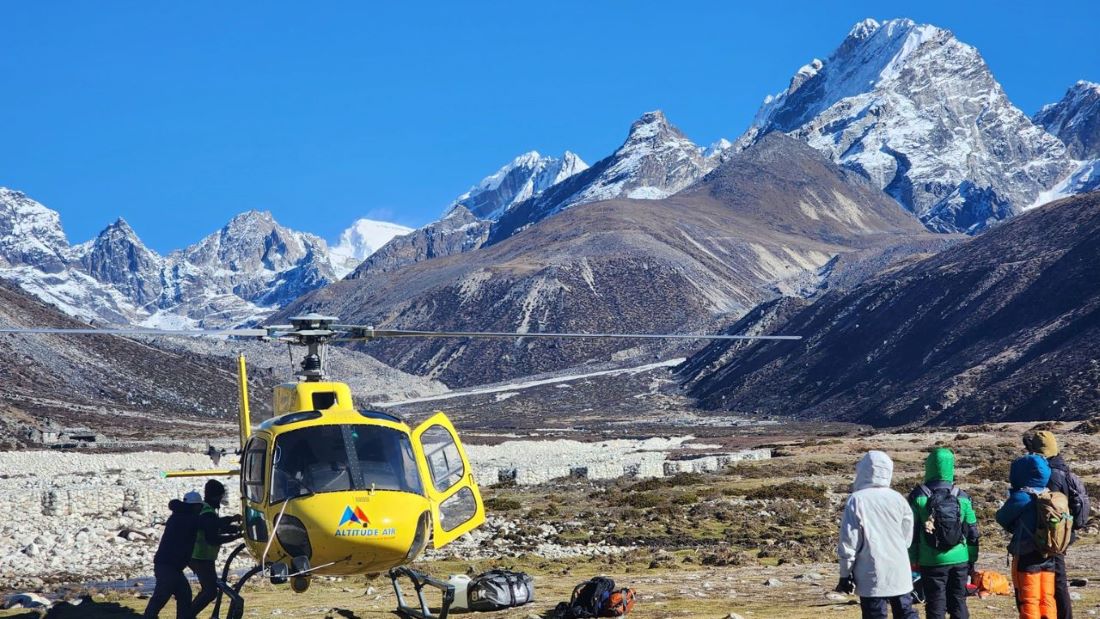
The EBC Helicopter Return Trek follows the traditional Everest Base Camp trekking route from Lukla to Gorak Shep (5,164m) and Everest Base Camp (5,364m), but instead of trekking back down through Namche Bazaar and Lukla, you board a helicopter at Gorak Shep and fly directly back to Lukla or Kathmandu.
This package is ideal for:
Trekkers with limited vacation time (typically 12–15 days total)
Travellers who want to avoid knee strain on the long descent
Adventure seekers wanting a scenic aerial view of the Khumbu Glacier and Himalayan giants
Those concerned about altitude sickness symptoms worsening on the return trail
Trek Highlights
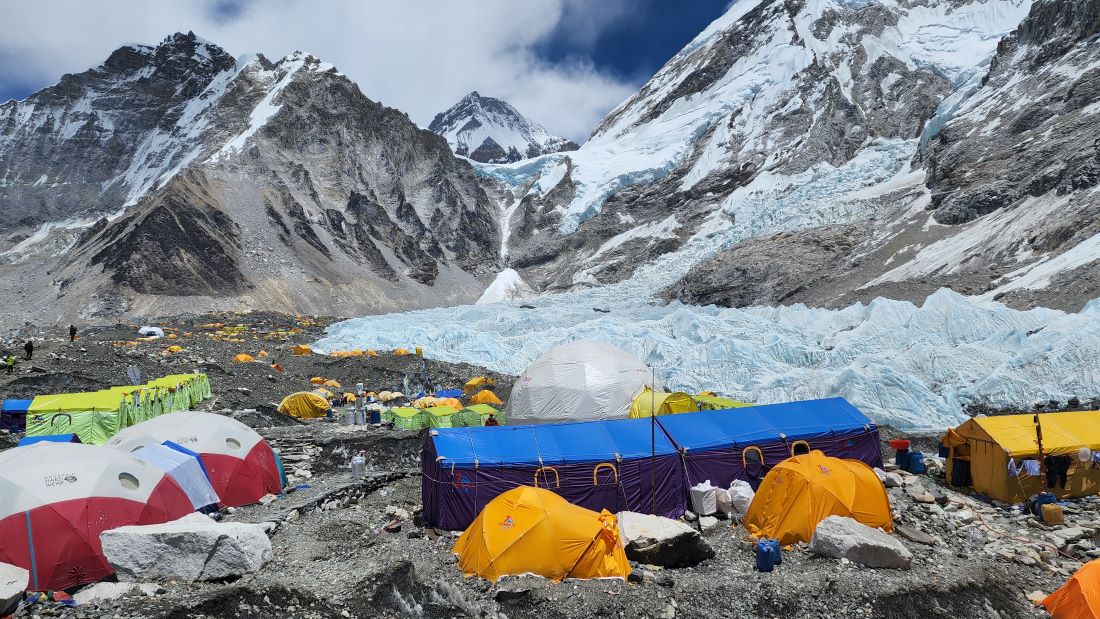
Stand at Everest Base Camp (5,364m), the gateway to the world’s highest mountain
Reach Kala Patthar (5,545m) for the most iconic panoramic sunrise view of Everest
Fly over the Khumbu Glacier and Icefall by helicopter
Aerial views of Everest, Lhotse, Nuptse, Cho Oyu, Ama Dablam, and the entire Khumbu valley
Visit Tengboche Monastery, the most famous Buddhist monastery in the Khumbu region
Walk through Sagarmatha National Park, a UNESCO World Heritage Site
Experience authentic Sherpa culture, teahouse hospitality, and mountain lifestyle
Explore the vibrant mountain town of Namche Bazaar (3,440m)
Everest Base Camp Trek With Helicopter Return Itinerary
Itinerary days may vary slightly depending on your chosen package (helicopter return directly to Kathmandu or to Lukla). Mountain World Trek will customise the itinerary based on your schedule and group size.
Day 01 :
Arrival in Kathmandu (1,400m)
Arrive at Tribhuvan International Airport, Kathmandu. Our representative will greet you and transfer you to your hotel. Evening welcome briefing and trek orientation with the Mountain World Trek team.
Day 02 :
Fly Kathmandu to Lukla (2,840m) - Trek to Phakding (2,610m) | 3–4 hrs | 8km
Take an early morning scenic flight to Tenzing-Hillary Airport in Lukla - one of the world's most thrilling airport landings. Begin your trek through lush rhododendron forests to the riverside village of Phakding.
Day 03 :
Phakding to Namche Bazaar (3,440m) | 5–6 hrs | 12km
Trek through the Dudh Koshi valley, cross several suspension bridges, and make the steep climb to Namche Bazaar, the commercial heart of the Khumbu. First views of Everest from the forest trail above Jorsale.
Day 04 :
Acclimatization Day in Namche Bazaar (3,440m) | 3-5km
Rest and acclimatize. Take a hike to the Everest View Hotel for stunning panoramas of Everest, Ama Dablam, and Thamserku. Visit the Sherpa Culture Museum and the bustling Saturday market.
Day 05 :
Namche Bazaar to Deboche (3,800m) | 6-7 hrs | 14km
Trek through high ridges with close-up views of Everest and Ama Dablam. Arrive at Tengboche, home to the famous Tengboche Monastery. Visit the Monastery and continue trek to Deboche for another 45min for overnight place.
Day 06 :
Deb0che to Dingboche (4,410m) | 5–6 hrs | 8Km
Trek through rhododendron forests and cross the Imja Khola valley. The trail opens into wide glacial terrain as you climb to the high-altitude village of Dingboche via Pangboche and Sumare.
Day 07 :
Acclimatization Day in Dingboche (4,410m)
Second acclimatization day. Hike to the ridge above Dingboche for views of Makalu, Island Peak, and Lhotse. This day is critical for adapting to the altitude before the higher sections of the trek.
Day 08 :
Dingboche to Lobuche (4,940m) | 4–5 hrs | 7km
One of the scenic day of the Everest base camp trek passing through Thukla Pass, where stone memorials honour climbers who lost their lives on Everest. Continue across the lateral moraine of the Khumbu Glacier to Lobuche.
Day 09 :
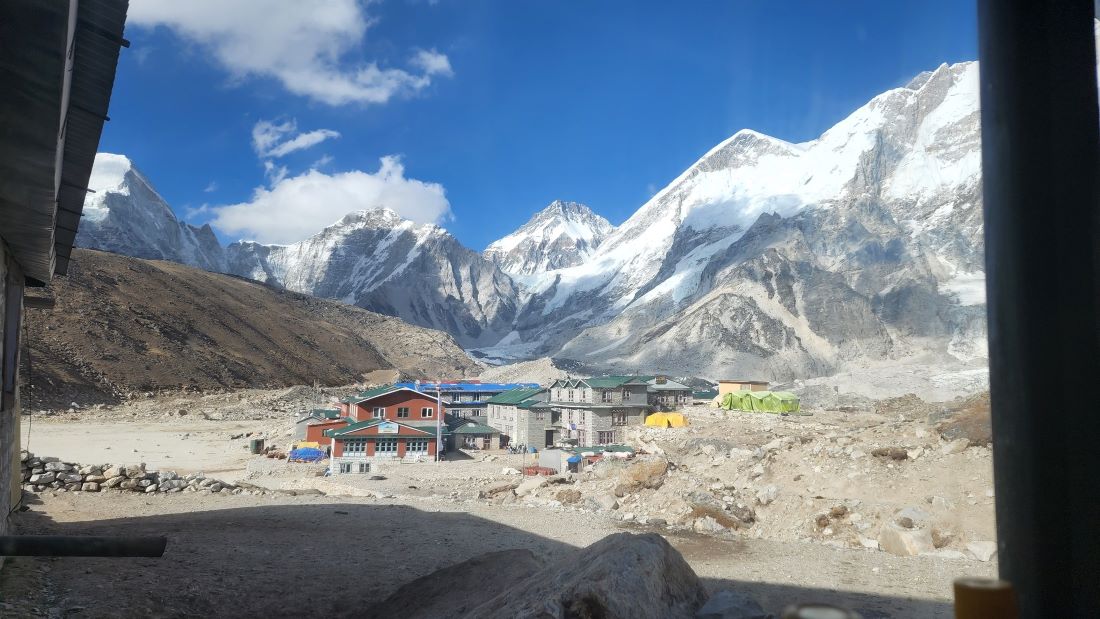
Lobuche to Gorak Shep (5,164m), Hike to Everest Base Camp (5,364m) | 7–8 hrs | 12km
Today is the biggest day of the trek. Trek across the rocky Khumbu Glacier moraine to Gorak Shep. Drop your bags and hike to Everest Base Camp, stand where the expeditions begin. Enjoy yourself surrounding base camp and return to Gorak Shep for the night.
Day 10 :
Gorak Shep to Kala Patthar (5,545m), Helicopter Return to Lukla / Kathmandu
Wake before sunrise and hike to Kala Patthar for the most spectacular close-up view of Mount Everest at sunrise. Return to Gorak Shep. After breakfast, board your helicopter from Gorak Shep and fly back to Lukla or directly to Kathmandu, soaring over the Khumbu Glacier and past the highest peaks on Earth.
Day 11 :
Lukla to Kathmandu By Flight
If your helicopter dropped you in Lukla, take a morning flight back to Kathmandu. Rest of the day free for shopping in Thamel.
Day 12 :
Departure from Kathmandu
Transfer to Tribhuvan International Airport for your international flight. Trek ends.
Everest Base Camp Trek with Helicopter Return | Package Includes & Excludes
Cost Includes
Airport transfers in Kathmandu
Kathmandu hotel accommodation (usually 2 nights)
Kathmandu–Lukla–Kathmandu flights
Helicopter return from Gorak Shep to Lukla or Kathmandu
Teahouse accommodation during the trek
All meals during the trek (breakfast, lunch, dinner)
Licensed English-speaking trekking guide
Experienced Sherpa porters
Sagarmatha National Park entry permit and Municipality permit
Crew insurance, equipment, and first aid
All government taxes and service charges
Sleeping bag and down jacket rental (if not bringing your own)
Duffel bag provided by the company
Oximeter for daily altitude monitoring
Emergency oxygen cylinder available at additional cost.
Company certificate and medal of completion
Cost Excludes
International airfare to/from Nepal
Nepal travel visa
Travel and rescue insurance (required, must cover helicopter evacuation)
Personal expenses, tips, and alcoholic beverages
Extra nights in Kathmandu due to flight delays
Lunch and dinner in Kathmandu
Hot shower and battery charging fees on the trail (teahouses charge separately)
WiFi charges on the trail
Personal trekking gear and clothing
Snacks and energy bars on the trail
Tips for guide and porters (customary and expected)
Everest Base Camp Trek with Helicopter Return Map
Everest Base Camp Trek with Helicopter Return from Gorak Shep to Lukla
Where Does the Helicopter Depart From?
The helicopter departs from Gorak Shep (5,164m), the last settlement before Everest Base Camp. This is the highest helicopter pickup point on the EBC route.
Where Does the Helicopter Land? You have two options:
Gorak Shep to Lukla – Takes approximately 45 minutes to 1 hour. From Lukla, you take a scheduled flight back to Kathmandu.
Gorak Shep to Kathmandu – Takes approximately 1.5–2 hours with possible fuel stops at Lukla or Phaplu. Most scenic and time-saving option.
How Long is the Helicopter Flight?
Gorak Shep to Lukla: approximately 45–60 minutes Gorak Shep to Kathmandu: approximately 90–120 minutes (with one fuel stop)
What is the Helicopter Capacity?
Most helicopters used on the EBC route are 5–6 seater aircraft (B3 Écureuil or similar). Groups are divided if larger.
Is the Helicopter Shared or Private?
Mountain World Trek offers both options for this EBC heli return:
Shared helicopter service – you share the Khumbu helicopter ride with other trekkers (typically 4–5 passengers). This is the most cost-effective way to do the Everest helicopter charter back to Lukla or Kathmandu.
Private/charter helicopter – the entire aircraft is exclusively for your group.
This trekking in, flying out format is increasingly popular among trekkers who want the full EBC experience without the repeated trail on the descent. The Gorak Shep to Kathmandu helicopter flight is one of the most dramatic aerial journeys in the world, passing directly alongside Everest’s South Face.
What Are the Views from the Helicopter?
The helicopter flies over the Khumbu Glacier, past the Khumbu Icefall, and alongside Mount Everest, Lhotse, Nuptse, Pumori, Ama Dablam, and the entire Sagarmatha National Park. This aerial perspective is something no ground trekker can experience, it is one of the most dramatic flights on Earth.
Is the Helicopter Flight Weather Dependent?
Yes. Helicopter operations in the Khumbu are subject to weather conditions and visibility. Mountain World Trek monitors weather closely and works with experienced local helicopter operators. In case of weather delays, we accommodate trekkers at Gorak Shep or Lobuche and reschedule the earliest possible flight.
How Many Days is the EBC Helicopter Return Trek?
The standard Everest Base Camp Trek with Helicopter Return takes 12–14 days from Kathmandu. Compared to the full EBC round trek (approximately 14–16 days), the helicopter return saves 4–5 days of trekking and significantly reduces physical fatigue on the knees and joints during the descent.
Cost of Everest Base Camp Trek with Helicopter Return
The cost depends on group size, helicopter type (shared or private), season, and inclusions. Generally:
Package Type
Estimated Cost Per Person (USD)
Standard EBC Helicopter Return (Shared Heli)
Starts From $1,899
EBC Helicopter Return (Private Heli)
USD 2,500 – USD 3,500
Luxury EBC Helicopter Return
USD 3,500 – USD 5,000
Contact Mountain World Trek for the latest pricing, group discounts, and seasonal offers.
Best Season for Everest Base Camp Trek with Helicopter Return
Cold but clear; fewer trekkers; possible snow on trail
Monsoon
June – August
Heavy rain, leeches, poor visibility — not recommended
The best months for the helicopter return are October, November, March, and April, when weather windows are most reliable for flight operations.
Permits Required for EBC Trek To trek in the Everest region, you will need:
TIMS Card (Trekkers’ Information Management System) — issued by Nepal Tourism Board
Sagarmatha National Park Entry Permit — obtained at the park entrance in Monjo
Khumbu Pasang Lhamu Rural Municipality Permit — collected at Lukla
Mountain World Trek handles all permit arrangements on your behalf.
Altitude and Acclimatization on the EBC Trek
The EBC trek takes you to a maximum altitude of 5,545m (Kala Patthar). Proper acclimatization is essential to prevent Acute Mountain Sickness (AMS).
Key acclimatization tips:
Follow the “climb high, sleep low” principle
Drink 3–4 litres of water per day
Avoid alcohol and sleeping pills at altitude
Never ascend more than 500m per day above 3,000m
Rest on designated acclimatization days (Namche and Dingboche)
Carry Diamox (Acetazolamide) after consulting your doctor
One important advantage of the helicopter return is that it avoids re-exposure to high altitude during the long descent, which can be mentally and physically exhausting, especially for trekkers who experienced mild AMS during the ascent.
Physical Fitness Requirements
The EBC trek is rated moderately strenuous to challenging. You do not need to be an experienced mountaineer, but you should:
Be able to walk 5–7 hours per day for consecutive days
Have no serious heart, lung, or blood pressure conditions
Have trekked at moderate altitudes before (preferred but not mandatory)
Begin physical preparation at least 8–12 weeks before departure (hiking, jogging, cycling)
The helicopter return significantly reduces the physical toll on the body compared to the full return trek on foot.
Why Choose the Helicopter Return Over the Full Trek Down?
Factor
Trek Down
Helicopter Return
Time
3-4 extra days
Saves 3-4 days
Knee & joint strain
Significant
None
Scenery
Familiar return trail
Aerial Himalayan views
Risk of AMS on descent
Possible
Eliminated
Experience
Repeated trail
Unique, memorable flight
Cost
Lower
Higher (but worth it)
Why Book with Mountain World Trek?
Mountain World Trek is a government-registered, locally owned trekking company based in Thamel, Kathmandu – and one of Nepal’s most experienced Himalayan operators with 30 years in the industry and 5000+ Everest Base Camp treks completed.
📋 Company Registration – Registered with the Office of Company Registrar, Nepal | Reg. No. 71796/066/067
🏔️ Trekking Agencies Association of Nepal (TAAN) – Member
⛰️ Nepal Mountaineering Association (NMA) – Affiliated
⭐ TripAdvisor Certificate of Excellence – Awarded by verified traveler reviews
What makes us different:
Local guides, born in the mountains – our Sherpa and trekking guides are not just trained, they grew up in the Khumbu region. They know the trails, the teahouses, the weather patterns, and the helicopter operators personally. That local knowledge is what keeps your trek safe and on schedule.
Helicopter partnerships you can rely on – after 30 years operating in Khumbu, we work only with helicopter companies we trust. When weather delays happen at Gorak Shep, our team is already on the phone rescheduling your flight, not waiting for you to figure it out.
No hidden costs, ever – our price of USD 1,899 per person is what you pay. Every permit, every transfer, every teahouse meal is included. We publish what others hide.
Safety is not a bullet point for us – every guide carries a pulse oximeter, a first aid kit, and a satellite communicator. We monitor every trekker’s oxygen saturation daily from Namche onwards. In 30 years, we have never lost a trekker to altitude sickness.
Small groups, personal service – maximum 16 people per group. You are never a number on a bus tour. Your itinerary can be adjusted, your pace respected, your concerns heard.
Get a free custom quote within 24 hours – no commitment required.
Frequently Asked Questions | Everest Base Camp Trek with Helicopter Return
Yes. Helicopter operations in the Everest region are conducted by licensed Nepali aviation companies with experienced high-altitude pilots. Mountain World Trek partners only with trusted and safety-certified operators.
Yes. Solo trekkers can join a shared helicopter service or book a private charter through Mountain World Trek.
In case of bad weather, our team will arrange accommodation at Gorak Shep or Lobuche and reschedule the helicopter at the earliest opportunity. This is why travel insurance covering helicopter evacuation and delays is mandatory.
Yes, absolutely. Your travel insurance must specifically cover high-altitude trekking above 5,000m and helicopter rescue/evacuation. This is non-negotiable and required by Mountain World Trek.
Weight limits are strict on high-altitude helicopters. Typically, each passenger is allowed 10–15 kg of luggage including a daypack. Excess luggage can be sent down with porters.
Helicopters do not land at Kala Patthar (5,545m). The standard pickup point is Gorak Shep (5,164m), which has a small landing area suitable for high-altitude rotorcraft.
Yes. The helicopter return is particularly popular among trekkers aged 50 and above, as it removes the physically demanding descent and reduces overall trip duration. Medical clearance from a doctor is recommended.
The EBC helicopter return is part of a full trekking itinerary, you trek up to base camp and fly back. An EBC helicopter tour is a short-day trip from Kathmandu by helicopter to Everest Base Camp and back, with no trekking involved.
The helicopter return saves 4–5 days by flying back from Gorak Shep instead of trekking down. It reduces physical strain, eliminates knee fatigue on the descent, and adds a breathtaking aerial view of Everest and the Khumbu Glacier.
The helicopter departs Gorak Shep at 5,164m and flies between 5,000m–6,000m, offering eye-level views of Everest, Lhotse, Nuptse, and the Khumbu Icefall, a perspective impossible from the ground.
The helicopter descends rapidly to lower altitudes, which relieves AMS symptoms rather than worsening them. Most trekkers feel noticeably better within minutes of the descent from Gorak Shep.
Prior experience is helpful but not required. You should comfortably walk 5–7 hours daily on mountain terrain. Physical fitness and determination matter more than trekking experience. Mountain World Trek guides set a pace suitable for all levels.
Key items include a down jacket, waterproof trekking boots, trekking poles, UV sunglasses, sunscreen SPF 50+, headlamp, water purification tablets, personal first aid kit, and Diamox. Keep luggage under 10–15 kg for the helicopter flight.
Kala Patthar (5,545m) is the highest point of the EBC trek and offers the closest ground-level views of Everest's summit. Trekkers hike there at sunrise on the final morning before descending to Gorak Shep to board the helicopter.
Yes, but spring (March–May) and autumn (September–November) are most reliable. Monsoon season (June–August) brings poor visibility and frequent delays. Winter flights operate but cold temperatures and snow can occasionally disrupt schedules.
Most helicopters carry 2 passengers at Gorak Shep's altitude (5,164m) due to weight restrictions. For larger groups, multiple flights are arranged on the same day by shuttle.
Yes. The ascent to EBC (5,364m) and Kala Patthar (5,545m) still involves full altitude exposure. Proper acclimatization at Namche and Dingboche is essential. The helicopter return simply eliminates additional altitude exposure during the descent.
Yes. It can be added to any standard EBC itinerary as an upgrade or booked as a dedicated package from the start. Mountain World Trek recommends booking in advance as helicopter slots fill quickly during peak season.
For most trekkers, yes. It saves 4–5 days, protects knees on the descent, and replaces the return trail with an unforgettable Himalayan flight. When you factor in saved accommodation and meal costs for extra days, the price difference is smaller than it appears.
October and April are the best months. Both offer stable weather, clear skies, and reliable helicopter conditions. November and March are excellent alternatives with fewer crowds.
Share your travel dates, group size, and budget. All permits, helicopter slots, guides, and accommodation are arranged on your behalf before you arrive in Nepal.
Annapurna Circuit Trek is a classic Himalayan trek in Nepal with diverse landscapes, villages, and the challenging Thorong La Pass with stunning mountain views.
The Kanchenjunga Circuit Trek in Nepal is a remote and off-the-beaten-path Himalayan adventure that circles the world’s third-highest mountain, Mount Kanchenjunga. Explore wild landscapes, rich biodiversity, and authentic Himalayan villages in eastern Nepal. This complete guide covers itinerary, cost, permits, difficulty, and everything you need to know for 2026.