QUICK ANSWER
The Annapurna Base Camp Trek itinerary will take 10 days from arrival in Kathmandu to departure, with 6 trekking days and a high point of 4,130m at base camp. You travel to Pokhara, drive to the road-head near Chhomrong, then trek up the Modi Khola valley via Bamboo and Deurali to base camp, returning the same way. It is a moderate trek with no technical climbing, but long days of stone staircases. As of 2026, a licensed guide booked through a registered agency is mandatory.
In This Guide
- Why trek to Annapurna Base Camp?
- How many days does the ABC trek take?
- Itinerary at a glance (day-by-day table)
- The full 10-day itinerary, day by day
- Altitude profile: how the climb is paced
- Best time to do the trek
- Can the itinerary be shortened or extended?
- Planning the rest of your trek
- Practical tips
- FAQ
- Related guides
- Sources and references
Why Trek to Annapurna Base Camp?
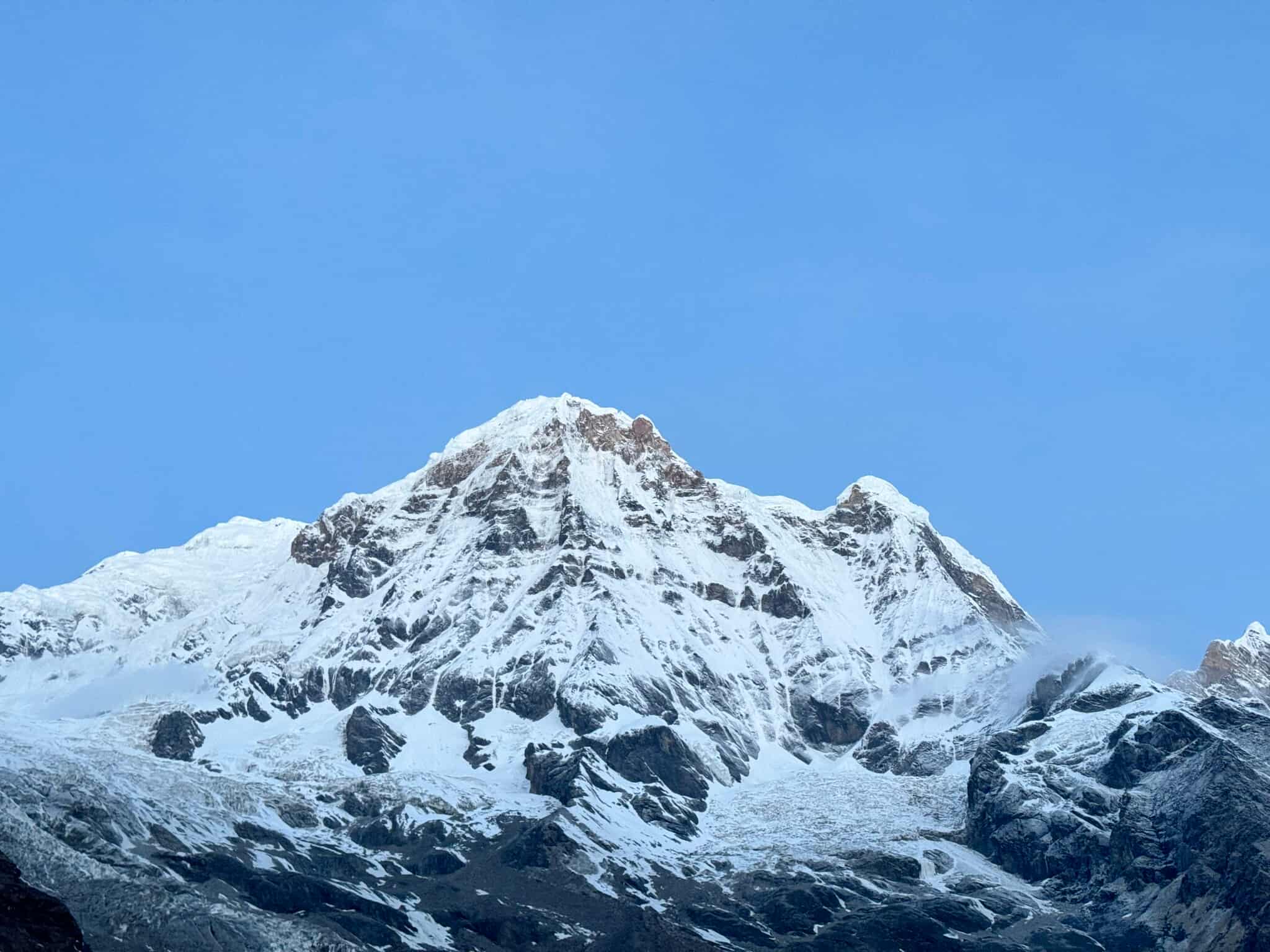
The Annapurna Base Camp Trek is one of the most rewarding journeys in the Himalayas, and one of the most accessible. In a single route you pass through terraced farmland, dense rhododendron forest, and the narrow Modi Khola valley, before the trail opens into a vast glacial amphitheatre ringed by peaks over 7,000 and 8,000 metres. Standing at base camp at 4,130 metres, surrounded on all sides by Annapurna I, Annapurna South, Machapuchare, and Hiunchuli, is a genuinely extraordinary experience.
What makes this trek so popular is the balance it strikes. It reaches real high-mountain scenery without requiring technical climbing or extreme altitude, the teahouses are comfortable and well established, and the whole route can be completed in around ten days from Kathmandu. This guide lays out a tried-and-tested 10-day itinerary, day by day, with the distances, altitudes, and timings you need to plan with confidence.
How Many Days Does the ABC Trek Take?
This itinerary runs to 10 days door to door, from arrival in Kathmandu to departure. Within that, there are 6 days of trekking (Days 3 to 8), with the remaining days used for travel between Kathmandu, Pokhara, and the trailhead. The actual walking from the road-head near Chhomrong up to base camp and back covers roughly 55 to 60 kilometres.
Ten days is a comfortable, safe length: it gives a steady ascent profile that helps your body adjust to altitude, and a buffer for weather. Fit trekkers sometimes compress the walking into fewer days, but doing so increases altitude-sickness risk and leaves no margin for a bad-weather day. The pacing below is built to get you to base camp feeling strong rather than rushed.
Itinerary at a Glance
The full route in one view. The two highlighted rows are the highest, most demanding stages, where altitude becomes a real factor.
| Day | Route | Distance | Time | Overnight |
| 1 | Arrive in Kathmandu | – | – | Kathmandu 1,350m |
| 2 | Kathmandu → Pokhara | – | Drive 7–8h / Fly 25min | Pokhara 850m |
| 3 | Pokhara → Chhomrong | Drive 60km + 3km | 3h drive + 3h trek | Chhomrong 2,170m |
| 4 | Chhomrong → Bamboo | 8–9 km | 5–6 h | Bamboo 2,310m |
| 5 | Bamboo → Deurali | 9–10 km | 5–6 h | Deurali 3,230m |
| 6 | Deurali → Annapurna BC | 7 km | 5–6 h | ABC 4,130m |
| 7 | ABC → Bamboo | 16–17 km | 7–8 h | Bamboo 2,310m |
| 8 | Bamboo → Pokhara | 12 km + drive | 6–7 h | Pokhara 850m |
| 9 | Pokhara → Kathmandu | – | Drive 7–8h / Fly 25min | Kathmandu 1,350m |
| 10 | Departure or extend | – | – | – |
Note: a 25-minute flight can replace the 7–8 hours drive between Kathmandu and Pokhara on Days 2 and 9. Day 3’s drive ends at the road-head, followed by a short, steep climb to Chhomrong.
The Full 10-Day Itinerary, Day by Day
Day 1: Arrive in Kathmandu (1,350m)
Overnight: Kathmandu 1,350m
Your trek begins in Nepal’s capital. Arrive at Tribhuvan International Airport, transfer to your hotel, and settle in. If you are booking through an agency, this is when you confirm arrangements, meet your guide, and run a final gear check. Use any spare time to explore Thamel’s trekking shops or visit a landmark such as Boudhanath or Durbar Square.
Tonight is also the moment to finalise the practical essentials: confirm your permits are being arranged, check your travel insurance covers high-altitude evacuation, and withdraw cash for the trail.
Day 2: Kathmandu to Pokhara (850m)
Drive 7–8h / Fly 25min Overnight: Pokhara 850m
Travel west to Pokhara, the lakeside city that is the gateway to the Annapurna region. The scenic drive takes 7 to 8 hours along the Trishuli and Marsyangdi rivers, while a 25-minute flight is the faster, easier alternative. Pokhara sits at just 850m, lower than Kathmandu, so this is not an altitude day.
Spend the afternoon by Phewa Lake, sort any last-minute gear in the Lakeside shops, and rest. This is your last reliable chance for ATMs, a hot shower on demand, and a proper city meal before the trail.
Day 3: Pokhara to Chhomrong (2,170m)
Drive 60km, 3h + Trek 3km, 3h Overnight: Chhomrong 2,170m
An early drive of around 60 km and 3 hours brings you from Pokhara to the road-head. From there, a short but steep trek of about 3 km and 3 hours climbs to Chhomrong, a Gurung village perched on the hillside with your first close views of Annapurna South and Machapuchare.
Chhomrong is one of the best-equipped villages on the route, with comfortable lodges and good food, a fine place to spend your first night on the trail and ease into the rhythm of teahouse trekking.
Day 4: Chhomrong to Bamboo (2,310m)
8–9 km 5–6h Overnight: Bamboo 2,310m
Today the trail drops steeply from Chhomrong on a long stone staircase to the Chhomrong Khola, then climbs again through Sinuwa and into cool bamboo and rhododendron forest. Despite finishing at a similar altitude to where you started, the day involves significant up-and-down and tired legs by the end.
Bamboo is a peaceful forest settlement, quieter than the villages lower down even in peak season, and a comfortable place to rest before the climb toward the higher country.
Day 5: Bamboo to Deurali (3,230m)
9–10 km 5–6h Overnight: Deurali 3,230m
A steady climb through forest that gradually thins as you gain height, passing Dovan and Himalaya Hotel before reaching Deurali at 3,230m. This is where altitude starts to matter: you are now above 3,000m, so walk slowly, drink plenty of water, and pay attention to how you feel.
Deurali’s teahouses are simpler than those lower down, but the setting is dramatic as the valley narrows and the peaks crowd in. An easy afternoon and an early night set you up for the push to base camp.
Day 6: Deurali to Annapurna Base Camp (4,130m)
7 km 5–6h Overnight: ABC 4,130m
The big day. The trail climbs through the final stretch of valley, passing Machapuchare Base Camp before a last steady ascent onto the glacial basin of Annapurna Base Camp at 4,130m. The distance is short at around 7 km, but the altitude makes it feel longer, so keep a slow, even pace.
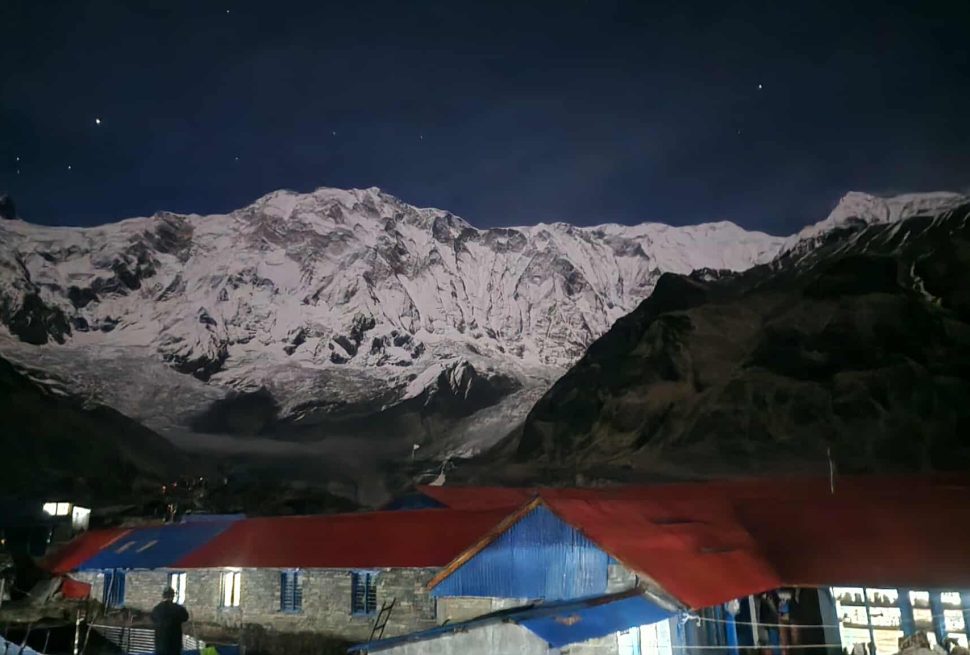
Arriving at base camp, encircled by a wall of Himalayan giants, is the emotional high point of the trek. If skies are clear, the sunset and the pre-dawn sunrise over the Annapurna massif are unforgettable. Dress warmly, this is the coldest night of the trek, and a sleeping bag rated to at least minus 10 degrees Celsius is essential.
Day 7: Annapurna Base Camp to Bamboo (2,310m)
16–17 km 7–8h Overnight: Bamboo 2,310m
After sunrise at base camp, you begin the long descent, retracing the valley all the way down to Bamboo. At 16 to 17 km and 7 to 8 hours, this is the longest day on the trek, and although it is mostly downhill, the relentless descent is hard on knees, so trekking poles earn their keep.
Losing altitude quickly feels good after the thin air of base camp, and a hot shower and hearty meal at Bamboo are well earned by the time you arrive.
Day 8: Bamboo to Pokhara (850m)
12 km + drive 6–7h Overnight: Pokhara 850m
A final morning of trekking, around 12 km, brings you back to the road-head, often via Jhinu Danda, where many trekkers stop at the natural hot springs to soak tired muscles. From there, a drive returns you to Pokhara and the comforts of the city.
Back in Lakeside, celebrate the completion of your trek with a good meal and a proper bed. The hard walking is done.
Day 9: Pokhara to Kathmandu (1,350m)
Drive 7–8h / Fly 25min Overnight: Kathmandu 1,350m
Return to Kathmandu by road or by the short flight. The afternoon is free for souvenir shopping, a celebratory dinner, or simply resting. This day also acts as a weather buffer, valuable insurance if a flight or road is delayed earlier in the trip.
Day 10: Departure or Extend Your Trip
Overnight:
Transfer to the airport for your onward flight, or use the day to extend your trip. Popular add-ons include a few more days in Pokhara for paragliding and lake time, a cultural tour of the Kathmandu Valley, or a short side trek such as Poon Hill if you have the time and energy.
Altitude Profile: How the Climb Is Paced
The itinerary is built around a gradual, safe ascent. From Chhomrong at 2,170m, you gain height steadily over four trekking days to base camp at 4,130m, an overall climb of just under 2,000m spread out rather than rushed. The single biggest jump is the final approach to base camp on Day 6, which is why the preceding night at Deurali (3,230m) matters: it lets your body begin adjusting before the highest sleeping point.
The descent is deliberately quick, dropping from 4,130m to 2,310m in a single day, which is safe because losing altitude relieves altitude stress rather than adding to it. The main consequence of the rapid descent is physical fatigue and strain on the knees, not altitude risk.
Altitude tip: the trek crosses 3,000m on Day 5 and tops out at 4,130m on Day 6. Acute mountain sickness is possible above roughly 3,000m, so ascend slowly, hydrate well, and never ignore symptoms. See the linked altitude guide below for prevention and treatment.
Best Time to Do the Trek
Two windows stand out. Spring, from March to May, brings warming temperatures and the famous rhododendron bloom that colours the lower forests. Autumn, from late September to November, offers the most stable weather and the clearest mountain views of the year, and is the single most popular season.
Winter (December to February) is possible but cold, with snow and a real avalanche risk on the upper sections, while the monsoon (June to early September) brings rain, leeches, cloud, and limited views. For most trekkers, autumn and spring are the safe, scenic choices, though they are also the busiest, so book teahouses and arrive early at each stop in peak weeks.
Can the Itinerary Be Shortened or Extended?
Yes, with trade-offs. Fit, well-acclimatised trekkers sometimes shorten the walking to seven or eight days by combining stages, for example pushing from Bamboo to Deurali and beyond more quickly, but this raises altitude-sickness risk and removes the weather buffer. It is not recommended for first-time high-altitude trekkers.
Extending is easier and often more enjoyable. You can add an acclimatisation day, include the Poon Hill viewpoint for sunrise over the range, or build in extra time in Pokhara. For anyone unsure of their altitude tolerance, adding a day is always safer than removing one.
Planning the Rest of Your Trek
This guide focuses on the route and the daily stages. The other essentials each have their own detailed guide in this series, summarised briefly here with a link to the full version.
Permits and guide. Two permits are required, the ACAP and a TIMS card, and as of the 2026 season a licensed guide booked through a registered agency is mandatory on this route. Your agency arranges the permits, and your insurance must cover high-altitude helicopter evacuation.
Altitude safety. The trek crosses 3,000m on Day 5 and tops out at 4,130m. Ascend slowly, hydrate well, and know the early symptoms of altitude sickness.
What to pack. Layer for everything from warm valleys to freezing base-camp mornings: base layers, a down jacket, a waterproof shell, broken-in boots, trekking poles, and a sleeping bag rated to at least minus 10 degrees Celsius.
Food, accommodation, and budget. You sleep and eat in teahouses every night, with dal bhat the best-value meal. Budget roughly USD 20 to 30 a day for food, plus permits, guide, and transport.
Practical Tips
- Start each trekking day early. Mountain weather is clearest in the morning, and finishing by mid-afternoon secures a teahouse room in peak season.
- Carry your essentials in your daypack: water, snacks, a warm layer, rain gear, sunscreen, and your permits and passport.
- Treat your own water with tablets or a filter rather than buying bottled water, which is expensive and creates plastic waste.
- Use the Day 9 buffer wisely. If an earlier flight or drive is delayed, this spare day protects your international departure.
- Take it slow above Deurali. The summit-day temptation to rush is exactly what causes altitude problems.
FAQ: Annapurna Base Camp Trek Itinerary
How many days does the Annapurna Base Camp Trek take?
This itinerary is 10 days from arrival in Kathmandu to departure, including 6 days of trekking. The actual walking from the road-head near Chhomrong up to base camp and back takes about 6 days.
How high is Annapurna Base Camp?
Annapurna Base Camp sits at 4,130 metres. It is the highest point of the trek and the highest place you sleep.
How many kilometres is the trek?
The walking covers roughly 55 to 60 km round trip from the road-head near Chhomrong, plus the drive between Pokhara and the trailhead.
What is the longest day on the trek?
Day 7, the descent from base camp to Bamboo, at around 16 to 17 km and 7 to 8 hours. It is mostly downhill, so trekking poles help protect your knees.
Do I need a guide for this itinerary?
Yes. As of 2026, a licensed guide booked through a registered agency is mandatory on the Annapurna Base Camp route, and guideless independent trekking is not permitted.
Can I do the trek in fewer than 10 days?
Fit trekkers sometimes complete the walking in 7 to 8 days by combining stages, but the fuller itinerary improves acclimatisation and leaves a weather buffer. Faster schedules raise altitude-sickness risk.
When is the best time to do the ABC trek?
Spring (March to May) and autumn (late September to November) offer the most stable weather and the clearest mountain views. Autumn is the most popular season.
Where does the trek start?
From Pokhara, with a drive to the road-head and a short, steep climb to Chhomrong, then up the Modi Khola valley toward base camp.
Is altitude sickness a risk on this trek?
Yes, above roughly 3,000m. The gradual ascent in this itinerary helps, but you should still ascend slowly, hydrate, and watch for symptoms from Deurali upward.
Can I fly between Kathmandu and Pokhara?
Yes. A 25-minute flight can replace the 7 to 8 hour drive on Days 2 and 9, saving most of a day in each direction.
What happens on Day 10?
Day 10 is reserved for your departure, or for extending your trip with extra time in Pokhara, a Kathmandu Valley tour, or a short add-on trek such as Poon Hill.
Do I need previous trekking experience for the ABC trek?
No. It is a moderate teahouse trek suitable for first-time Himalayan trekkers with reasonable fitness. The main demands are consecutive days of walking and the altitude, rather than technical skill.
How fit do I need to be?
You should be comfortable walking 5 to 7 hours on consecutive days over steep, uneven, staircase-heavy terrain. A few weeks of cardio and hill walking before the trek makes a noticeable difference.
How cold does it get at Annapurna Base Camp?
Nights at base camp regularly drop below freezing, and well below it in late autumn and winter. A sleeping bag rated to at least minus 10 degrees Celsius and a warm down jacket are essential.
Will I see Machapuchare (Fishtail) on the trek?
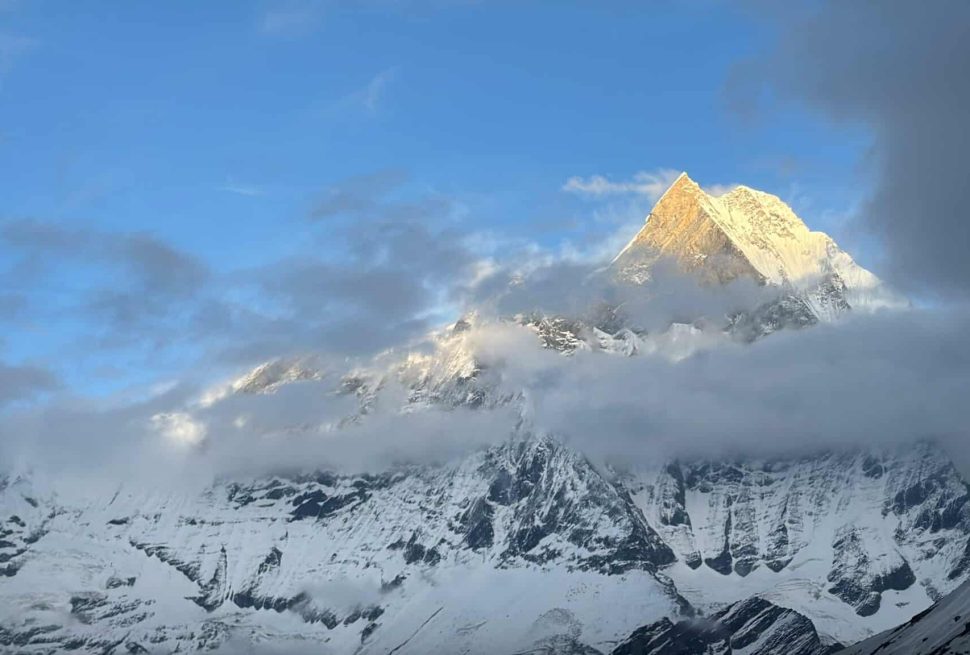
Yes. The distinctive fishtail summit of Machapuchare dominates the upper valley and is in view for much of the climb. You pass Machapuchare Base Camp shortly before reaching Annapurna Base Camp.
Is there phone signal or WiFi on the trek?
Many teahouses offer paid WiFi, and NTC mobile data works in patches up to around Machapuchare Base Camp, but the connection is slow and unreliable higher up. Carry a power bank, as charging is also limited at altitude.
Are there ATMs on the trek?
No. There are no ATMs anywhere on the trail. Withdraw all the cash you will need in Pokhara before you start, covering food, drinks, hot showers, charging, and tips.
How much does the whole trek cost?
Costs vary by style and group size, but you should budget for permits, the now-mandatory guide, teahouse food and lodging, and transport between Kathmandu, Pokhara, and the trailhead. See our cost guide for a full 10-day breakdown.
What if bad weather delays the trek?
The Day 9 buffer absorbs most short delays. In winter or the monsoon shoulder periods, consider building in one or two extra contingency days, and always follow your guide’s advice on timing and conditions.
Related Guides
Plan every part of your Annapurna Base Camp Trek:
- Full cost guide: complete 10-day budget breakdown /annapurna-base-camp-trek-cost
- Trek difficulty guide: how hard is the ABC Trek? /annapurna-base-camp-trek-difficulty
- Altitude sickness guide: symptoms, prevention, treatment /annapurna-base-camp-trek-altitude-sickness
- Food & accommodation: teahouses, dal bhat, and costs /annapurna-base-camp-trek-food-accommodation
- Packing list: what to bring and wear /annapurna-base-camp-trek-packing-list
- Permits & guide rules: ACAP, TIMS, and 2026 requirements /annapurna-base-camp-trek-permit
Sources and References
| Source | Reference |
| Nepal Tourism Board / ACAP | Annapurna Conservation Area route and permit information 2026 |
| National Trust for Nature Conservation | Annapurna Conservation Area data and trail management |
| TAAN | Guide and TIMS card requirements 2026 |
| Confirmed 10-day ABC itinerary | Stage distances, altitudes, and timings (internal reference) |