QUICK ANSWER
Thank you for reading this post, don't forget to subscribe!The Annapurna Base Camp Trek cost approximately USD 699 for the full 10-day trip but cost may go up depending on mode of transport, accommodation standard in the city, and spending habits.
In This Guide
- Full 10-day itinerary at a glance
- Why the ABC Trek is more affordable
- Permits cost
- Guide and porter fees
- Trekking package cost
- Transportation costs
- Accommodation
- Food and meals
- Extra expenses
- Complete cost breakdown table
- Budget styles: budget, mid-range, and comfort
- Money-saving tips
- Cost comparison to other Nepal treks
- Hidden and overlooked costs
- How group size affects cost
- FAQ
- Sources and references
Full 10-Day Itinerary at a Glance
Your Annapurna Base Camp Trek follows a 10-day itinerary from arrival in Kathmandu to departure. Days 3 to 8 are the active trekking days, with Days 1, 2, 9, and 10 being travel or rest days. Days highlighted in red are the hardest trekking days.
| Day | Route | Altitude | Distance / Time | Notes |
| Day 01 | Arrival in Kathmandu | 1,350m | No trek | Arrival and rest day. Prepare gear, collect permits in Kathmandu or arrange in Pokhara the following day. |
| Day 02 | Kathmandu to Pokhara | 850m | Drive 7–8 hrs or fly 25 min | Travel day. Settle in Pokhara, gear check, last-minute shopping in Lakeside. Withdraw all trek cash from ATMs here. |
| Day 03 | Pokhara to Chhomrong | 2,170m | Drive 60 km (3 hrs) + Trek 3 km (3 hrs) | First trek day. Drive to Jhinu Danda then hike up to Chhomrong through terraced fields and rhododendron forest. |
| Day 04 | Chhomrong to Bamboo | 2,310m | 8–9 km | 5–6 hours | Famous stone staircase descent from Chhomrong to the river crossing then climb to Sinuwa and down to Bamboo. |
| Day 05 | Bamboo to Deurali | 3,230m | 9–10 km | 5–6 hours | Steady climb through forest and gorge. Altitude starts to affect above 3,000m. Walk slowly from here. |
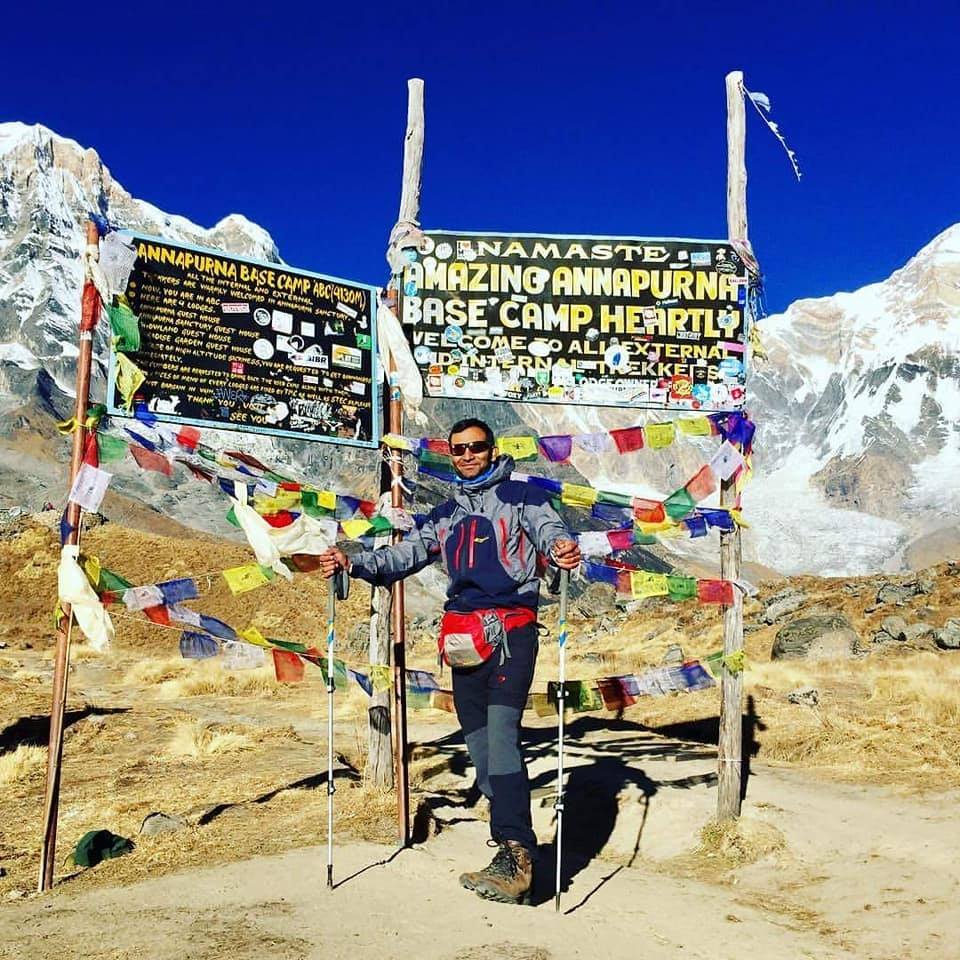
| Day 06 | Deurali to Annapurna Base Camp | 4,130m | 7 km | 5–6 hours | Highest risk day for altitude sickness. Gain 900m to reach the glacial amphitheatre. Walk slowly and breathe deeply. |
| Day 07 | ABC to Bamboo (descent) | 2,310m | 16–17 km | 7–8 hours | Longest day of the trek. Steep descent tests knees. Trekking poles essential. Take the staircases slowly. |
| Day 08 | Bamboo to Pokhara | 850m | 12 km + Drive | 6–7 hours | Trek down to Jhinu Danda then drive back to Pokhara. Hot springs at Jhinu available as a reward. |
| Day 09 | Pokhara to Kathmandu | 1,350m | Drive 7–8 hrs or fly 25 min | Return travel day. Celebrate your achievement in Kathmandu. |
| Day 10 | Departure or Extension | — | — | Depart Kathmandu or extend your trip to explore more of Nepal. |
Trail nights breakdown:
Day 3: Chhomrong (Night 1) Day 4: Bamboo (Night 2) Day 5: Deurali (Night 3) Day 6: ABC (Night 4) Day 7: Bamboo (Night 5) Day 8: Pokhara (Night 6). Total: 5 trail nights plus 2 Pokhara hotel nights equals 7 total nights away from Kathmandu.
Why the Annapurna Base Camp Trek Is Affordable
The Annapurna Base Camp Trek is not a restricted area. This single fact changes everything about the budget. You do not need an expensive Restricted Area Permit, which on some routes costs USD 75 to USD 100 per week or more. You do not need a mandatory licensed guide. And you do not have to book through an agency, which means independent trekkers can keep costs low.
The trail is also well developed, with teahouses at regular intervals offering competitively priced rooms and meals. Because the trek begins close to Pokhara, transport costs to the trailhead are modest compared to routes that require long drives or domestic flights to remote starting points.
Annapurna Base Camp Trek Permit Cost (2026): ACAP & TIMS Fees
One of the reasons the Annapurna Base Camp Trek remains one of Nepal’s best-value adventures is its affordable permit fees. Unlike restricted trekking regions such as Upper Mustang or Manaslu, where permit costs can run into hundreds of dollars, the Annapurna region requires only two inexpensive permits.
You can obtain these permits in either Kathmandu or Pokhara before starting your trek. If you book your trip with Mountain World Treks and Expedition, our team will arrange all the required permits for you, allowing you to focus on preparing for your adventure rather than dealing with paperwork.
Annapurna Base Camp Trek Permit Costs:
Annapurna Conservation Area Permit (ACAP)
- Foreign nationals (non-SAARC): NPR 3,000 (approximately USD 22–25)
- SAARC nationals: NPR 1,000 (approximately USD 8)
TIMS (Trekkers’ Information Management System) Card
· TIMS Card (Foreign Nationals): NPR 2,000 (approximately USD 15–17) when issued through the official online system used by registered trekking agencies.
Good to know: Permit fees are subject to change by the Nepal Tourism authorities. When you book with Mountain World Treks and Expedition, we arrange all permits on your behalf, ensuring everything is up to date before your trek begins.
This permit cost is only a small portion of the total Annapurna Base Camp Trek Cost, making the trek one of the most affordable and rewarding Himalayan adventures in Nepal.
2. Guide and Porter Fees
Hiring a guide is not legally required on the Annapurna Base Camp Trek, but it is strongly recommended for safety, navigation, and a richer experience. Guide and porter fees cover 6 active trek days (Days 3 to 8).
Licensed guide: Approximately USD 30 per day, including meals, accommodation, and insurance. For 6 trek days: USD 180
Porter: Approximately USD 20 per day. Shared between two trekkers for 6 days: USD 60 per person.
3. Trekking Package Cost
A standard all-inclusive Annapurna Base Camp Trek package from a reputable agency like mountain world treks costs USD 699 per person for the full 10-day trip, arrival to departure.
What a good package should include:
- Airport puck up and drop off
- Kathmandu and pokhara hotel, twisn sharing basis
- All permits (ACAP and TIMS)
- A licensed guide for 6 trek days
- A porter for 2 people sahring
- Teahouse accommodation in twin-sharing rooms
- Three meals per day during the trek
- Airport or hotel transfers (Kathmandu and Pokhara)
- Basic insurance for the guide and porter
Items commonly excluded from packages:
- Your own travel insurance
- Hot showers, WiFi, drinking water, boiled water, and battery charging on the trail
- Tips for the guide and porter
- Meals in Pokhara and Kathmandu on travel days
- Gear rental or purchase
Always ask for a written breakdown of inclusions and exclusions before booking any package.
4. Transportation Costs
Day 2 and Day 9: Kathmandu to Pokhara and Return
- Tourist bus: 7 to 8 hours, USD 15 each way
- Local bus: USD 10 each way
- Domestic flight: 25 minutes, approximately USD 125 per person each way
- Private car: USD 120 for the vehicle, split among the group
Day 3: Pokhara to Trailhead (Jhinu Danda)
Drive approximately 60 km, taking around 3 hours. A private jeep costs approximately USD 60 one way for the vehicle. A shared jeep reduces the per-person cost.
Day 8: Trailhead to Pokhara
Trek 12 km down to Jhinu Danda then drive back to Pokhara. Hot springs at Jhinu Danda are a popular stop before the drive.
5. Accommodation
Based on the 10-day itinerary, accommodation breaks down as follows:
Kathmandu (Day 1 and Day 9): Budget guesthouses USD 10 to USD 20 per night, mid-range hotels USD 30 to USD 60 per night.
Pokhara (Day 2 and Day 8): Budget guesthouses USD 10 to USD 20 per night, mid-range hotels USD 30 to USD 60 per night.
Trail nights (5 nights: Chhomrong, Bamboo, Deurali, ABC, and Bamboo again): USD 5 to USD 10 per room per night at lower elevations, USD 5 to USD 10 per night in the upper sections.
6. Food and Meals on the Trek
A daily food budget on the trail is usually USD 20 to USD 30 per person, covering breakfast, lunch, dinner, and hot drinks. Dal bhat is your best value meal with unlimited refills at most teahouses.
As altitude increases, menu options narrow and prices rise. A bowl of noodles that costs USD 3 at Chhomrong may cost USD 5 to USD 6 at Deurali. Stock up in Pokhara on snacks such as nuts, chocolate, and energy bars.
Estimated meal cost for 7 active days on trail: approximately USD 140 to USD 210.
7. Extra Expenses You Should Not Forget
Drinking water, Hot showers, WiFi, and charging: Usually USD 2 to USD 5 each. Over 5 trail nights, budget an extra USD 50 to USD 70 for these conveniences.
Gear rental in Pokhara: Sleeping bag or down jacket USD 1 to USD 2 per day, trekking poles USD 1 per day.
Travel insurance: USD 50 to USD 150. Must explicitly cover helicopter evacuation to at least 5,000 metres. Non-negotiable.
Tips: USD 8 to USD 12 per day for guide and USD 5 to USD 10 per day for porter. Total for 6 trek days: USD 60 to USD 120.
ATM warning:
There are no ATMs anywhere on the ABC Trek trail. Withdraw all the cash you need from ATMs in Pokhara on Day 2 before you depart. Carry a contingency buffer of at least USD 100 to USD 150 for unexpected situations.
Nepal visa fees:
Tourist visa on arrival at Kathmandu airport: USD 30 for 15 days, USD 50 for 30 days, or USD 125 for 90 days. Most trekkers opt for the 30-day visa. Apply online through the Nepal government e-visa portal before travel to save time on arrival.
Complete Cost Breakdown Table: Annapurna Base Camp Trek (10 Days)
All costs in USD. Based on the full 10-day itinerary: 6 active trek days, 5 trail nights, 2 Pokhara nights.
| Category | Details | Budget USD | Comfort USD |
| Permits | ACAP and TIMS card | $33 | $42 |
| Guide fee | USD 25 to 35 per day for 6 trek days | $150 | $210 |
| Porter fee | USD 15 to 25 per day shared between two (6 days) | $45 | $75 |
| Transportation | Bus and shared jeep vs flight and private jeep | $50 | $400 |
| Accommodation | 5 nights teahouse and 2 nights Pokhara hotel | $80 | $250 |
| Food and meals | USD 20 to 30 per day for 7 days on trail | $140 | $210 |
| Hot shower and WiFi | USD 2 to 5 per use across the trip | $30 | $70 |
| Travel insurance | High-altitude and helicopter evacuation cover | $50 | $150 |
| Gear rental | Sleeping bag, down jacket, trekking poles | $30 | $60 |
| Tips | Guide and porter combined for 6 trek days | $60 | $120 |
| Snacks and extras | Chocolate, nuts, energy bars, drinks | $40 | $60 |
| GRAND TOTAL | 10-day trip, all categories included | ~$708 | ~$1,647 |
All-inclusive package option:
If you book a package (USD 600 to USD 1,100), permits, guide, porter, accommodation, and trail meals are already bundled in. Add travel insurance, gear, tips, and personal spending (roughly USD 180 to USD 400 extra) for a package total of approximately USD 780 to USD 1,500.
Budgeting for Different Trekking Styles
The Budget Independent Trekker (USD 600 to USD 750)
No agency, guide, or porter. Own permits, public transport, cheapest teahouses, dal bhat at every meal, treated water, rented gear. Suitable for experienced trekkers comfortable with self-navigation.
The Mid-Range Trekker (USD 900 to USD 1,200)
Hires a guide and shared porter, takes a mix of comfortable and budget transport, good teahouses and varied meals. Best balance of comfort, safety, and value. Ideal for first-time Nepal trekkers.
The Comfort Trekker (USD 1,400 or more)
Flies between Kathmandu and Pokhara, uses private jeeps, stays in the best available lodges, hires both a guide and a personal porter, does not worry about small extra costs. Suits trekkers who value ease and a fully supported experience.
Money-Saving Tips for the Annapurna Base Camp Trek
- Travel in a group of two or more to share a porter, split jeep costs, and sometimes qualify for group discounts from agencies.
- Take the tourist bus from Kathmandu to Pokhara rather than flying, saving around USD 80 to USD 90 each way.
- Eat dal bhat at every opportunity. It is the best value meal, comes with unlimited refills, and gives you the energy you need for the climbs.
- Stock up on snacks in Pokhara on Day 2 rather than buying them on the upper trail, where prices climb with the altitude.
- Rent gear in Pokhara rather than buying new, unless you plan to trek regularly.
- Book a guide and porter directly through a registered local agency rather than an international operator to keep costs down.
- Stay in teahouses that offer free rooms when you commit to eating all your meals there. Standard practice and saves money on both accommodation and planning.
- Use the tourist bus for both legs between Kathmandu and Pokhara (Day 2 and Day 9) rather than flying.
Comparing the Cost to Other Nepal Treks
The Annapurna Base Camp Trek delivers a genuine high-altitude Himalayan experience at a cost accessible to a wide range of budgets. The Everest Base Camp Trek is significantly more expensive due to flights to and from Lukla (USD 200 or more each way) plus higher permit fees and higher prices at altitude. The Manaslu Circuit Trek costs more due to its expensive restricted area permits and mandatory guide requirement.
| Trek | Max altitude | Duration | Technical skills | Difficulty |
| Annapurna BC (ABC) | 4,130m | 10 days total | None required | Moderate |
| Everest Base Camp | 5,364m | 14 to 16 days | None required | Hard |
| Annapurna Circuit | 5,416m | 14 to 21 days | None required | Hard |
| Manaslu Circuit | 5,106m | 14 to 16 days | Basic experience | Very hard |
| Langtang Valley | 3,870m | 7 to 10 days | None required | Moderate |
| Poon Hill | 3,210m | 4 to 5 days | None required | Easy to moderate |
Hidden and Overlooked Costs
- Nepal visa fees: USD 30 for 15 days, USD 50 for 30 days, or USD 125 for 90 days. Factor these in before you reach the trail.
- Meals in Pokhara on Day 2 and Day 8 and in Kathmandu on Days 1, 9, and 10 are usually not included in trek packages.
- Boiled or bottled water on the trail is an ongoing cost if you do not treat your own water. A filter or tablets saves money and reduces plastic waste.
- Small tips for teahouse staff are customary and worth budgeting a little extra for.
- Contingency funds for an extra night due to weather, a change of plans, or a minor emergency. A buffer of USD 100 to USD 150 provides peace of mind.
How Group Size Affects Cost
Solo trekkers bear the full cost of a guide and porter alone, making the per-person cost higher. A combined guide-porter is the most popular cost-saving option for solo trekkers.
Pairs and small groups can share the cost of a guide, share one porter between two people, and split the cost of private jeeps. This dramatically reduces the per-person cost.
Larger groups benefit from even greater economies of scale, sharing guides and transport, and sometimes qualifying for group discounts from agencies.
If you are travelling solo but want to reduce costs, joining a group departure organised by an agency lets you share expenses with other trekkers while still having guide and porter support.
FAQ: Annapurna Base Camp Trek Cost
How much does the Annapurna Base Camp Trek cost in 2026?
The full 10-day trip typically costs between USD 700 and USD 1,650 or more per person depending on whether you trek independently or book a package, your transport choices, and personal spending habits. This includes two travel days (Kathmandu to Pokhara and back), six trek days on trail, and two nights in Pokhara.
Why is the Annapurna Base Camp Trek cheaper than other Nepal treks?
It is not a restricted area, so there are no expensive special permits and no mandatory guide requirement. The trailhead is also close to Pokhara, keeping transport costs low compared to routes that require flights to remote start points such as Lukla for the Everest Base Camp Trek.
What permits do I need and what do they cost?
You need two permits. The Annapurna Conservation Area Permit (ACAP) costs approximately USD 22 to USD 25, and the TIMS card costs USD 8 to USD 17. Total permit cost for a foreign independent trekker is approximately USD 33 to USD 42.
Do I need a guide for the Annapurna Base Camp Trek?
No, a guide is not legally required on the ABC Trek. However, hiring one is strongly recommended for safety, navigation, and a richer cultural experience. A licensed guide costs approximately USD 25 to USD 35 per day inclusive of their meals, accommodation, and insurance.
How much does a porter cost?
A porter costs approximately USD 15 to USD 25 per day. Many trekkers share one porter between two people to halve the cost per person. For 6 trek days with a shared porter, the per-person cost works out to roughly USD 45 to USD 75.
What does an all-inclusive package cost?
A standard all-inclusive package from a reputable agency costs between USD 600 and USD 1,100 per person for the full 10-day itinerary. This typically covers permits, a licensed guide, a porter, teahouse accommodation in twin-sharing rooms, three meals per day on the trail, and airport or hotel transfers.
How much should I budget for food on the trek?
Budget around USD 20 to USD 30 per day on the trail to cover breakfast, lunch, dinner, and hot drinks. Dal bhat is the best value meal, filling, nutritious, and served with unlimited refills at most teahouses on the route.
How much does teahouse accommodation cost?
Teahouse rooms cost USD 5 to USD 15 per night at lower elevations and USD 5 to USD 12 per night in the upper sections near base camp. Many teahouses offer free or heavily discounted rooms if you take all your meals with them, which is worth taking advantage of.
Is travel insurance required and how much does it cost?
Travel insurance is essential and non-negotiable for this trek. A policy covering high-altitude trekking and helicopter evacuation to at least 5,000 metres costs roughly USD 50 to USD 150. Without it, an emergency evacuation from the Annapurna Sanctuary can cost USD 3,000 to USD 6,000 or more out of your own pocket.
What is the cheapest way to do the Annapurna Base Camp Trek?
Trek independently, use tourist buses and shared jeeps, stay in teahouses that offer free rooms when you take meals with them, eat dal bhat at every opportunity, treat your own water with a filter or tablets, and rent gear in Pokhara. This approach can bring total costs down to around USD 600 to USD 750 for the 10-day trip.
Is it worth hiring a porter even on a budget?
Yes. Sharing one porter between two trekkers costs very little per person and makes a significant difference to your enjoyment, especially on the long stone staircase day and the gruelling 16 to 17 km descent on Day 7. It also directly supports the local economy in one of the most meaningful ways a trekker can.
How much cash should I carry?
Carry enough cash in Nepali rupees to cover all trail expenses plus a contingency buffer of at least USD 100 to USD 150. There are no ATMs anywhere on the ABC Trail. Withdraw everything you need from ATMs in Pokhara on Day 2 before you depart. Most teahouses and vendors accept cash only.
When is the best time to trek to save money?
Winter (December to February) and the monsoon season (June to August) are quieter, and some teahouses may offer lower room rates. However, winter brings cold and snow on the upper trail, and monsoon brings rain, leeches, and limited views. Most trekkers find the slightly higher costs of autumn or spring worth it for the far better conditions.
Does group size affect the cost per person?
Yes, significantly. Pairs and small groups can share a porter, split the cost of a guide, and divide private jeep costs, reducing the per-person total considerably. Solo trekkers pay the full cost of a guide and porter alone, so hiring a combined guide-porter is the most popular cost-saving option for solo travellers.
What is a combined guide-porter and how much does it cost?
A combined guide-porter is a person who acts as both a guide and carries a lighter load. They cost approximately USD 25 to USD 30 per day. This is a popular and cost-effective choice for solo trekkers and couples who want the benefits of guiding and some load-carrying support without hiring two separate people.
Are there any costs that are easy to forget?
Several. Nepal visa fees (USD 30 to USD 50), meals in Pokhara and Kathmandu before and after the trek, hot showers and WiFi charges on the trail (USD 2 to USD 5 each), tips for teahouse staff, boiled or bottled water at higher elevations, and a contingency cash buffer are all commonly overlooked when planning a trek budget.
How much should I tip my guide and porter?
The standard tipping recommendation is USD 8 to USD 12 per day for your guide and USD 5 to USD 10 per day for your porter. For 6 trek days, plan for a total of approximately USD 60 to USD 120 in tips across both. Tips are always given in cash and are deeply appreciated by local guide and porter teams.
Can I rent trekking gear in Pokhara?
Yes. Pokhara has dozens of gear rental shops in the Lakeside area. A sleeping bag rents for USD 1 to USD 2 per day, a down jacket for USD 1 to USD 2 per day, and trekking poles for around USD 1 per day. Renting a full kit for the trek typically costs USD 30 to USD 60 in total, far cheaper than buying new quality gear.
Final Thoughts
The key to budgeting for the Annapurna Base Camp Trek is to be honest about your trekking style and realistic about the small costs that add up. Decide whether you want the economy of independent trekking, the balance of the mid-range approach, or the comfort of a fully supported trip. Build in a buffer for extras and contingencies. Carry enough cash since there are no ATMs on the trail. And remember that some of the best money-saving choices do not reduce the quality of your experience at all.
The Annapurna Base Camp Trek delivers one of the most spectacular mountain experiences accessible to ordinary trekkers anywhere in the world, at a fraction of the cost of treks like Everest Base Camp. Plan your budget carefully and you can enjoy one of the great mountain journeys of the world without financial stress.
Related Guides
Trek difficulty guide: How hard is the ABC Trek? /annapurna-base-camp-trek-difficulty
Altitude sickness guide: Symptoms, prevention, and treatment /annapurna-base-camp-trek-altitude-sickness
ABC Trek itinerary: Day-by-day route guide /annapurna-base-camp-trek-itinerary
Packing list: What to bring and wear /annapurna-base-camp-packing-list
Trekking permits: TIMS, ACAP and official costs /nepal-trekking-permits
Best Time to Visit: Best seasons to visit /annapurna-base-camp-trek-best-time-to-visit
Sources and References
| Source | Reference |
| Nepal Tourism Board / ACAP | Annapurna Conservation Area Permit Fee Schedule 2025 to 2026 |
| TAAN | Guide and Porter Standard Wage Guidelines 2025 |
| Nepal Immigration Department | Nepal Tourist Visa Fees and Categories 2025 to 2026 |
| Wilderness Medical Society | Altitude Illness Travel Insurance Recommendations |