There are mountains and then there is The Everest.
Everest Expedition 2026 – There’s something about Everest that refuses to stay quiet inside a person. Maybe it’s the pure scale of it, the icy ridges cutting through the sky, the thin air where every breath feels earned, or the simple fact that for decades, standing on its summit has represented the absolute edge of human possibility. People don’t just climb Everest for adventure. They climb it because somewhere deep down, they want to discover who they become when the world gets brutally hard.
And Everest Expedition 2026 is already shaping as the most exciting seasons yet. With improved expedition planning and logistics, evolving climbing technology, and a growing desire for meaningful adventures, Everest Summit 2026 is shaping as one of the most unforgettable climbing seasons in the recent years. For many, this is not just another expedition year, it is the year they finally answer the call of the Himalayas.
Imagine this moment: after weeks of fighting thin air, freezing winds, and exhaustion, the first light of sunrise breaks over the Himalayas. Prayer flags flutter in the cold wind as you take your final steps to the summit. Above the clouds, surrounded by endless peaks, you realize you’re standing at the top of the world.
In that single heartbeat, the struggle, fear, sacrifice, and determination all become worth it. The world stretches beneath your feet, silent and endless, while the mighty Himalayas glow gold in the morning light. Few moments in life compare to it.
That is the allure of Everest. Not just the summit itself, but the journey that changes people long before they reach the top.
Permits and royalty revenue
Every Everest season begins long before climbers set foot on the mountain, with permits. The Everest Expedition 2026 season is already being talked about as one of the busiest and most closely watched climbing years in recent history. Everest is not just a dream destination for climbers; it is also a major source of income for Nepal. For the Everest Expedition 2026 season, Nepal continued its structured permit system through the Department of Tourism, where each foreign climber is required to pay around USD 15,000 for a spring Everest permit. This fee increase from the earlier USD 11,000 level reflects Nepal’s attempt to better manage overcrowding, improve safety systems, and increase revenue from the world’s most famous mountain.
Despite the higher cost, demand has not slowed down.
Reports from the Nepal tourism authorities and expedition operators indicate that hundreds of permits were still issued for the Nepal side alone in 2026, keeping Everest one of the busiest climbing destinations in the world. Even with rising prices, climbers continue to apply year after year, showing just how powerful the Everest dream still is.
What makes this even more interesting is the economic impact behind it. Everest permits alone generate millions of dollars in government revenue each season, supporting not only national income but also local livelihoods in the Khumbu region, guides, porters, logistics teams, and rescue services all depend heavily on this climbing economy.
So while the outside world often sees Everest as a remote and extreme adventure, for Nepal it is also a carefully managed economic lifeline.
Number of Climbers and Major Expeditions on Everest 2026
The Everest Expedition 2026 season has been one of the busiest and most closely watched in recent years, with climbers arriving in Nepal from across the world with a shared goal, reaching the summit of the world’s highest peak.
According to Nepal’s Department of Tourism, with nearly 494climbers and an almost equal number of Sherpa guides and support staffs taking part, this season has turned into a massive expedition season from the start. Because Chinese authorities did not issue permits for the Tibetan side this year, almost the entire pressure has been concentrated in the Nepali route. As a result, expedition traffic, logistics, and summit attempts were all focused on a single corridor to the top of the mountain.
Across Base Camp, several well-known international guiding companies and experienced Sherpa-led expedition teams have been managing large groups of climbers. Some are seasoned mountaineers returning for new goals or records, while others are attempting Everest for the very first time after years of preparation, training, and high-altitude experience on other peaks.
During the peak season, Everest Base Camp feels less like a remote campsite and more like a temporary high-altitude village. Expedition tents stretch across the glacier, weather monitoring stations track conditions daily, and communication teams stay connected through satellite systems. Doctors, guides, cooks, and climbers all share the same space, each preparing for their own rotation through the Khumbu Icefall and upward into the higher camps.
Khumbu Icefall Conditions and Route Delays
Before climbers even think about the summit, Everest already demands its first major test, and it begins lower on the mountain inside the dangerous Khumbu Icefall.
This section of the mountain is never stable. Massive blocks of ice shift, crack, and collapse every day as the glacier slowly moves downhill. Because of this constant change, a special Sherpa team known as the “Icefall Doctors” spends weeks fixing ropes, ladders, and a safe passage through a maze of towering ice walls and deep, hidden crevasses.
In the Everest Expedition 2026 season, this early stage once again proved how unpredictable Everest can be. A large unstable section of ice created a serious blockage in the Icefall route, delaying the opening of the climbing path. For safety reasons, the Icefall Doctors had to rebuild the path carefully through unstable ice towers and deep crevasses before climbers could move upward again.
During this time, climbers at Everest Base Camp were essentially on standby. Their acclimatization rotations, short climbs up and down the mountain to adapt to altitude were delayed, and teams had no choice but to wait while the route was made safe again.
When the Icefall finally reopened after days of technical work and constant monitoring, the entire rhythm of the season changed immediately. Expeditions that normally spread their preparation over several weeks were suddenly pushed into a shorter timeline, forcing climbers to move faster through their rotations and summit planning.
In Everest terms, a delayed Icefall doesn’t just slow the season, it reshapes it. What should feel like a gradual climb toward the summit quickly turns into a compressed and high-pressure race against time, weather, and the mountain itself.
Weather Patterns, Wind Conditions and Best Summit Windows
Everest does not allow negotiation with weather. Everest climbing always depends on a narrow weather window. No matter how strong a climber is, the mountain only allows summit attempts during very short, carefully chosen weather windows.
In the Everest Expedition 2026 season, this pattern once again became very clear. Most expedition teams waited through April and early May, watching forecasts closely, because the real summit opportunities typically arrive in mid-to-late May, just before the monsoon begins to influence the Himalayas.
At that altitude, weather is not just “bad or good”, it can change the entire outcome of a climb.
One of the biggest challenges is the jet stream wind, which constantly sweeps across the summit region. In many parts of the season, winds can exceed 100 km/h, strong enough to make standing upright nearly impossible. Combined with temperatures dropping below -30°C, even short exposure becomes extremely dangerous without protection.
Like in previous years, this season also climbers had to wait patiently at higher camps while guides monitored short breaks in the jet stream. These calm periods were brief, sometimes only lasting 24 to 48 hours but they were the only chance to safely move above 8,000 meters.
And that is why Everest often feels crowded during summit days.
When a safe window opens, every team knows it might not last long. So climbers from different camps, guided groups, Sherpa teams, and independent expeditions, begin moving together. This creates both excitement and tension on the mountain, especially in the final sections where space is extremely limited.
Timing is critical on Everest. Leave too early, and climbers face brutal winds. Leave too late, and incoming storms or snow can trap teams high on the mountain.
Traffic Jams Near the Summit
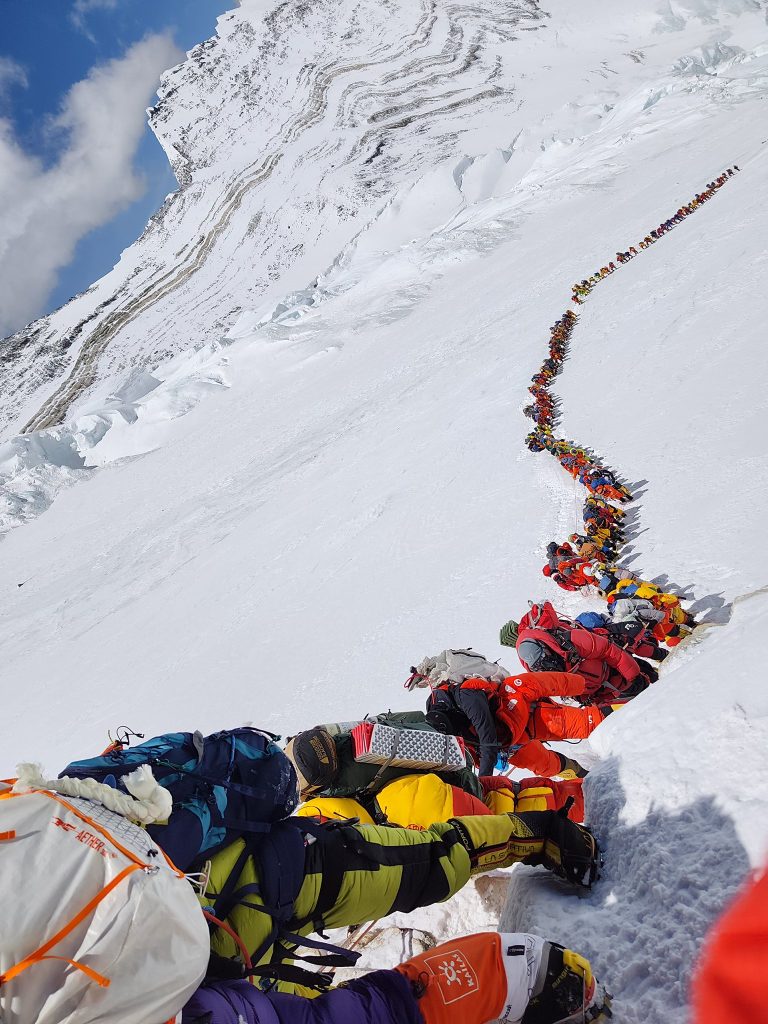
One image that continues to define modern Everest is the infamous summit traffic stretching towards the summit ridge. Photos of climbers standing in long lines near the Hillary Step and summit ridge once again spread across global media during this season. When the weather opens, everyone wants to move at once, and that is when traffic jams happen.
And in the Everest Expedition 2026 season, that image returned once again. As soon as a stable weather window opened in mid-May, teams across the mountain began their summit push almost simultaneously. On May 20, 2026, over 270 climbers successfully reached the summit from the Nepal side in a single day, making it one of the busiest summit days of the season. With only a narrow window of safe weather available, climbers from multiple expeditions moved upward at nearly the same time.
The result was heavy congestion in the highest sections of the mountain, especially near the Hillary Step, the summit ridge, and other narrow rope sections above 8,000 meters. At sea level, waiting in line is frustrating. On Everest, it can become dangerous.
This area is known as the “death zone” because oxygen levels are critically low and the human body slowly begins to shut down. Every extra minute spent standing still in extreme cold drains energy, consumes precious bottled oxygen, and increases the risk of frostbite, exhaustion, or altitude-related illness.
Several climbers this season described slow movement and delays high on the route as teams tried to carefully pass one another on fixed ropes. Guides and Sherpas worked continuously to manage movement, but when hundreds of climbers target the same short weather window, bottlenecks become almost unavoidable.
The traffic issue on Everest is not simply about numbers, it is about timing. Climbers wait for weeks at Base Camp for just a small break in the wind, and when that opportunity arrives, everyone knows it may only last for a day or two.
So when the mountain finally allows passage, the entire route suddenly comes alive.
And for a few intense hours high above the clouds, the dream of standing on top of the world becomes a shared race against time, weather, and altitude.
Successful Summits and Historic Everest Records
Even with the risks, Everest continues to produce remarkable achievements. Once the long-awaited weather window finally opened in May 2026, Everest quickly transformed from a quiet mountain of waiting climbers into a place of movement, celebration, and historic achievement.
One of the biggest defining moment of the season came on May 20, when 274 climbers successfully summited Everest from the Nepali side in a single day, the highest one-day summit total ever recorded on Everest through Nepal’s route. For hours, climbers moved steadily toward the top under rare calm conditions, taking advantage of one of the few stable weather windows the mountain offered this year.
But beyond the numbers, Everest Expedition 2026 also became a season of remarkable personal milestones.
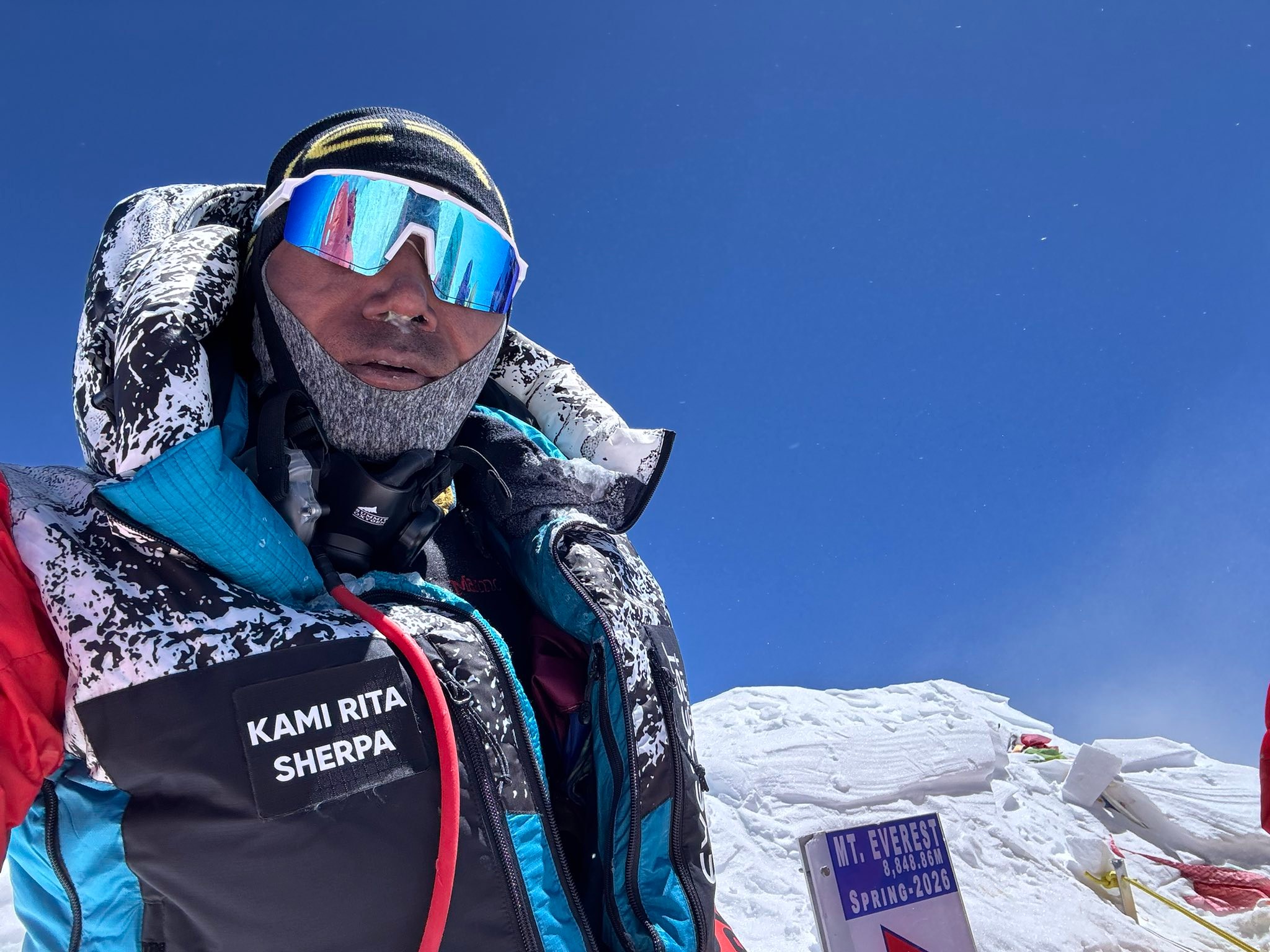
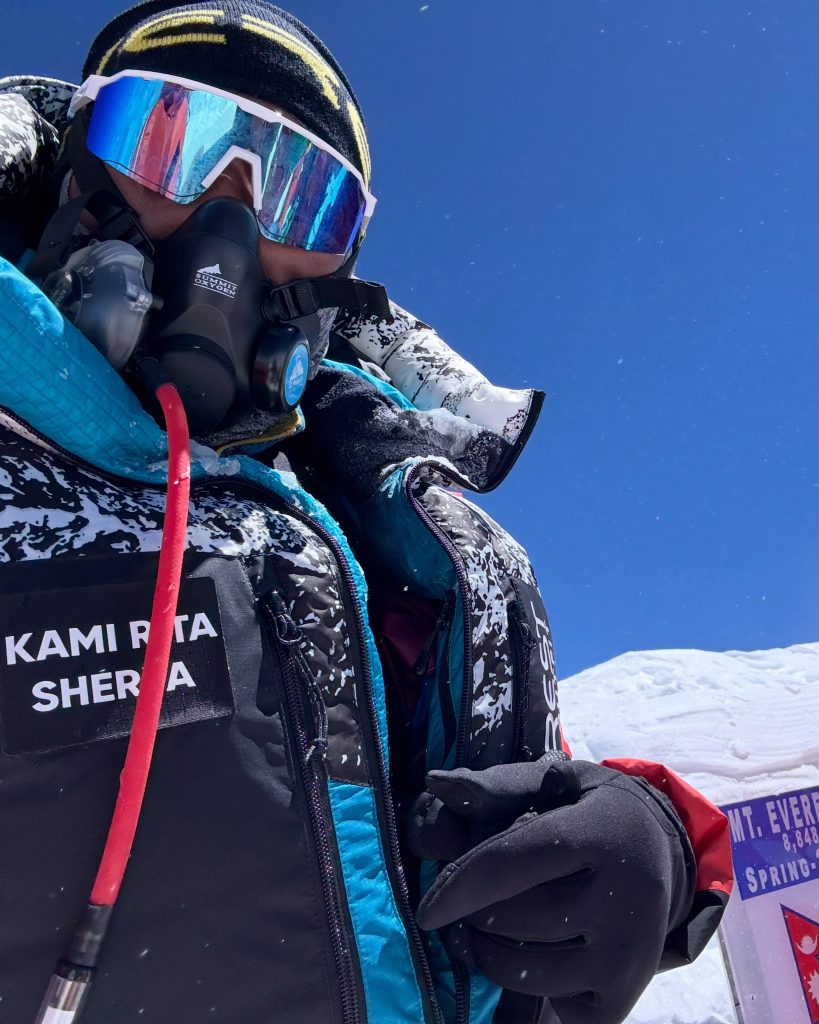
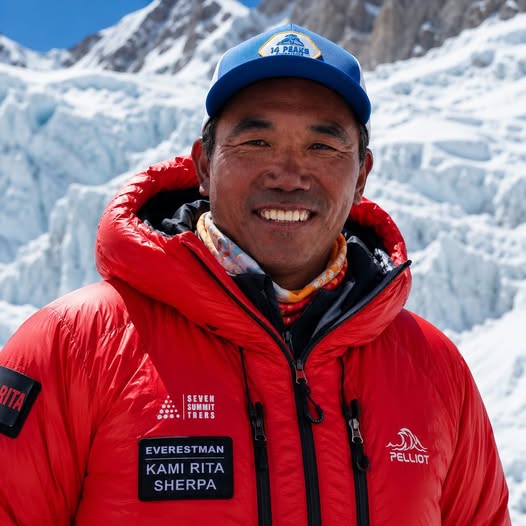
At the center of global attention once again was legendary Nepali mountaineer Kami Rita Sherpa. Already known around the world as the man with the most Everest summits in history, he extended his own record by reaching the summit for the 32nd time. What makes Kami Rita’s achievement even more extraordinary is not just the number itself, but the consistency behind it. For decades, he has climbed Everest almost every year, guiding foreign climbers through some of the harshest conditions on Earth while becoming a symbol of the strength, experience, and endurance of Nepal’s Sherpa community.
Another major milestone came from British climber Kenton Cool, who completed his 20th Everest summit, the highest number ever achieved by a foreign climber. Over the years, Kenton has become one of the most respected international figures on Everest, known not only for his climbing ability but also for his deep connection with Himalayan mountaineering culture and long partnership with Nepali guides and Sherpas.
The season also celebrated an inspiring achievement by Lhakpa Sherpa, who reached the summit of Everest for the 11th time, setting the record for the most Everest summits by a woman. Her story is especially powerful because it goes far beyond mountaineering records. Coming from a humble background in Nepal, Lhakpa has overcome personal struggles, financial hardship, and years of challenges to become one of the most iconic women in Everest history. Each of her summits represents resilience as much as achievement.
Another climber who drew major international attention during the Everest 2026 season was young Australian mountaineer Bianca Adler. At just 18 years old, Bianca became the youngest Australian ever to summit Mount Everest. She is also the youngest female climber to summit Manaslu at the age of 16, earning a Guinness World Record.
Also, Nepali mountaineer and photojournalist Purnima Shrestha once again captured global attention by reaching the summit of Mount Everest for the sixth time. Her climb this season wasn’t just another expedition; it was a continuation of an already remarkable journey that has made her one of Nepal’s most inspiring female climbers.
While official summit numbers continue to be verified after the climbing season ends, Everest has now been climbed by thousands of people over the decades. Yet despite the growing commercialization of the mountain, seasons like 2026 remind the world that Everest is still a place where extraordinary human stories are written every year.
Because behind every summit photo is a much deeper journey, months of preparation, physical suffering, fear, determination, and the lifelong dream of standing on top of the world.
Deaths, Rescues, and the Reality of Everest
Behind all the summit celebrations and record-breaking moments, Everest Expedition 2026 also carries its quieter, more difficult reality, one that every climber understands but still chooses to face. Everest is beautiful yet unforgiving.
As of late May 2026, Nepal’s Himalayan climbing season had already recorded five deaths, including three on Everest, and one of the latest fatalities involved a fall into a crevasse near Camp III, a reminder of how quickly conditions can turn in steep, high-altitude terrain.
This is the part of Everest that rarely appears in summit photos.
Above 8,000 meters, in what climbers call the Death Zone, the human body begins to break down. Oxygen levels are so low that even basic movement becomes exhausting. Decisions become slower, reactions weaken, and even small mistakes can become life-threatening.
Rescues above 8,000 meters remain extremely rare. Helicopters cannot fly at summit altitude, and even highly experienced Sherpa rescue teams can only operate within limited ranges below certain elevations. In most cases, evacuation depends on climbers being helped down slowly, step by step, through extreme exhaustion and unpredictable weather. One widely known example from previous seasons involved a Nepali Sherpa guiding a stranded climber down from extreme altitude, highlighting just how rare successful high-altitude rescues truly are.
In 2026, this reality once again shaped how expeditions were managed. When summit windows opened, teams had to carefully balance speed with safety, because delays at high altitude can quickly become dangerous. Overcrowding, slow-moving queues, and exhaustion all add to the risk, especially when weather changes unexpectedly.
Experts and expedition leaders continue to raise concerns about the modern Everest environment, particularly the growing number of climbers attempting the peak in short weather windows. When many teams move at once, the strain on fixed ropes, oxygen supplies, and rescue response systems increases significantly. There are also ongoing discussions in the mountaineering community about preparedness levels, with some climbers arriving with limited high-altitude experience.
And yet, despite the dangers, Everest continues to attract climbers from around the world. Because for many, the possibility of standing on the highest point on Earth outweighs everything else, even when they know the mountain will never guarantee a safe return.
New Government Regulations for Everest Climbers
As Everest becomes more crowded and commercialized each year, Nepal has been slowly tightening its rules to make the mountain safer and more controlled. The goals are simple, but not easy, reduce risk without stopping the flow of Himalayan tourism that supports thousands of families.
In recent seasons leading up to Everest 2026, the Government of Nepal has already increased the Everest permit fee to around $15,000 per climber, reflecting both the growing demand and the need for better management of climbing traffic and environmental impact.
But fees are only part of the bigger shift.
One of the most talked-about proposals is the idea that climbers should first successfully summit a 7,000-meter peak in Nepal before being allowed to apply for an Everest permit. The thinking behind this rule is practical, Everest is not a beginner mountain, yet every season sees climbers arriving with limited high-altitude experience. By requiring prior exposure to extreme altitude, officials hope to reduce emergencies and improve overall safety on the route.
Alongside this, authorities are also looking at stricter enforcement around expedition leadership and guiding standards, making it more important for teams to have experienced and certified guides, especially in high-risk sections like the Khumbu Icefall and the summit ridge.
Environmental responsibility is another growing focus. With hundreds of climbers on the mountain each season, waste management has become a serious concern. New discussions in Nepal’s mountaineering policy also emphasize stricter rules for waste removal, oxygen cylinder tracking, and expedition accountability, ensuring that Everest is not only climbed, but also better protected.
There is also a stronger push for improved rescue coordination systems, especially during peak summit days when many teams are moving at once. Authorities are increasingly aware that overcrowding can slow down emergency response in critical situations.
Taken together, these changes reflect a clear direction: Nepal is no longer treating Everest as just a tourism product. It is being managed more like a high-risk global expedition zone, where safety, sustainability, and experience matter as much as permits and profits.
Because in the end, Everest is not just about who reaches the top, but how responsibly the mountain is climbed.
Everest Still Captivates the World
Even after all the news about crowds, delays, extreme weather, and the growing risks, Everest still does something very few places on Earth can do, it pulls people in.
Every season reminds us that this is not just a mountain covered in ice and rock. It is a place that carries dreams, obsession, fear, and ambition all at once. And Everest Summit 2026 is a clear reflection of that reality. This year brought together record-breaking summit numbers, tightly packed climbing windows, unpredictable wind conditions, and powerful human stories unfolding side by side.
At times, it looked chaotic. At other times, it looked almost surreal, long lines of climbers moving slowly through the thin air, Sherpas guiding teams through frozen sections, and brief moments of calm weather that turned into sudden rushes toward the summit. It is modern mountaineering at its most intense and most complicated.
And still, none of it seems to reduce Everest’s appeal.
Because despite everything, despite the risks, the cost, and the uncertainty, the mountain continues to call people upward. Not just for the achievement of standing on the highest point on Earth, but for something deeper.
Everest has never been only about the summit.
It is about endurance when everything in your body says stop. It is about patience when weather decides your fate. And it is about transformation, because almost everyone who comes down from Everest returns as someone slightly different from the person who began the climb.
That is why, even in 2026, Everest is still not just a destination.
It is an experience that stays with you long after the mountain is behind you.