Food and accommodation on the Manaslu Circuit Trek are simple, authentic, and completely different from what you’ll find on Nepal’s more commercial trekking routes. Unlike the Everest Base Camp or Annapurna regions, there are no luxury lodges, extensive restaurant menus, or hotel-style services. Instead, trekkers experience traditional Himalayan hospitality in family-run teahouses scattered throughout remote mountain villages.
There’s a moment that happens to almost every trekker on the Manaslu Circuit. You’ve been walking for six hours. Your legs are burning, your backpack feels heavier, and the village you’re heading to feels like it’s always just around the next bend. Then finally, you see it. A hand-painted wooden sign. A small stone building with smoke curling from the chimney. A smiling face at the door. You’ve found your teahouse for the night.
You drop your pack, pull off your boots, and within twenty minutes you’re sitting in a warm dining room with a steaming bowl of dal bhat in front of you, prayer flags fluttering past the window, and Himalayan peaks glowing in the last light of the day.
That moment, simple as it sounds, is one of the most satisfying experiences trekking in Nepal has to offer. And on the Manaslu Circuit, it happens every single day.
If you’re planning this trek and wondering what food and accommodation actually look like on the trail, this guide is for you. The honest, practical, day-by-day reality of what you’ll eat, where you’ll sleep, and what to expect from the teahouses that will become your home for the next two weeks.
Quick Answers:
How is accommodation on the Manaslu Circuit Trek?
Accommodation on the Manaslu Circuit Trek is provided mainly by local teahouses and mountain lodges. Most rooms are simple twin-sharing rooms with two single beds, blankets, pillows, and basic furnishings. Bathrooms are usually shared, although some lower-altitude villages offer attached bathrooms. As the trail climbs higher into remote areas, facilities become more basic, but teahouses remain comfortable, welcoming, and sufficient for trekkers completing the circuit.
what food is available in Manaslu Circuit Trek?
Food on the Manaslu Circuit Trek includes traditional Nepali, Tibetan, and simple international dishes. The most common meal is dal bhat, which consists of rice, lentil soup, vegetables, and pickles. Trekkers can also find fried rice, noodles, soups, pasta, momos, Tibetan bread, pancakes, porridge, eggs, potatoes, tea, coffee, and hot chocolate in most teahouses. Menu choices become more limited at higher elevations, but there is always enough nutritious food available to support long trekking days.
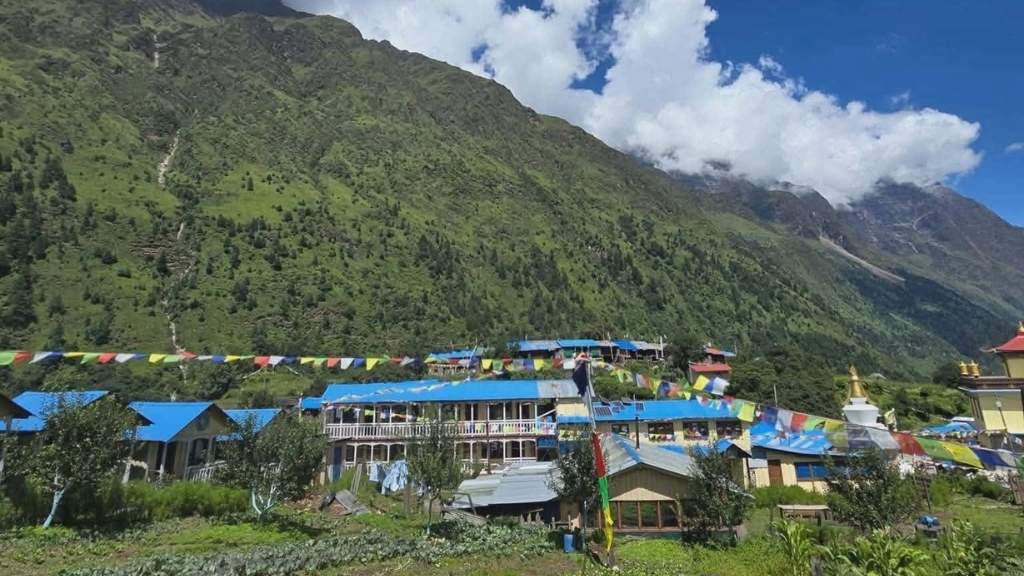
What Is a Teahouse – Teahouse Facilities in Manaslu Region
Before anything else, let’s clear up what a teahouse actually is, because if you’re imagining a cozy mountain lodge with fluffy duvets and a restaurant menu, you might need to adjust your expectations slightly.
A teahouse on the Manaslu Circuit is a family-run guesthouse, usually built from stone or wood, that offers trekkers a simple room and meals. The family who owns it lives there. Sometimes you eat in the same room where their children do homework. Sometimes the grandmother is making bread in the corner while you study your map.
That is not a complaint. That is the whole point.
Unlike the Everest Base Camp or Annapurna Circuit, which have become heavily commercialized over the years, the Manaslu Circuit remains one of Nepal’s most authentic trekking routes. The teahouses here haven’t been taken over by corporate lodge chains. They’re real homes offering real hospitality, and that makes all the difference.
What to expect in a standard Manaslu Circuit teahouse room?
- Two single wooden beds with thin mattresses
- One pillow and one blanket per bed
- Plywood or stone walls with minimal insulation
- Shared bathroom down the corridor
- No heating inside the room
- Communal dining room with a wood-burning stove
Bring earplugs. You’ll hear your neighbour snoring, the wind rattling the window, and the family cooking breakfast at 5am. They will earn their weight many times over.You may check Manaslu circuit trek copst for the ideas how strong you need to be your pocket.
How Accommodation Changes as You Climb Higher
The quality and comfort of accommodation changes significantly depending on your altitude. The higher you go, the more basic it gets. That’s just the reality of mountain logistics, supplies are harder to carry up, fuel is scarcer, and the number of trekkers thins out.
Village by village – what to expect
Manaslu Circuit Trek itinerary plan with altitude, room type, bathroom, shower facilities, charring and WIFI facilities and Room cost details.
| Village | Altitude | Room Type | Bathroom | Hot Shower | WiFi | Approx. Cost |
| Machha Khola | 930m | Private or twin | Attached/shared | Yes | Yes | $5–8 |
| Jagat | 1,340m | Twin | Shared | Yes | Yes | $5–8 |
| Deng | 1,860m | Twin | Shared squat | Yes | Limited | $5–7 |
| Namrung | 2,630m | Twin | Shared squat | Yes (solar) | Slow | $6–8 |
| Lho | 3,180m | Twin | Shared squat | Yes (solar) | Slow | $6–8 |
| Samagaon | 3,530m | Twin/private | Shared/attached | Yes (solar) | Slow | $7–10 |
| Samdo | 3,875m | Twin | Shared squat | Limited | No | $6–8 |
| Dharamsala | 4,460m | Dormitory | Outdoor pit | No | No | $4–6 |
| Bimthang | 3,720m | Twin | Shared | Yes (solar) | Limited | $6–9 |
In the lower villages such as Machha Khola and Jagat (which is the first checkpoint for the Manaslu Circuit Trek permit), teahouses are surprisingly comfortable. Many offer private rooms with attached bathrooms, hot running water, and even reliable WiFi. If you’re planning to take a hot shower, this is the best place to enjoy it, because a few days further along the trail, it quickly becomes a rare luxury.
Namrung is a highlight on the accommodation front. The teahouses sit against a dramatic mountain backdrop, rooms are tidy, and dining rooms are warm and welcoming. Many trekkers consider it one of the best overnight stops on the entire route.
Samagaon at 3,530 meters is the largest village in the upper Manaslu region, more options, better food variety, and a bit more comfort before the big push toward the pass. Some lodges even offer attached bathrooms for a small premium.
Then comes Dharamsala at 4,460 meters. Two or three seasonal stone teahouses. Dormitory rooms. No electricity. Pit toilets outside in the freezing cold. No hot showers. A menu reduced to dal bhat and tea.
But almost every trekker who’s spent a night at Dharamsala will tell you it was memorable in a way that a five-star hotel never could be. There’s something about lying in a stone room at 4,460 meters, listening to the wind howl off the glacier, knowing that tomorrow you’ll cross one of the highest passes in the Himalayas. Sleep when you can. Keep your water bottle inside your sleeping bag so it doesn’t freeze. Set your alarm for 3am.
Toilet Facilities on the Manaslu Circuit Trek
Toilet facilities are basic and vary significantly depending on where you are on the trail.
| Location | Toilet Type | Condition |
| Lower villages (Machha Khola, Jagat) | Western flush, some attached | Generally clean |
| Mid villages (Deng, Namrung, Lho) | Shared squat | Basic but clean |
| Upper villages (Samagaon, Samdo) | Shared squat | Very basic |
| Dharamsala (4,460m) | Outdoor pit toilet | Exposed to cold and wind |
Essential toilet tips:
- Always carry your own toilet paper, it is not guaranteed at any teahouse
- Never leave used toilet paper on the trail, use bins or carry a zip-lock bag
- Carry hand sanitizer as soap and running water are not always available
- Bring a head torch for middle-of-the-night trips, corridors at high altitude are dark and freezing cold
The Sleeping Bag Needed For Manaslu Circuit Trek?
Bring a good sleeping bag. This is non-negotiable on the Manaslu Circuit. Teahouses provide blankets but above 3,000 meters they are simply not enough on their own. If you want a clearer idea of what to bring for this journey, you can check the Manaslu Circuit Trek packing list to better understand the essential gear, clothing, and equipment you’ll need to stay comfortable and well-prepared throughout the trek.
Sleeping bag recommendations:
- Minimum rating: minus 10 degrees Celsius
- Ideal rating: minus 15 degrees Celsius for winter trekking
- Most important at: Dharamsala, Samdo, and Samagaon
- Extra tip: Keep your water bottle inside your sleeping bag at high altitude to prevent freezing overnight
A good sleeping bag directly affects your sleep quality, which affects your energy, mood, and acclimatization. Don’t leave home without one.
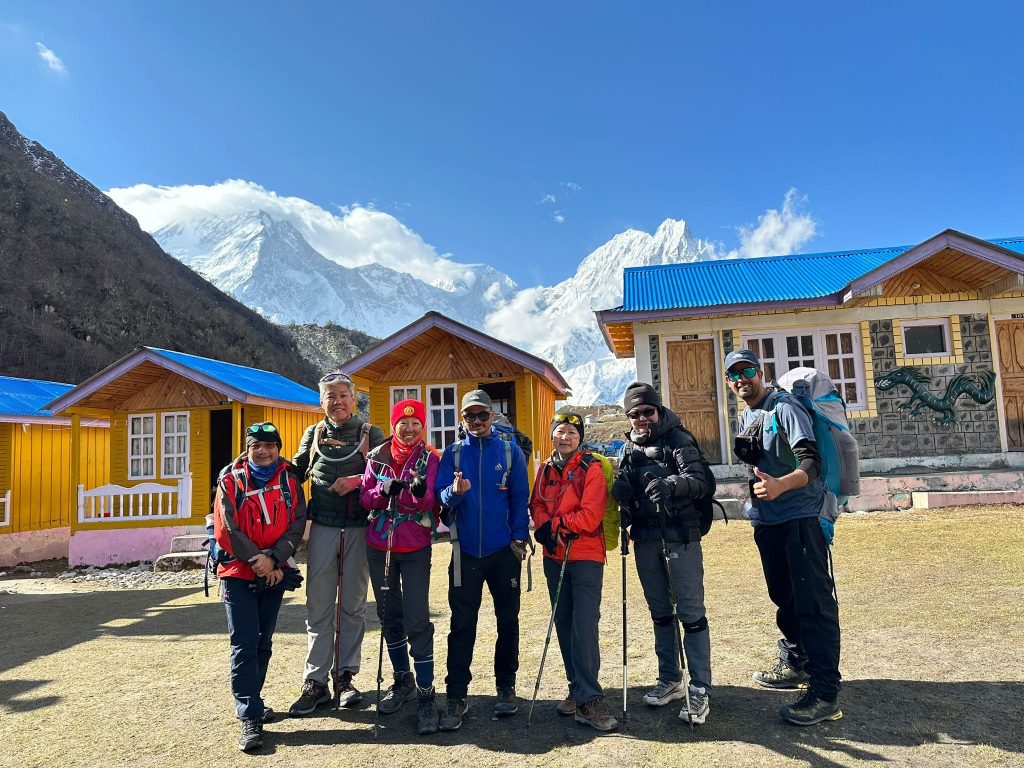
Food on the Manaslu Circuit: Simple, and Surprisingly Good
Eating on the Manaslu Circuit is one of the genuine pleasures of the trek. The menu follows a familiar pattern across Nepal’s trekking routes, but on the Manaslu Circuit you also get the added influence of Tibetan culture, particularly in the upper villages.
Dal Bhat: The Trekker’s Best Friend
If there’s one dish that will carry you through the Manaslu Circuit, it’s dal bhat. Rice, lentil soup, vegetable curry, a small pickle, and sometimes a papadum on the side. It sounds humble. It is humble. And it is absolutely delicious after a six-hour walk in mountain air.
Why trekkers love dal bhat:
- Comes with unlimited free refills
- High in carbohydrates, protein, and fibre
- Available at every single teahouse on the route
- One of the most affordable meals on the menu
- Perfectly fuels long trekking days at high altitude
There’s a saying among trekkers in Nepal: dal bhat power, 24 hours. After a few days on the trail, you’ll understand exactly what that means.
What Food Is Available on the Manaslu Circuit Trek?
| Meal | Available Options |
| Breakfast | Porridge, Tibetan bread, chapati, pancakes, eggs (fried/boiled/omelette), toast |
| Lunch | Fried rice, chowmein, momos, thukpa, soups, dal bhat |
| Dinner | Dal bhat, vegetable curry, pasta, potato dishes, tsampa (upper villages) |
| Drinks | Tea, coffee, ginger lemon tea, hot chocolate, yak butter tea (upper villages) |
| Snacks | Biscuits, chocolate bars, energy bars, noodles (available at most teahouses) |
Breakfast
Mornings at a teahouse usually start early. You’ll hear the kitchen come to life around 5 or 6am, and by the time you’ve packed your bag and laced your boots, breakfast is ready. The eggs are almost always fresh from the family’s own chickens. Porridge is underrated as a trekking breakfast, warm, filling, and slow-releasing energy, exactly what you need for a long day of walking. If they have it, order it.
Lunch on the Trail
Lunch is usually eaten mid-trail at a teahouse along the route. Most trekkers stop for around an hour at noon, giving the body time to rest and refuel before the afternoon push.
Momos deserve a special mention. Freshly made Tibetan dumplings filled with vegetables or potato, eaten at a wooden table with a view of snow-capped peaks. Order them whenever you see them. They are one of the small joys of trekking in this region.
Dinner: The End-of-Day
Dinner on the Manaslu Circuit is more than just a meal. It’s the social centre of your trekking day. The dining room fills up as the evening arrives, other trekkers, guides, porters, the family who runs the lodge, and the wood-burning stove turns the room from cold to genuinely cosy. People share stories from the trail, compare notes on the pass conditions, and rediscover the pleasure of real conversation without phones.
Food Cost Breakdown per Meal on the Manaslu Circuit Trek
Food on the Manaslu Circuit Trek is simple, filling, and becomes slightly more expensive as you gain altitude. This is due to transportation challenges and limited supplies in remote villages. On average, trekkers spend around $25–$40 per day on food, depending on their appetite and choices.
Most meals are freshly prepared in teahouses, and while menus are not extensive, they are nutritious enough to support long trekking days. If you want a clearer idea of how much budget you’ll need for this journey, you can check the Manaslu Circuit Trek cost for a better understanding of overall expenses and how much to prepare financially.
| Meal Type | Food Items Example | Cost Range (USD) |
|---|---|---|
| Breakfast | Porridge, eggs, Tibetan bread, pancakes, tea/coffee | $4 – $8 |
| Lunch | Dal Bhat, noodles, fried rice, soup, momos | $5 – $10 |
| Dinner | Dal Bhat, curry sets, pasta, potatoes, soups | $6 – $12 |
| Hot Drinks | Tea, coffee, hot lemon, ginger tea | $1 – $4 |
| Snacks | Chocolate, biscuits, energy bars | $2 – $5 |
Expert Tip: Dal Bhat is the best value meal. It is filling, nutritious, and often comes with unlimited refills in many teahouses.
Practical Things En Route of Manaslu Trek Nobody Tells You
Eat Where You Sleep
The room rate is kept low because the teahouse owner expects you to eat there. Always have dinner and breakfast at the teahouse where you’re sleeping. Order dinner when you check in, it helps the kitchen plan and gets food to you faster.
Cash Only, Always
There are no ATMs anywhere on the Manaslu Circuit after Kathmandu. All payments on the trail are cash only in Nepalese Rupees. Most of your major expenses like accommodation and meals are already included in your trekking package. However, you will need personal spending cash for extras such as:
- Hot showers
- Device charging
- Tea, coffee, and cold drinks
- Snacks like chocolate bars and energy bars
- Small grocery items from village shops like toilet paper and tissues
- WiFi access
A reasonable budget for personal expenses is around $10 to $15 per day on top of your package. Carry small denomination notes as teahouse owners and small village shops often cannot make change for large bills.
Device Charging Costs Money
Electricity mostly comes from solar panels and small hydro generators. Most teahouses charge $1 to $2 per hour, usually in the communal dining room. Bring a portable power bank, it removes the anxiety of a dying camera or phone battery between villages.
Hot Showers Are a Luxury, Not a Given
Enjoy hot showers in the lower villages. Above 3,500 meters they become warm bucket affairs, only available when the sun has been out all day. At Dharamsala there are no showers at all. Pack wet wipes, they are worth their weight in gold after a long day at altitude.
A Note on Water
Do not drink untreated water anywhere on the Manaslu Circuit, no matter how clean the stream looks.
Safe water options on the trail:
- Bring water purification tablets or a filter
- Ask teahouses for boiled water (NPR 200-400 per litre)
- Use a UV purifier like a SteriPen
- Avoid buying plastic bottled water – expensive and environmentally damaging
A good filter or purification tablets cost very little and solve the problem completely.
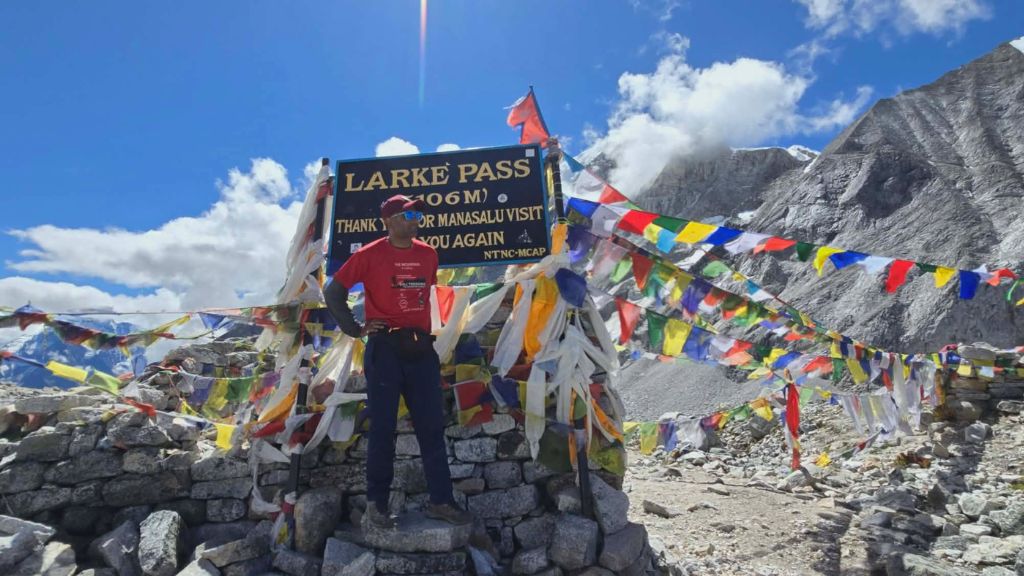
Leave Your Expectations at Kathmandu
Here is what nobody really prepares you for, how much you will come to love the teahouses on the Manaslu Circuit. Not despite the simplicity, but because of it. There’s something that happens when you strip away comfort and convenience. The food tastes better. The warmth of a fire feels more real. When a teahouse owner notices you shivering and quietly places an extra blanket on your bed without a word, you realize that real hospitality has nothing to do with stars on a building.
The Manaslu Circuit is a trek that gives back in proportion to how much you let go of expectations. Come expecting five-star facilities and you’ll be frustrated. Come expecting a simple, honest, deeply human experience and you’ll leave wondering why you don’t live like this all the time.
The dal bhat will be waiting. The stove will be lit. The mountains will be outside the window. And that, honestly, is everything you need.
Local Expert Recommendation:
Having guided trekkers on the Manaslu Circuit Trek for over three decades, we recommend embracing the simplicity of the local teahouses. While facilities are more basic compared to the Everest or Annapurna regions, trekkers are rewarded with authentic Himalayan hospitality, hearty meals, and comfortable enough accommodation throughout the journey. The remote and traditional character of the Manaslu region is one of its greatest attractions.
FAQ: Food and Accommodation on the Manaslu Circuit Trek
1. What type of accommodation is available on the Manaslu Circuit Trek?
Accommodation on the Manaslu Circuit Trek is primarily teahouses and small guesthouses run by local families. Rooms are simple with two single beds, thin mattresses, pillows, and blankets. In larger villages like Samagaon and Namrung, slightly more comfortable guesthouses with private rooms are available. At Dharamsala (4,460m), accommodation is the most basic, stone lodges with dormitory-style rooms and very limited facilities.
2. How much does accommodation cost on the Manaslu Circuit Trek?
Room rates on the Manaslu Circuit Trek are very affordable, typically ranging from $3 to $10 per night depending on altitude and season. Lower villages like Machha Khola and Jagat are on the cheaper end, while higher villages charge slightly more due to difficult supply logistics. Most teahouse owners keep room rates low expecting trekkers to eat their meals there.
3. How much should I budget for food per day on the Manaslu Circuit Trek?
A realistic daily food budget on the Manaslu Circuit Trek is around $15 to $20 per person for three meals. Combined with accommodation, expect to spend around $25 to $40 per day in total. Prices increase slightly as you gain altitude due to the difficulty of transporting supplies to higher villages.
4. What food is available on the Manaslu Circuit Trek?
Teahouses on the Manaslu Circuit Trek serve a mix of Nepali and Tibetan dishes alongside basic Western options. Common meals include dal bhat, fried rice, fried noodles, momos, thukpa, soups, pasta, omelettes, pancakes, Tibetan bread, and porridge. In upper villages like Samdo and Samagaon, yak products including yak butter tea and yak milk are also available.
5. Is dal bhat available everywhere on the Manaslu Circuit Trek?
Yes. Dal bhat is available at every single teahouse on the Manaslu Circuit Trek, including the most remote and high-altitude stops like Dharamsala. It is the most reliable, filling, and energy-rich meal on the trail and comes with unlimited refills at no extra charge. Most experienced trekkers and guides eat dal bhat for both lunch and dinner throughout the trek.
6. Are hot showers available on the Manaslu Circuit Trek?
Hot showers are available at most teahouses in lower and mid-altitude villages, usually at an extra charge of $2 to $3. They are typically solar-heated, so availability depends on sunny weather. Above 3,500 meters, hot showers become limited and, in some villages, only cold bucket washes are available. At Dharamsala (4,460m), there are no shower facilities at all.
7. Is WiFi available on the Manaslu Circuit Trek?
WiFi is available in some villages on the Manaslu Circuit Trek, particularly in larger settlements like Jagat, Namrung, and Samagaon, but it is generally slow and unreliable. Most teahouses charge a small fee for WiFi access. Above 4,000 meters connectivity becomes very limited or completely unavailable. It is better to purchase a Nepali SIM card with data as a backup.
8. Can I charge my devices on the Manaslu Circuit Trek?
Yes, most teahouses offer device charging facilities, usually in the communal dining area. Expect to pay around $1 to $2 per hour for charging. Electricity is mostly solar-powered and limited, so availability can vary. Bringing a portable power bank is strongly recommended to avoid relying entirely on teahouse charging.
9. Do I need a sleeping bag for the Manaslu Circuit Trek?
Yes, a good sleeping bag is essential for the Manaslu Circuit Trek. Teahouses provide blankets but they are often insufficient at higher altitudes, particularly above 3,000 meters where night temperatures drop well below freezing. A sleeping bag rated to at least minus 10 degrees Celsius is recommended for a comfortable and safe night’s sleep throughout the trek.
10. Are vegetarian food options available on the Manaslu Circuit Trek?
Yes, vegetarian food is widely available throughout the Manaslu Circuit Trek. In fact, most teahouse menus are predominantly vegetarian due to the limited supply of fresh meat at higher altitudes. Dal bhat, vegetable fried rice, noodles, momos, soups, eggs, and porridge are all vegetarian-friendly options available at virtually every stop on the trail.
11. Is the food safe to eat on the Manaslu Circuit Trek?
Generally, yes, as long as you stick to cooked meals. Dal bhat, noodles, soups, eggs, and similar hot cooked dishes are safe and reliable choices. Avoid raw vegetables and salads as they may be washed in untreated water. Always drink purified or boiled water rather than tap water or stream water anywhere on the trek.
12. Do I need to book teahouses in advance on the Manaslu Circuit Trek?
During peak trekking seasons in October and April, booking teahouses in advance is strongly recommended, particularly in popular stops like Samagaon and Namrung. Your guide can usually arrange this for you. Outside peak season the trail is quieter and walk-in accommodation is generally available, but arriving early in the afternoon, ideally by 2 to 3pm, always gives you the best room choices.
13. Are there ATMs on the Manaslu Circuit Trek?
No. There are no ATMs anywhere on the Manaslu Circuit Trek after you leave Kathmandu. All payments for accommodation, food, hot showers, WiFi, and device charging must be made in cash in Nepalese Rupees. Bring enough cash for your entire trek plus a comfortable buffer for unexpected expenses. Keep small denomination notes as teahouse owners often struggle to make change for large bills.
14. Can I find accommodation at every village on the Manaslu Circuit Trek?
Yes, teahouses and guesthouses are available at all major overnight stops on the Manaslu Circuit Trek including Machha Khola, Jagat, Deng, Namrung, Lho, Samagaon, Samdo, and Dharamsala. The number of options varies by village, larger villages like Samagaon have multiple choices while smaller stops may have only one or two teahouses.
15. What is the food and accommodation like at Dharamsala before crossing Larkya La Pass?
Dharamsala at 4,460 meters is the most basic overnight stop on the entire Manaslu Circuit Trek. There are only two to three small stone teahouses operating seasonally with dormitory-style rooms, no electricity, no hot showers, and pit toilets outside. Food is limited to dal bhat and basic drinks. Despite the spartan conditions, most trekkers find the experience memorable and the early morning start for the Larkya La Pass crossing makes a long comfortable night less important than a warm sleeping bag and an early bedtime.
16. Can I drink tap water or stream water on the Manaslu Circuit Trek?
Never drink untreated water anywhere on the trail. Always use purification tablets, a filter, or UV purifier. Teahouses sell boiled water for around NPR 200–400 per litre. Bring a reusable water bottle with purification tablets, it’s the cheapest and most eco-friendly solution.
17. Is alcohol available on the Manaslu Circuit Trek?
Yes, beer, whiskey, and local raksi are available at many teahouses. However, alcohol at high altitude increases dehydration and raises the risk of altitude sickness significantly. Avoid it above 3,000 meters and stick to very small amounts in lower villages.
18. Can I get snacks between villages on the Manaslu Circuit Trek?
Packaged snacks like chocolate, biscuits, and energy bars are available at some teahouses but get expensive at higher altitudes. There are no shops between villages, so always carry your own snacks for the walking day. Trail mix, nuts, and energy bars are popular choices.
19. Can I do the Manaslu Circuit Trek by camping instead of teahouses?
Technically yes but not practical. Camping requires carrying all equipment which increases cost and complexity significantly. Since teahouses are now available at every major stop, most trekkers choose teahouses for comfort, convenience, and authentic local experience.
20. Are private rooms available on the Manaslu Circuit Trek?
Private rooms are available in lower villages like Jagat and Samagaon. At higher altitudes during peak season, they are not always guaranteed. Arriving at your teahouse by 2–3pm gives you the best chance of securing a private room before other trekking groups arrive.
21. How do teahouse dining rooms work on the Manaslu Circuit Trek?
All teahouses have a shared communal dining room where everyone eats together. It is also the only heated space in the teahouse, warmed by a wood-burning stove. Evenings here, sharing food and stories with fellow trekkers, are genuinely one of the highlights of the entire trek.