-
1-18 person
-
Car/Van/Flight
-
5420m
-
Good Level of fitness Required
-
Kathmandu
-
Kathmandu
-
Spring/Autumn
-
Trekking
-
English
-
Breakfast/Lunch/Dinner
-
Provided
-
Hotel/guesthouse
Everest Base Camp & Gokyo Lake Trek – Ultimate Everest Circuit in Nepal
The Everest Base Camp & Gokyo Lake Trek combines two of Nepal’s most iconic routes into one journey, the classic trail to Everest Base Camp (5,364m) and the turquoise lake system of Gokyo Valley, inside Sagarmatha National Park.
What makes this trek different?
- Combines Everest Base Camp AND the Gokyo Lakes in one itinerary
- Passes through Sherpa villages, monasteries, and glacier zones
- Includes two major viewpoints: Kala Patthar (5,545m) and Gokyo Ri (5,357m)
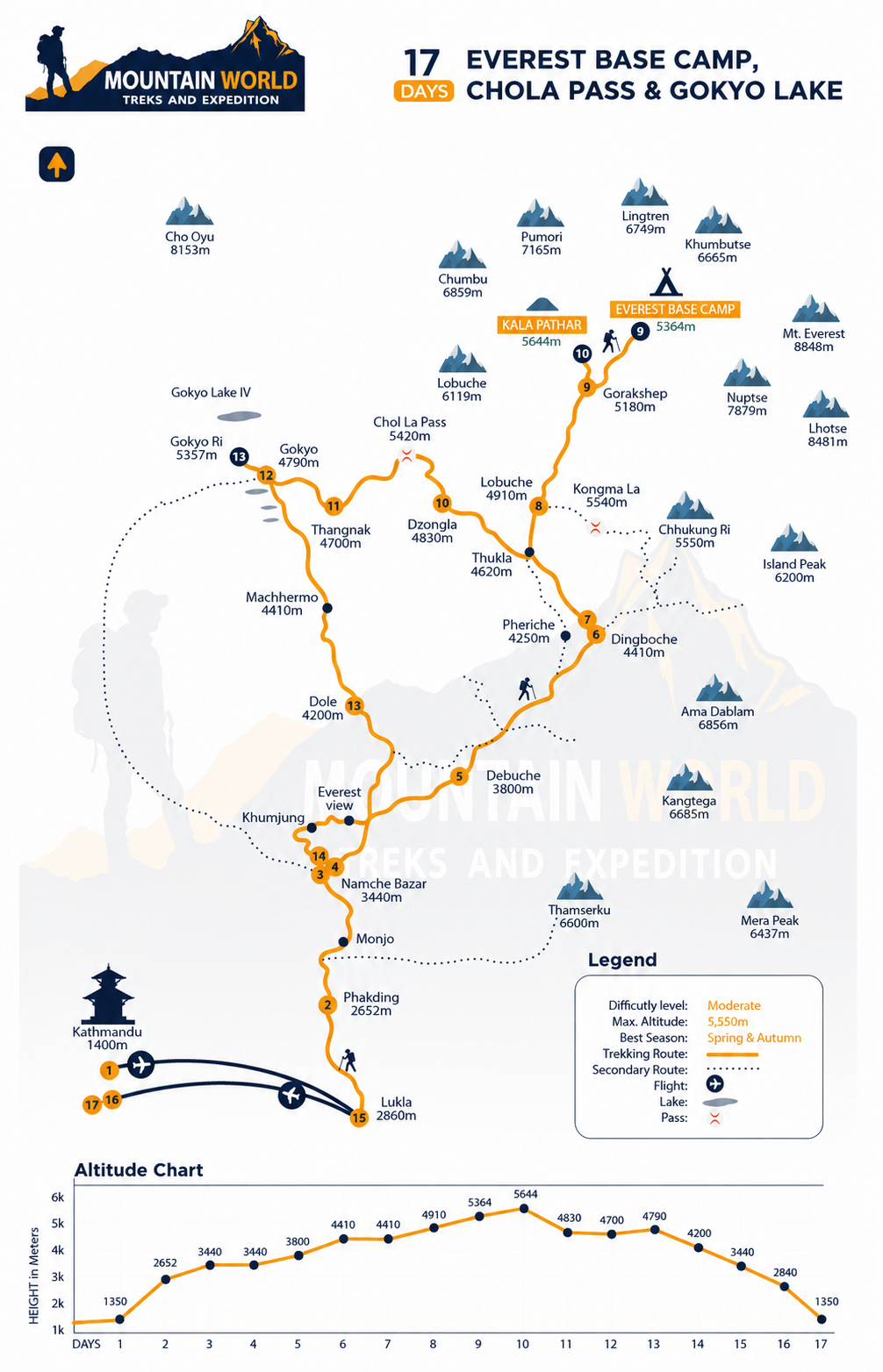
- Can be extended into a full loop via the Cho La Pass (5,420m) for experienced trekkers
What Is the Route for the Everest Base Camp and Gokyo Lake Trek?
The trek starts with a flight from Kathmandu to Lukla (2,860m) and follows the Dudh Koshi River valley to Namche Bazaar, where the route splits into two directions.
Route breakdown:
| Stage | Key Stops | Altitude |
|---|---|---|
| Start | Kathmandu → Lukla | 2,860m |
| Lower trail | Phakding → Monjo → Namche Bazaar | 3,440m |
| EBC route | Tengboche → Dingboche → Lobuche → Gorak Shep → EBC | 5,364m |
| EBC viewpoint | Kala Patthar | 5,545m |
| Gokyo route | Dole → Machhermo → Gokyo Village | 4,790m |
| Gokyo viewpoint | Gokyo Ri | 5,357m |
| Connector (optional) | Cho La Pass | 5,420m |
Two ways to trek this route:
- Classic EBC route, Sherpa villages, monasteries, and glacier landscapes via the main Khumbu Valley
- Gokyo Valley route, a quieter alternative with turquoise lakes and fewer trekkers
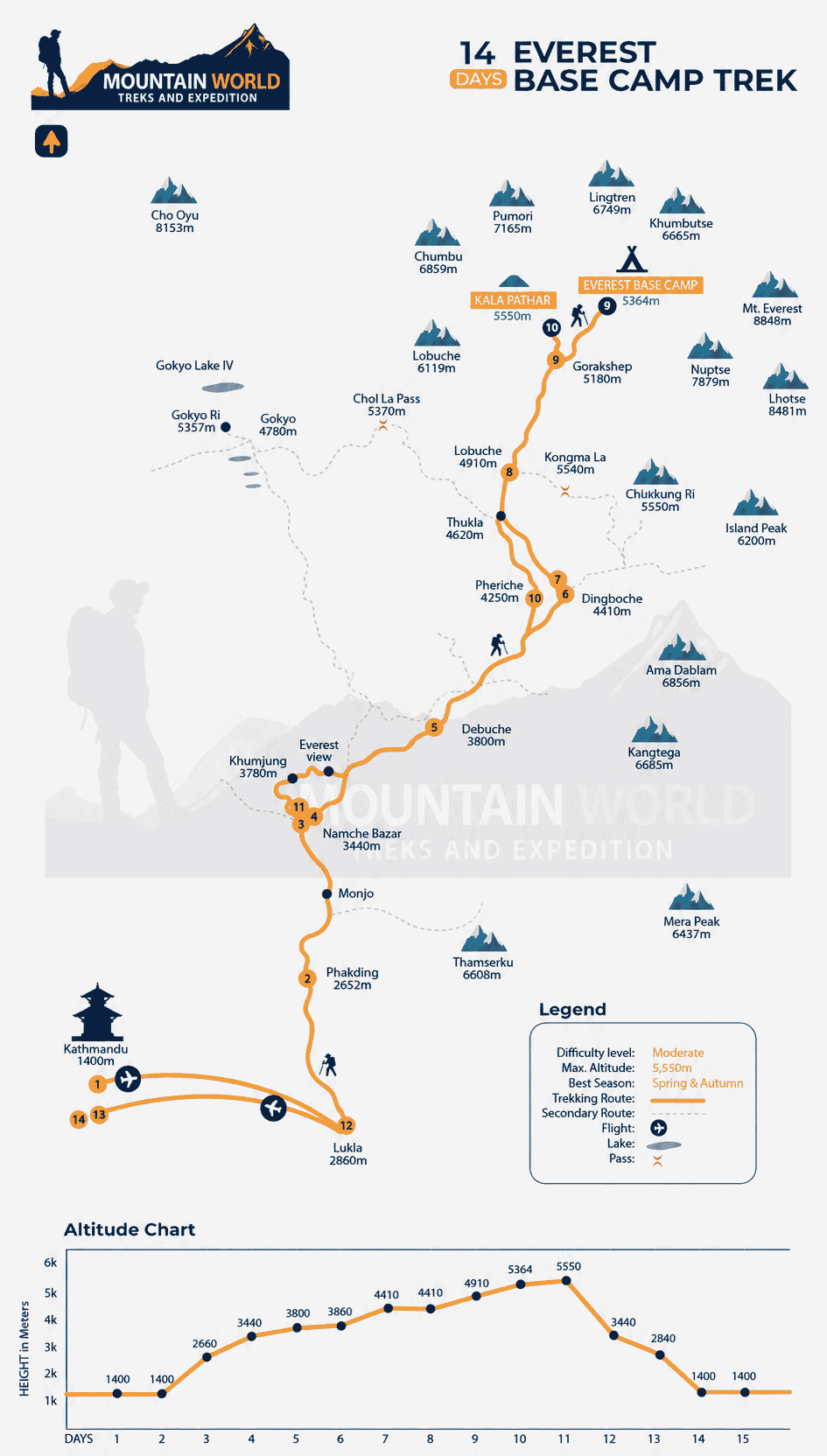
- Combined loop (Cho La Pass), connects both routes for experienced trekkers, adding glacier crossing and technical terrain over 14-18 days
Read our complete Everest Base Camp and Gokyo Lake itinerary – day-by-day breakdown and distances.
What Will You Experience at Everest Base Camp?
Everest Base Camp (5,364m) is a working expedition area, not a scenic viewpoint, during climbing season it fills with expedition tents and mountaineering teams preparing to summit Everest.
At Base Camp, you’ll see:
- Close-up views of the Khumbu Icefall
- The Khumbu Glacier, a massive, constantly shifting river of ice with crevasses and moraine ridges
- Expedition camps during spring climbing season
- Thin air and rocky glacier terrain above 5,000m
Getting there: From Gorak Shep, the last settlement, it’s a 2-3 hour walks over rocky glacier terrain to reach Base Camp.
Note: Mount Everest itself is not visible from Base Camp, for the best Everest photo, continue to Kala Patthar (5,545m).
What Are the Gokyo Lakes and Gokyo Ri Like?
The Gokyo Lakes are a system of six glacial lakes sitting at 4,700-5,000m, known for their turquoise-blue color caused by suspended glacial particles.
Gokyo Ri (5,357m):
- A 2–3-hour climbs from Gokyo Village, no technical climbing required
- Summit views include Everest (8,848m), Lhotse (8,516m), Makalu (8,485m), and Cho Oyu (8,188m), four 8,000m peaks visible at once
- Best done at sunrise for the clearest light and quietest trail conditions
Why Choose the Everest Base Camp and Gokyo Lake Trek?
- Stand at Everest Base Camp (5,364m), the starting point for Everest summit expeditions
- See the turquoise Gokyo Lakes and climb Gokyo Ri for a four-8,000m-peak panorama
- Trek through authentic Sherpa culture – monasteries, prayer wheels, and Namche Bazaar
- Choose a quieter alternative to the standard EBC-only route, or combine both via Cho La Pass
How Difficult Is the Everest Base Camp & Gokyo Lake Trek?
This trek is rated moderate to challenging, no technical climbing skills or equipment required, but a good level of fitness and mental readiness for long, high-altitude days are essential.
What makes it harder than the standard EBC trek:
- 18 days total vs. 14 for standard EBC, with more cumulative altitude gain
- Includes the Cho La Pass (5,420m) crossing, glacier terrain and a genuinely tougher single day than anything on the classic route
- Longer daily walks in the Gokyo Valley section, often on quieter, less-supported trails
How to prepare: Build fitness with regular hiking, stair climbing, and cardio for 8-12 weeks before departure. On the trek itself, the same rule applies as everywhere in the Khumbu: walk slow, sleep low, and don’t rush the pass crossing.
Read our complete guide to Everest Base Camp and Gokyo Lake Trek difficulty – fitness prep timeline and daily walking distances.
When Is the Best Time for the Everest Base Camp and Gokyo Lake Trek?
The best time is spring (March-May) or autumn (September-November), when skies are clearest for both Everest and Gokyo Ri viewpoints.
- Spring: Rhododendron blooms, milder evenings, and Everest expedition season atmosphere
- Autumn: The clearest, most reliable skies of the year – best sunrise visibility from both Kala Patthar and Gokyo Ri
- Winter: Quiet trails, but nights below -20°C above 4,000m, and the Cho La Pass becomes more technical with snow
- Monsoon: Not recommended – muddy trails, poor visibility, and higher Lukla flight delay risk
Given the added difficulty of the Cho La Pass, spring and autumn aren’t just preferable here – they meaningfully reduce your risk on the pass crossing itself.
Read our complete guide to the Best Time for the Everest Base Camp and Gokyo Lake Trek– month-by-month breakdown.
How Much Does the Everest Base Camp and Gokyo Lake Trek Cost?
This trek starts from $1,599 per person, reflecting its longer duration and the additional logistics of the Cho La Pass route.
What’s included:
- Airport pickup/drop-off and all trip transportation
- Lukla Flight return
- All meals and teahouse accommodation during the trek
- Guide (transportation, food, accommodation, insurance included)
- Down jacket, sleeping bag, duffel bag, and trekking map (returned after trip)
- First aid medical kit
- All required permits and paperwork
What’s excluded:
- International airfare and Nepal visa fees
- Kathmandu hotel and meals (unless specified in your package)
- Personal travel/medical insurance
- Personal expenses (showers, laundry, snacks, bar bills)
Read our Everest Base Camp and Gokyo Lake Trek cost guide – full price breakdown and budgeting tips.
What Are Food and Accommodation Like on EBC and Gokyo lake Trek?
Accommodation is in teahouses, not hotels, throughout the entire 18-day route, including in the quieter Gokyo Valley section where facilities are more basic than the main EBC trail.
- Twin-sharing rooms with blankets; shared bathrooms, especially at higher elevations
- Hot showers, Wi-Fi, and charging available for a small fee in most villages, weaker signal in Gokyo Valley
- Meals served at the same teahouse, Dal Bhat, noodles, momos, and simple Western options
- Budget $20-35/day for food and drinks; prices rise with altitude due to transport costs
Read our complete guide to food and accommodation on Everest Base Camp and Gokyo Lake Trek
Is Altitude Sickness a Risk High on Everest base Camp and Gokyo Lake Trek via Chola pass?
Yes, and the risk is higher on this route than the standard EBC trek, since you spend more consecutive days above 4,000m and cross Cho La Pass at 5,420m.
Common mild AMS symptoms:
- Headache, dizziness, fatigue
- Loss of appetite, difficulty sleeping
- Nausea
How we help manage it:
- Acclimatization days built in at Namche Bazaar and Machhermo
- Guides trained to monitor symptoms daily throughout both the EBC and Gokyo sections
- Immediate descent recommended if symptoms worsen, especially before attempting the Cho La Pass
Read our complete guide to altitude sickness – symptoms, prevention, Diamox, and what to do if it happens.
Trip Highlights of Everest Base Camp & Gokyo Lake Trek
- Close-up views of Mount Everest (8,848m) from Kala Patthar
- Turquoise Gokyo Lakes surrounded by glaciers and snow peaksglaciers and snow peaks
- Sunrise from Gokyo Ri (5,357m), one of Nepal's best viewpoints
- Crossing Cho La Pass (5,420m), connecting both classic routes
- Traditional Sherpa villages: Namche Bazaar, Dingboche
- Fewer crowds on the Gokyo side compared to the standard EBC route
- Buddhist monasteries and Himalayan culture throughout