

-
Car and Flight
-
1-16
-
6187m
-
Hotel & Teahouse
-
Kathmandu
-
Kathmandu
-
Spring & Autumn
-
Trekking/Climbing
-
English
-
3 Meals/Day
-
Provided
-
Good stamina & Endurance needed
Overview of Annapurna Base Camp & Poon Hill Trek in Nepal
The Annapurna Base Camp (ABC) & Poon Hill Trek is one of the most popular and visually rewarding trekking routes in Nepal. It combines two iconic Himalayan experiences into a single journey: the panoramic sunrise viewpoint of Poon Hill and the dramatic high-mountain amphitheater of Annapurna Base Camp.
This trek takes place in the central Himalayas of Nepal inside the protected conservation area of Annapurna Conservation Area, the largest protected region in the country. The route offers a perfect mix of mountain views, cultural villages, terraced farmland, dense rhododendron forests, and high-altitude landscapes.
Unlike remote high passes or technical climbs, this trek is designed for a wider range of travelers. It is accessible, well-established, and ideal for beginners as well as experienced trekkers who want a shorter but highly scenic Himalayan journey.
A Perfect Combination of Two Famous Treks
What makes this route special is the combination of two distinct trekking highlights:
- Poon Hill (3,210m): A famous sunrise viewpoint known for its wide Himalayan panorama
- Annapurna Base Camp (4,130m): A natural amphitheater surrounded by towering snow peaks
Poon Hill offers an early visual introduction to the Himalayas, where trekkers witness golden sunrise views over mountains like Dhaulagiri, Annapurna South, and Machhapuchhre. Later in the trek, Annapurna Base Camp provides a close-up mountain experience, where trekkers stand in the heart of the Annapurna massif surrounded by giant peaks on all sides.
Why This Trek Is So Popular
The Annapurna Base Camp & Poon Hill Trek is popular because it offers a complete Himalayan experience in a relatively short duration. It is suitable for people who want:
- Stunning mountain views without extreme difficulty
- A mix of sunrise viewpoints and high-altitude base camp experience
- Well-managed tea house accommodation and food options
- A safe and accessible trekking route in Nepal
It is often considered one of the best introductory Himalayan treks for international travelers visiting Nepal for the first time.
The Annapurna Base Camp & Poon Hill Trek is a perfect blend of scenic beauty, cultural richness, and Himalayan adventure. From the sunrise panorama at Poon Hill to the dramatic mountain walls of Annapurna Base Camp, the journey offers two unforgettable experiences in one route.
All of this takes place inside the stunning environment of Annapurna Conservation Area, making it one of the most rewarding trekking regions in the Himalayas.
Complete Route Map: Pokhara to Annapurna Base Camp via Poon Hill Trail
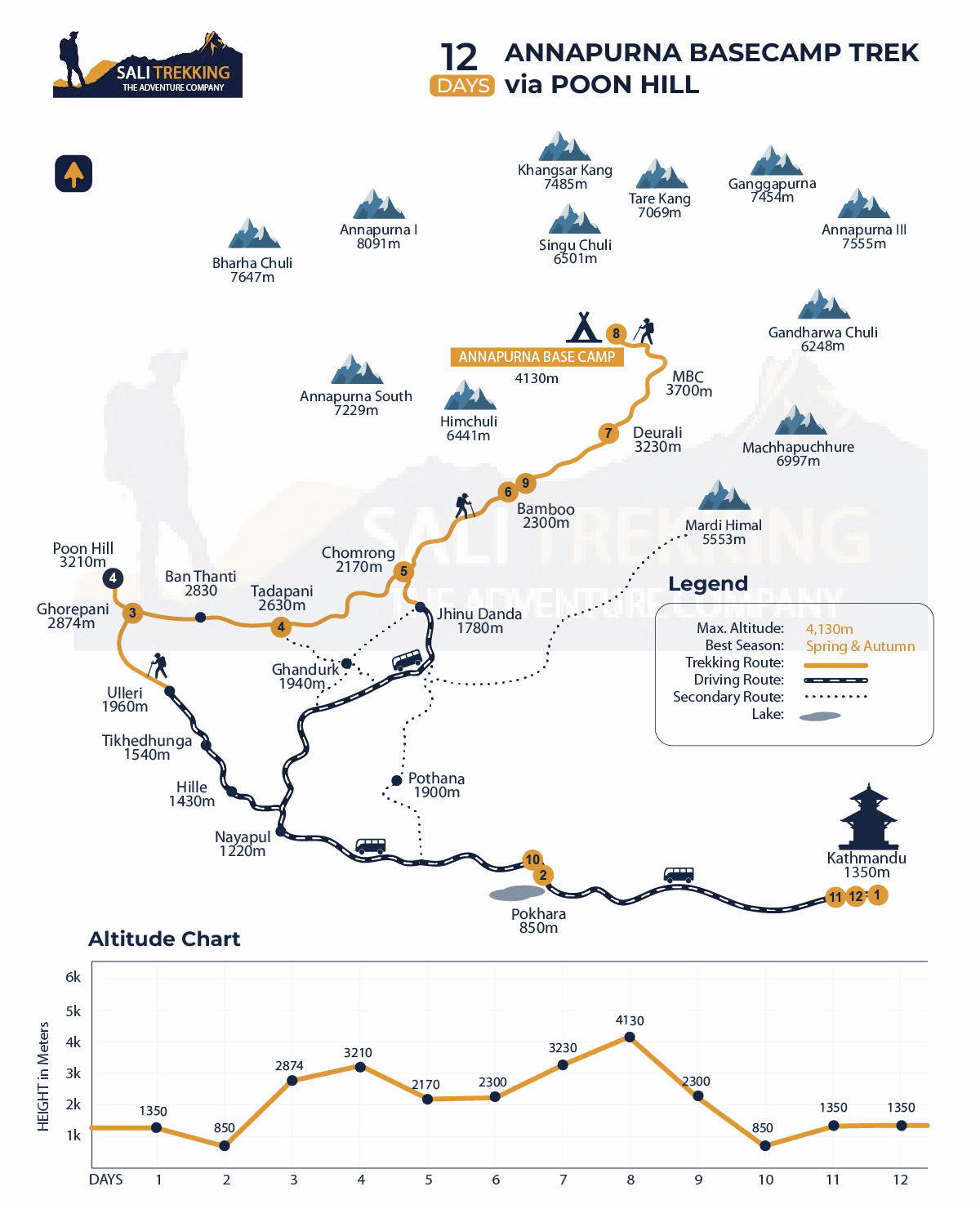
The Annapurna Base Camp & Poon Hill Trek route is one of the most well-connected and well-established trekking networks in Nepal. It starts from Pokhara, a beautiful lakeside city, and gradually moves into the heart of the Annapurna Himalayas through villages, forests, rivers, and high mountain valleys.
This entire trekking corridor lies inside the protected environment of Annapurna Conservation Area, where nature, culture, and mountain landscapes blend into one continuous journey.
Starting Point: Pokhara (820m)
The journey begins in Pokhara, the main gateway for the Annapurna region. From here, trekkers travel by road to Nayapul or Ghandruk depending on the route plan. Pokhara itself is a relaxed tourist hub with lakes, mountain views, and full trekking preparation facilities before entering the mountains.
Lower Trail Section: Nayapul / Ghandruk Route
From Pokhara, the trek enters rural mountain terrain. Common starting points include:
- Nayapul (classic route start)
- Ghandruk (shorter cultural entry route)
From here, the trail passes through:
- Birethanti (checkpost and river crossing)
- Tikhedhunga
- Ulleri (steep stone staircase section)
This section is known for its long uphill climbs and beautiful views of terraced hills and waterfalls.
Poon Hill Section: Ghorepani Route
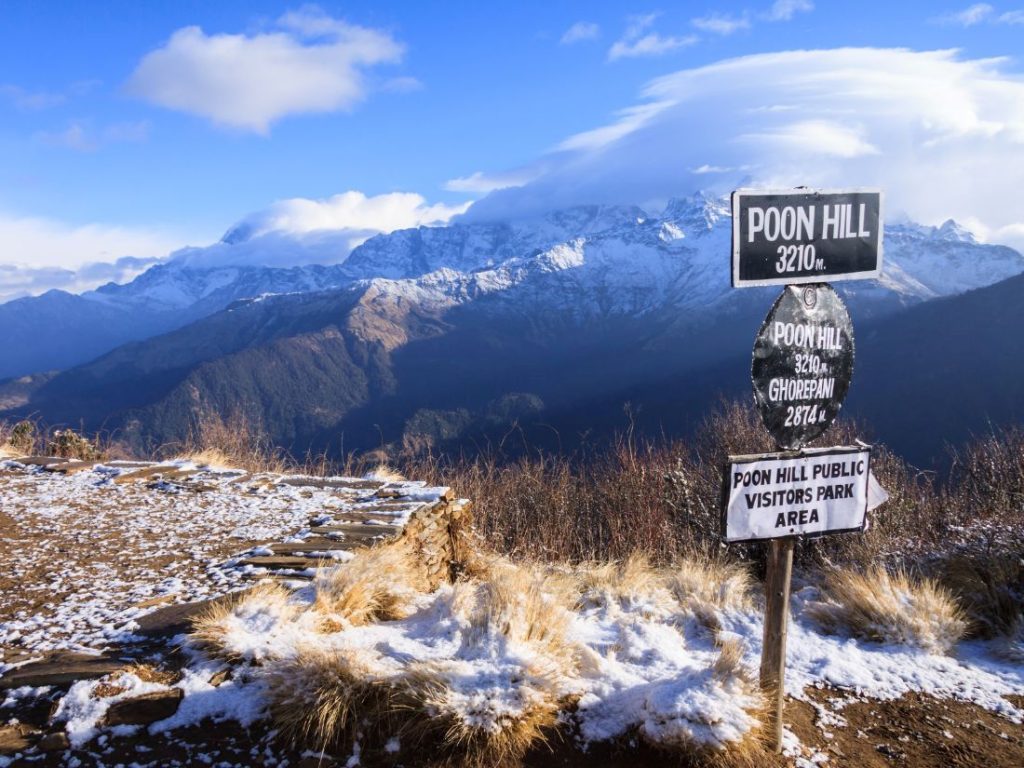
After Ulleri, the trail reaches Ghorepani (2,860m), a key stop before Poon Hill. From Ghorepani, early morning hikers climb to Poon Hill (3,210m) for sunrise views. This viewpoint offers one of the most famous Himalayan panoramas in Nepal, including:
- Dhaulagiri range
- Annapurna South
- Machhapuchhre (Fishtail)
- Nilgiri peaks
After sunrise, the trail continues deeper into the Annapurna region.
Mid Section: Tadapani to Chhomrong
From Ghorepani, the route descends through rhododendron forests to Tadapani and then moves toward Chhomrong, a major gateway village of the Annapurna Sanctuary. This part of the route includes:
- Dense forests and wildlife areas
- Suspension bridges and river valleys
- Traditional Gurung villages
- Gradual transition from hills to high mountains
Chhomrong is one of the final major settlements before entering the high Annapurna Base Camp route.
Upper Section: Into Annapurna Sanctuary
From Chhomrong, the trail enters the Annapurna Sanctuary region inside Annapurna Conservation Area. The landscape becomes more dramatic and enclosed by towering peaks. The route continues through:
- Bamboo
- Dovan
- Himalaya
- Deurali
- Machhapuchhre Base Camp (MBC)
At this stage, trekkers walk through glacier valleys and steep mountain walls, with increasing altitude and colder weather.
Final Destination: Annapurna Base Camp (4,130m)
From Machhapuchhre Base Camp, a short final ascent leads to Annapurna Base Camp. This is a natural mountain amphitheater surrounded by Annapurna I, Annapurna South, Hiunchuli, and Machhapuchhre.
The trail ends at one of the most dramatic high-altitude viewpoints in Nepal.
Return Route
After reaching Annapurna Base Camp, trekkers return via the same valley route:
ABC → MBC → Deurali → Bamboo → Chhomrong → Jhinu Danda (hot springs optional) → Nayapul → Pokhara
The descent is faster but still physically demanding due to long downhill sections.
The Annapurna Base Camp & Poon Hill trek follows a gradual mountain journey from Pokhara to the heart of the Annapurna Sanctuary, combining cultural villages, forest trails, high ridges, and glacier landscapes.
The entire route lies inside Annapurna Conservation Area, making it one of the most diverse and scenic trekking circuits in the Himalayas.
It is one of the most balanced and rewarding trekking journeys in Nepal for all types of travelers.
Poon Hill Sunrise Viewpoint (3,210m) & Himalayan Panorama
The Poon Hill sunrise experience is one of the most iconic moments of the entire Annapurna Base Camp & Poon Hill Trek. It is often the first major Himalayan viewpoint many trekkers experience in Nepal, and it sets the emotional tone for the rest of the journey.
Located above Ghorepani inside the protected landscape of Annapurna Conservation Area, Poon Hill is a short uphill hike that rewards trekkers with one of the widest mountain panoramas in the Himalayas.
Early Morning Hike to Poon Hill
The experience begins very early in the morning, usually before sunrise. Trekkers leave Ghorepani in darkness, walking with headlamps through a steep forest trail for about 45 minutes to 1 hour.
The climb is short but slightly steep, and the cold morning air adds to the challenge. As you approach the top, you start seeing silhouettes of the surrounding peaks slowly appearing in the fading darkness.
This early morning effort is worth every step once you reach the viewpoint.
Sunrise Himalayan Panorama
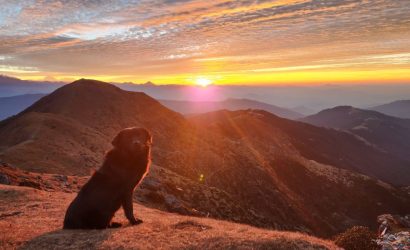
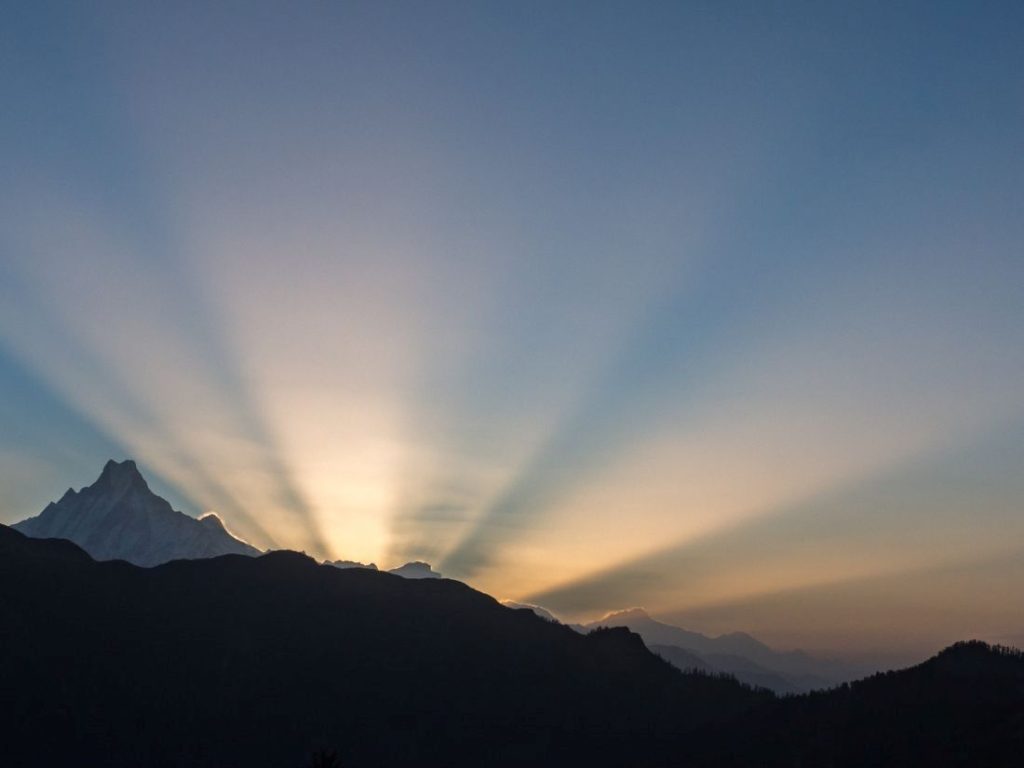
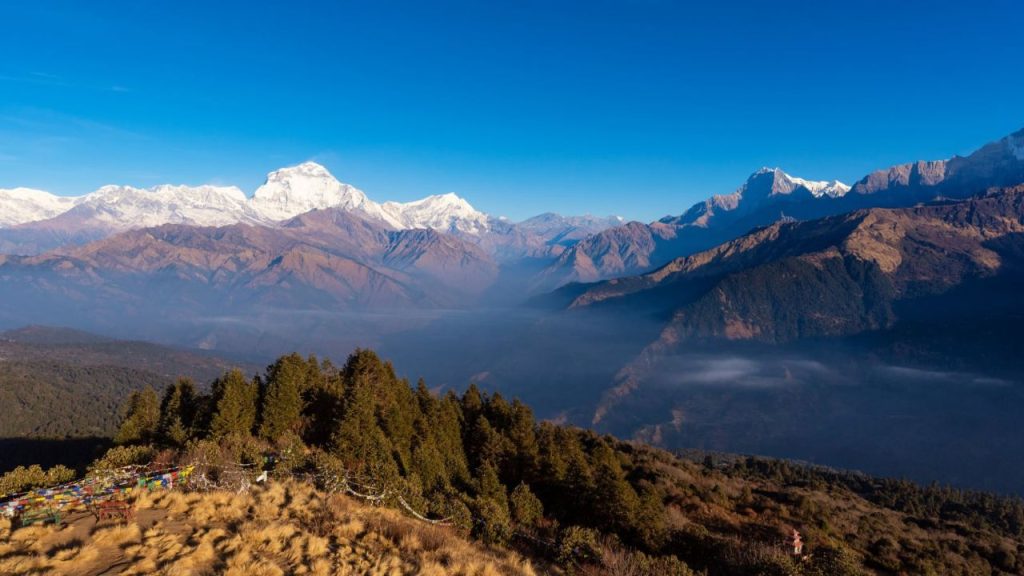
From the top of Poon Hill (3,210m), the sunrise view reveals a massive Himalayan range stretching across western and central Nepal. As the sun rises, golden light gradually spreads across snow-covered peaks, creating a dramatic and peaceful atmosphere. The major mountains visible include:
- Dhaulagiri Range (8,167m)
- Annapurna I (8,091m)
- Annapurna South
- Machhapuchhre (Fishtail Mountain)
- Nilgiri peaks
The light changes every few minutes, turning the mountains from dark silhouettes into glowing golden giants. This transition is one of the most photographed sunrise scenes in Nepal.
Why Poon Hill Trek Is So Special
Poon Hill is not a high technical peak, but its value lies in accessibility and view quality. Unlike many high-altitude viewpoints, it can be reached without technical climbing skills, making it suitable for beginners. It is special because:
- It offers one of the widest Himalayan panoramas in Nepal
- It is easily accessible from the trekking trail
- It provides a perfect introduction to high mountain scenery
- It gives a clear view of both Annapurna and Dhaulagiri ranges together
Inside Annapurna Conservation Area, it is considered one of the most important trekking highlights for visitors.
Surrounding Landscape Experience
Apart from the mountains, the surrounding environment also adds beauty to the experience. On clear days, trekkers can see layers of hills, forests, and valleys stretching far below the viewpoint.
During spring, rhododendron forests bloom along the trail, adding color to the early morning hike. In autumn, the skies are crystal clear, offering the sharpest visibility of distant peaks. The combination of nature, silence, and sunrise makes the atmosphere feel peaceful and powerful at the same time.
The Poon Hill sunrise viewpoint is the perfect introduction to the Himalayan experience in Nepal. It is a short but unforgettable hike that rewards trekkers with a breathtaking 360-degree mountain panorama.
From golden sunrise over Annapurna and Dhaulagiri to the calm silence of the mountains, Poon Hill remains one of the most iconic highlights inside Annapurna Conservation Area.
Annapurna Base Camp Experience (4,130m) Inside Annapurna Sanctuary
The Annapurna Base Camp (ABC) experience is the ultimate highlight of this entire trek. After days of walking through villages, forests, and valleys, the trail suddenly opens into a massive natural amphitheater surrounded by some of the highest and most dramatic mountains in the world.
This incredible destination lies deep inside the protected Himalayan landscape of Annapurna Conservation Area, where towering peaks, glaciers, and alpine winds create a completely different world compared to the lower trekking sections.
Arrival at Annapurna Base Camp
Reaching Annapurna Base Camp is a gradual but powerful journey. After passing Machhapuchhre Base Camp, the trail becomes more open, colder, and more exposed. As trekkers move forward, the mountains start surrounding the valley from all sides.
When you finally arrive at ABC (4,130m), the feeling is overwhelming. You are standing in the heart of the Annapurna Sanctuary, a natural bowl-shaped valley completely enclosed by giant peaks.
There is no city, no village noise; only mountains, wind, and silence.
Mountain Panorama from ABC
The view from Annapurna Base Camp is one of the most dramatic in the Himalayas. The peaks rise almost vertically around you, creating a 360-degree mountain wall. Major mountains visible from ABC include:
- Annapurna I (8,091m)
- Annapurna South
- Hiunchuli
- Machhapuchhre (Fishtail Peak)
- Tent Peak and surrounding ridges
The mountains appear extremely close, giving a powerful sense of scale and natural grandeur.
Sunrise at Annapurna Base Camp
One of the most unforgettable moments is the sunrise at ABC. Early morning light slowly touches the snow-covered peaks, turning them golden and orange. The experience includes:
- Silent, cold morning atmosphere
- First light hitting Annapurna I and Machhapuchhre
- Snow peaks glowing above the clouds
- A completely peaceful and spiritual environment
Inside Annapurna Conservation Area, this sunrise is considered one of the most beautiful high-altitude experiences in Nepal.
Glacier & High-Altitude Environment
Annapurna Base Camp is surrounded by glacial terrain and high-altitude alpine conditions. Unlike lower villages, there are no forests or settlements here; only ice, rocks, and snow-covered slopes. The environment includes:
- Cold winds even during daytime
- Thin air due to high altitude
- Glacial moraine landscapes
- Constant mountain silence
This raw environment gives trekkers a real sense of Himalayan wilderness.
Emotional Experience of Being at ABC
Reaching Annapurna Base Camp is not just a physical achievement—it is an emotional moment for most trekkers. After days of effort, steep climbs, and altitude adjustment, standing in this massive mountain basin feels deeply rewarding. Many trekkers describe it as:
- A feeling of complete isolation from the outside world
- A moment of personal achievement
- A connection with nature at its purest form
- A once-in-a-lifetime experience
It is one of the most memorable locations inside Annapurna Conservation Area.
Annapurna Base Camp is the heart of the entire trek. It is a high-altitude sanctuary surrounded by giant Himalayan peaks, offering one of the most dramatic mountain views in Nepal. The combination of glaciers, towering mountains, and complete silence makes ABC one of the most powerful trekking destinations in the world.
Best Time to Visit Annapurna Base Camp & Poon Hill Trek
Choosing the right season for the Annapurna Base Camp and Poon Hill Trek is very important because weather conditions directly affect mountain views, trail safety, and overall trekking comfort. Since the route passes through different elevation zones inside Annapurna Conservation Area, the climate can vary from warm valleys to freezing alpine regions.
The trek is possible throughout the year, but certain seasons offer much better visibility and safer trekking conditions.
Spring Season (March to May): Best for Nature & Flowers
Spring is one of the most beautiful times to trek in the Annapurna region. During this season, the weather becomes warmer, skies are generally clear, and the hills come alive with blooming rhododendron forests. The key highlights of spring include:
- Colorful rhododendron forests along the trail
- Clear morning mountain views
- Comfortable daytime temperatures
- Active wildlife and fresh greenery
This is also one of the most photogenic seasons, especially in forest areas between Ghorepani and Tadapani inside Annapurna Conservation Area.
Autumn Season (September to November): Best Overall Season
Autumn is widely considered the best time for this trek due to stable weather conditions and crystal-clear mountain visibility after the monsoon season. During autumn, trekkers enjoy:
- The clearest views of Annapurna and Dhaulagiri ranges
- Dry and stable trekking trails
- Excellent visibility from Poon Hill and Annapurna Base Camp
- Comfortable temperatures during the day
This season provides the most reliable trekking experience with minimal weather disruptions.
Winter Season (December to February): Cold but Peaceful
Winter trekking is possible but more challenging due to cold temperatures, especially at higher altitudes near Annapurna Base Camp. Winter conditions include:
- Very cold mornings and nights
- Snow-covered landscapes in upper regions
- Clear skies with sharp mountain views
- Fewer trekkers on the trail
This season is ideal for those who prefer quiet trails and are well-prepared for cold weather inside Annapurna Conservation Area.
Monsoon Season (June to August): Least Recommended
Monsoon is generally not recommended for this trek due to heavy rainfall and slippery trails. However, it has its own natural beauty. During monsoon:
- Trails become muddy and slippery
- Mountain views are often blocked by clouds
- Risk of leeches in lower forest areas
- Frequent rain showers and humidity
On the positive side, waterfalls are powerful and landscapes become extremely green and fresh.
The best time for Annapurna Base Camp & Poon Hill Trek is spring (March to May) and autumn (September to November). These seasons offer the best combination of clear mountain views, safe trekking conditions, and comfortable weather.
Inside Annapurna Conservation Area, these months provide the most rewarding and visually stunning Himalayan experience.
Major Trip Highlights of Poonhill and Annapurna Base Camp Trek
- Poon Hill Sunrise (3,210m): One of the best panoramic sunrise viewpoints in Nepal with golden views of Annapurna and Dhaulagiri ranges.
- Annapurna Base Camp (4,130m): A natural mountain sanctuary surrounded by towering Himalayan peaks on all sides.
- Diverse Landscapes: From subtropical forests and waterfalls to alpine glaciers and snowy valleys.
- Cultural Villages: Experience Gurung and Magar villages with traditional lifestyle and hospitality.
- Rhododendron Forests: Especially beautiful in spring when the hills turn red and pink.
- Glacier & River Valleys: Walk alongside rivers, ice formations, and high mountain terrain.
- Photography Paradise: Every section offers dramatic landscapes and changing scenery.
- Beginner-Friendly Trek: No technical climbing required, suitable for fit beginners.
- Hot Springs at Jhinu Danda: Natural relaxation after long trekking days.
- Close Mountain Views: Annapurna I, Machhapuchhre, Hiunchuli, and more up close.