QUICK ANSWER
Pack for the Mardi Himal trek using a three-part layering system: moisture-wicking base layers, an insulating mid layer and a warm down jacket, plus a waterproof and windproof outer shell. Add sturdy broken-in trekking boots, a sleeping bag rated to around -10 to -15 C for the cold nights at High Camp and Base Camp, trekking poles for the steep Siding descent, a headlamp, sun protection, a basic first aid kit and your documents. Aim to keep your daypack around five to seven kilograms. Down jackets, sleeping bags and poles are easy and cheap to rent in Pokhara if you would rather not buy them.
Mardi Himal Trek Packing List: On this page
- How to think about packing
- Clothing and layers
- Footwear
- Head, hands and eyes
- Sleeping, pack and trekking gear
- Toiletries and personal care
- First aid and medication
- Documents, money and electronics
- Snacks and staying fuelled
- Weight and the porter question
- Season-specific extras
- What to rent or buy in Pokhara
- Packing tips and what to leave behind
- Frequently asked questions
- Sources
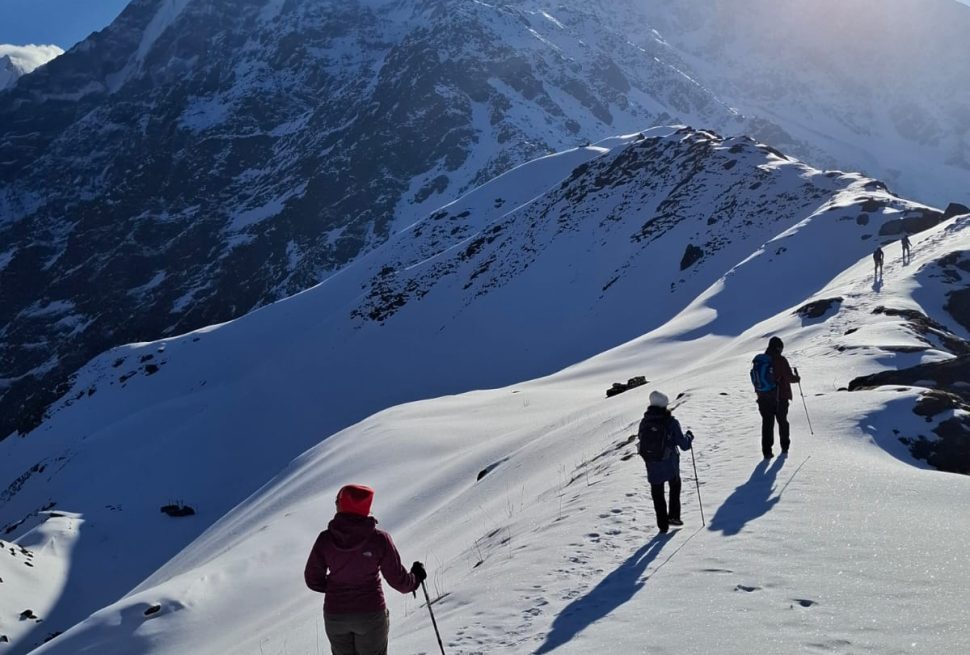
The trick to packing for Mardi Himal is that it crosses several climates in a few days. You start in warm subtropical forest, sleep in cool woodland at Forest Camp, and finish on a freezing, wind-exposed ridge at 4,500m. The answer is layering rather than a single heavy garment, so you can add and shed clothing as the temperature and altitude change through the day. Keep the total light, because you will feel every extra kilogram on the climbs and on the long descent to Siding.
This list pairs with our best time to trek guide for seasonal conditions and the cost guide for gear rental prices.
See the Mardi Himal itinerary for the day-by-day route, the difficulty guide for why boots and poles matter, and the permit guide for the documents to carry.
How to think about packing
Layer, do not bulk. Several thin layers trap warmth and adapt to changing conditions far better than one thick coat.
Split your load. Carry water, snacks, a warm layer, a rain shell and your valuables in a daypack. Everything else goes in a duffel carried by a porter or in your main pack.
Keep it light. Aim for a daypack of about five to seven kilograms and a total trekking load that stays modest. Weight is the enemy on the climbs.
Waterproof everything. Line your pack with a dry bag or bin liner and use a rain cover, because mountain weather changes fast.
Clothing and layers
The clothing system is the heart of this list. Build it around three warmth layers plus a protective shell, and bring enough base layers to stay dry.
| Item | Notes | ||
| Base layer tops (2 to 3) | Moisture-wicking synthetic or merino, not cotton | ||
| Base layer bottoms (1 to 2) | Thermal leggings for cold nights and the upper trek | ||
| Insulating mid layer | Fleece or light down sweater for warmth | ||
| Down jacket | Essential for High Camp and Base Camp; rentable in Pokhara | ||
| Waterproof shell jacket | Breathable, windproof and waterproof outer layer | ||
| Waterproof over-trousers | For rain and wind, packs small | ||
| Trekking trousers (2) | Quick-drying; convertible zip-off pairs are handy | ||
| Trekking shirts (2 to 3) | Light, breathable, long-sleeve helps with sun | ||
| Underwear and sports bras | Quick-drying, enough for the trip | ||
| Warm sleepwear | Dedicated dry layer for cold teahouse nights | ||
Footwear
Your feet do all the work here, and the long descent to Siding punishes poor footwear, so this is not the place to economise. Break new boots in well before you travel.
| Item | Notes | ||
| Trekking boots | Sturdy, ankle-supporting, waterproof and well broken in | ||
| Trekking socks (3 to 4) | Wool or synthetic; a couple of thicker pairs for the cold | ||
| Liner socks (optional) | Reduce blisters on long days | ||
| Camp shoes or sandals | Light footwear to rest your feet at the lodges | ||
| Gaiters (seasonal) | Useful in snow or monsoon mud | ||
Head, hands and eyes
At altitude the sun is fierce and the cold is sharp, so protect your extremities and your eyes.
| Item | Notes |
| Warm hat or beanie | For cold mornings, nights and the ridge |
| Sun hat or cap | The lower trail can be hot and exposed |
| Buff or neck gaiter | Warmth, sun and dust protection |
| Insulated gloves | Warm gloves for High Camp and the summit push |
| Liner gloves (optional) | Extra warmth and dexterity |
| Sunglasses | UV protection; category 3 or 4 for snow glare |
| High-SPF sunscreen and lip balm | UV is stronger at altitude, even in cloud |
Sleeping, pack and trekking gear
Teahouses provide beds and blankets, but nights are cold high up, so a proper sleeping bag matters. The daypack and poles are your daily workhorses.
| Item | Notes |
| Sleeping bag | Comfort rating around -10 to -15 C; rentable in Pokhara |
| Sleeping bag liner | Adds warmth and keeps the bag clean |
| Daypack (25 to 35 L) | Carries your daily essentials; add a rain cover |
| Duffel or main pack (50 to 65 L) | For porter-carried gear if you use one |
| Trekking poles | Save the knees on the descent; add stability on the ridge |
| Headlamp and spare batteries | For the pre-dawn Base Camp start and dim lodges |
| Reusable water bottles or bladder | Two litres of capacity total |
| Water purification | Tablets, drops or a filter to treat trail water |
| Dry bags or bin liners | Keep clothing and electronics dry inside the pack |
Toiletries and personal care
Keep this compact. Facilities are basic, hot showers are paid extras, and you will appreciate travelling light.
| Item | Notes |
| Toothbrush and toothpaste | Travel sized |
| Biodegradable soap and shampoo | Small bottles; showers are limited up high |
| Quick-dry travel towel | Compact and light |
| Wet wipes and hand sanitiser | For days without a shower |
| Toilet paper | Not always provided on the trail |
| Personal hygiene items | Including anything needed for your period |
| Sunscreen and lip balm | High SPF, also listed above for convenience |
First aid and medication
TALK TO A DOCTOR FIRST
This list is general guidance, not medical advice. Discuss any altitude medication and your personal health with a doctor before the trek, and carry any prescription medicines you rely on in your daypack. Your guide will also carry a basic kit, but you should have your own essentials.
| Item | Notes |
| Personal prescription medicines | Enough for the whole trip, in your daypack |
| Pain and fever relief | Standard over-the-counter tablets |
| Blister care | Plasters, blister pads and tape |
| Rehydration salts | For hydration and stomach upsets |
| Anti-diarrhoea and antacid tablets | Common trail complaints |
| Altitude medication | Only if advised by your doctor; know how to use it |
| Basic wound kit | Antiseptic, gauze, small bandage |
| Insect repellent | Especially in the monsoon and lower forest |
For prevention and what to do if symptoms appear, see the Mardi Himal altitude sickness guide.
Documents, money and electronics
Keep documents and cash in a waterproof pouch in your daypack, and remember there are no ATMs once you leave Pokhara.
| Item | Notes |
| Passport and copies | Needed for permits and checkpoints |
| Permits | ACAP permit, plus TIMS if arranged; your guide often holds these |
| Travel insurance details | Must cover high-altitude trekking and helicopter evacuation |
| Cash in Nepalese rupees | For meals, extras and tips; no ATMs on the trail |
| Passport photos (2 to 4) | For permits and any registration |
| Phone and charger | Coverage is patchy above the treeline |
| Power bank | Charging is paid and unreliable up high |
| Universal adapter | Nepal uses 230V; bring the right plug |
| Camera (optional) | Plus spare batteries, which drain in the cold |
Snacks and staying fuelled
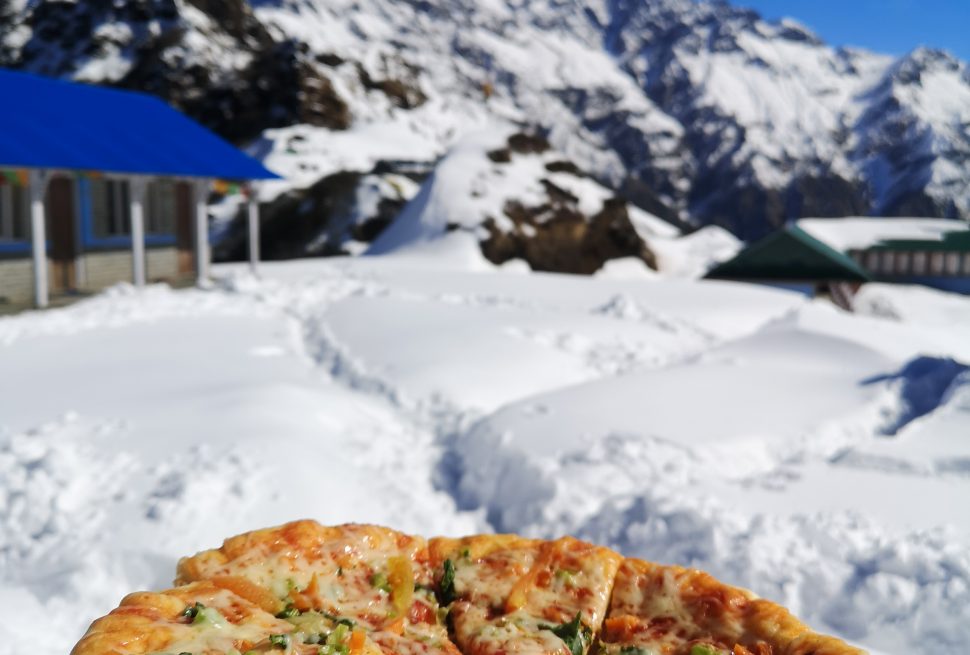
Teahouses serve three good meals a day, so you do not need to carry much food, but a small stash of trail snacks keeps your energy up between stops and on the long summit day. Bring a handful of high-energy items that survive being carried and do not spoil, and top them up in Pokhara before you leave, since prices climb steeply the higher you go.
Energy bars and trail mix. Compact, calorie-dense fuel for the climbs and the pre-dawn Base Camp push.
Nuts and dried fruit. Good slow-release energy that packs down small.
Chocolate and boiled sweets. A quick lift on tired afternoons, and sweets help with dry mouth at altitude.
Electrolyte or rehydration sachets. Add to your water to replace salts lost through effort and altitude.
Weight and the porter question
How much you carry shapes how the whole trek feels. On Mardi Himal the two big-effort climbs and the steep Siding descent are all noticeably harder with a heavy pack, so most trekkers carry only a daypack and let a porter take the rest in a duffel. One porter typically carries up to 20 to 25 kilograms, enough for two trekkers sharing, which also splits the cost.
If you prefer to carry everything yourself, keep your total load light and disciplined, because there is no rest day to recover on. Whichever you choose, pack your daypack thoughtfully: water, snacks, a warm layer, a rain shell, sun protection and your valuables should always be on you, not in a duffel you will not see again until the evening. This one habit prevents the most common trail frustration of needing a layer that is an hour ahead of you with the porter.
Season-specific extras
Spring (March to May): Lighter overall, but keep the down jacket and warm bag for cold nights up high. A sun hat helps on warm lower days.
Autumn (late September to November): Similar to spring, with extra warmth for colder November nights at High Camp and Base Camp.
Winter (December to February): Add heavier insulation, thicker gloves and hat, a warmer sleeping bag, and traction such as microspikes for possible snow on the upper ridge.
Monsoon (June to August): Prioritise full waterproofs, a pack rain cover, quick-drying clothing, gaiters for mud, and salt or repellent for leeches in the forest.
What to rent or buy in Pokhara
If you are not a regular trekker, there is no need to buy expensive kit for a single trip. Pokhara’s Lakeside is full of gear shops that rent and sell equipment, and renting the bulky, cold-weather items is the sensible, low-cost choice.
Worth renting: Down jacket, four-season sleeping bag, trekking poles, and sometimes a duffel or backpack. These are the big, costly items you may rarely use again.
Worth buying or bringing your own: Boots, socks, base layers and anything worn next to the skin, for fit and hygiene. Break boots in at home before you travel.
Rental rates and a full budget are in the Mardi Himal cost guide.
Packing tips and what to leave behind
Pack the night before with everything laid out, then remove anything you are unsure about. Most people overpack.
Leave a bag in Pokhara. Your hotel will store city clothes and anything you do not need on the trail, so you carry less.
Skip heavy books, excess toiletries and duplicate gadgets. They add weight you will regret on the climbs.
Do not rely on buying essentials on the trail. Prices are high and stock is limited up high, so sort key items in Pokhara.
Respect the mountain and pack out waste. Carry a small bag for rubbish and avoid single-use plastics where you can.
Frequently asked questions
What should I pack for the Mardi Himal trek?
Pack a three-part layering system of base layers, an insulating mid layer and a down jacket, plus a waterproof shell, broken-in trekking boots, a sleeping bag rated to around -10 to -15 C, trekking poles, a headlamp, sun protection, a basic first aid kit and your documents and cash. Keep your daypack light at around five to seven kilograms.
What is the layering system for trekking?
Layering means wearing several thin layers you can add or remove as conditions change. A moisture-wicking base layer sits next to the skin, an insulating fleece or light down mid layer traps warmth, and a waterproof windproof shell blocks rain and wind. A separate warm down jacket handles the cold high camps.
What sleeping bag do I need for Mardi Himal?
Bring a bag with a comfort rating of around -10 to -15 C, because nights at High Camp and Base Camp fall below freezing even in the main seasons. Teahouses provide blankets, but a proper bag ensures a warm night. Four-season sleeping bags are easy and cheap to rent in Pokhara.
Can I rent trekking gear in Pokhara?
Yes. Pokhara’s Lakeside has many shops that rent and sell gear. Renting a down jacket, sleeping bag and trekking poles is the cost-effective choice for a one-off trek, while boots, socks and base layers are better bought or brought from home for fit and hygiene.
How heavy should my backpack be?
Aim for a daypack of about five to seven kilograms carrying water, snacks, a warm layer, a rain shell and valuables. If you hire a porter, they carry the rest in a duffel, up to around 20 to 25 kilograms shared between two trekkers. Lighter is always better on the climbs and the long descent.
Do I need trekking boots or will trainers do?
Sturdy, ankle-supporting, waterproof trekking boots are strongly recommended. The trail includes rocky sections, cold ground and a long steep descent to Siding that is hard on the feet. Trainers lack support and grip for this terrain. Whatever you choose, break the footwear in before the trek to avoid blisters.
What should I carry in my daypack each day?
Carry water, snacks, a warm layer, a waterproof shell, sun protection, your headlamp, a basic first aid kit, your permits and passport, cash, phone and power bank. Keep valuables and anything you might need quickly on you, rather than in a porter-carried duffel you will not see until evening.
Do I really need a down jacket?
Yes. A down jacket is essential for the cold evenings and the pre-dawn Base Camp push at 4,500m, where temperatures fall below freezing. It packs down small and light for its warmth. If you do not own one, it is one of the easiest and cheapest items to rent in Pokhara.
What medications should I bring?
Bring your personal prescription medicines, pain and fever relief, blister care, rehydration salts, and remedies for common stomach upsets. Any altitude medication should only be taken on a doctor’s advice, so discuss it before you travel. This is general guidance, not medical advice, so consult a doctor about your own needs.
Should I bring a water filter or purification?
Yes. Treating trail water with tablets, drops or a filter lets you refill from taps and streams, which saves money and avoids the rising price of bottled water higher up, while cutting plastic waste. Carry two litres of capacity in bottles or a bladder and treat all water before drinking.
What should I not bring on the trek?
Leave behind heavy books, excess toiletries, duplicate gadgets, jeans and cotton clothing, and anything you are unsure about. Cotton stays wet and cold, and every extra kilogram is felt on the climbs. Store city clothes and non-trail items in a bag at your Pokhara hotel.
Does the packing list change by season?
The core list stays the same, but winter needs heavier insulation, warmer gloves and hat, a warmer bag and traction for snow, while the monsoon needs full waterproofs, gaiters and leech protection. Spring and autumn are the mildest, though you always need warm layers for the cold nights up high.
Sources
This packing list is based on the following:
- The standard nine-day Mardi Himal itinerary and its altitude and temperature range
- Annapurna region seasonal conditions from Forest Camp to Base Camp
- 2026 Pokhara gear-rental availability and teahouse trekking norms