Everything you need to know about food and accommodation on the Annapurna Base Camp Trek, including teahouses, dal bhat, costs, hot showers, and practical tips for every village on the route.
One of the great joys of the Annapurna Base Camp Trek is that you do not need to carry a tent, a stove, or your own food. The trail is lined with teahouses, family-run lodges that provide a warm bed and hot meals at the end of every trekking day. This teahouse system is what makes the trek so accessible, and understanding how it works helps you plan, budget, and enjoy the journey far more.
This guide covers everything about food and accommodation on the Annapurna Base Camp Trek, from what a teahouse is really like, to what is on the menu, to how much it all costs, to the small practical details that make a big difference on the trail.
What to Expect: The Teahouse Experience
Teahouses are the heart of trekking life in the Annapurna region. These are simple lodges run by local Gurung and Magar families, offering basic rooms and a shared dining area where trekkers gather to eat, warm up, and swap stories.
A typical teahouse has a row of simple bedrooms, usually with twin beds and thin mattresses, and a central dining room that is the social hub of the lodge. The dining room often has a wood or gas stove that becomes the gathering point in the evening, where trekkers, guides, and porters come together over hot meals and tea.
The atmosphere is friendly and communal. You will share tables with trekkers from around the world, eat hearty home-cooked food, and experience the genuine hospitality the Annapurna region is known for. The rooms are basic but the welcome is warm, and after a long day on the trail, a teahouse feels like a haven.
Accommodation Along the Route
Lower and Middle Sections
In the lower and middle sections of the trek, from Jhinu Danda and Chhomrong through Sinuwa and Bamboo, teahouses are at their most developed. Here you will find a range of options, from simple guesthouses to more established lodges. Some offer attached private bathrooms, hot showers, and even comfortable common areas. Rooms are clean and cosy, and the facilities are surprisingly good given the remote setting.
Chhomrong in particular is one of the best-equipped villages on the route, with several quality lodges offering good food, comfortable rooms, and spectacular views of Annapurna South and Machapuchare.
Upper Sections
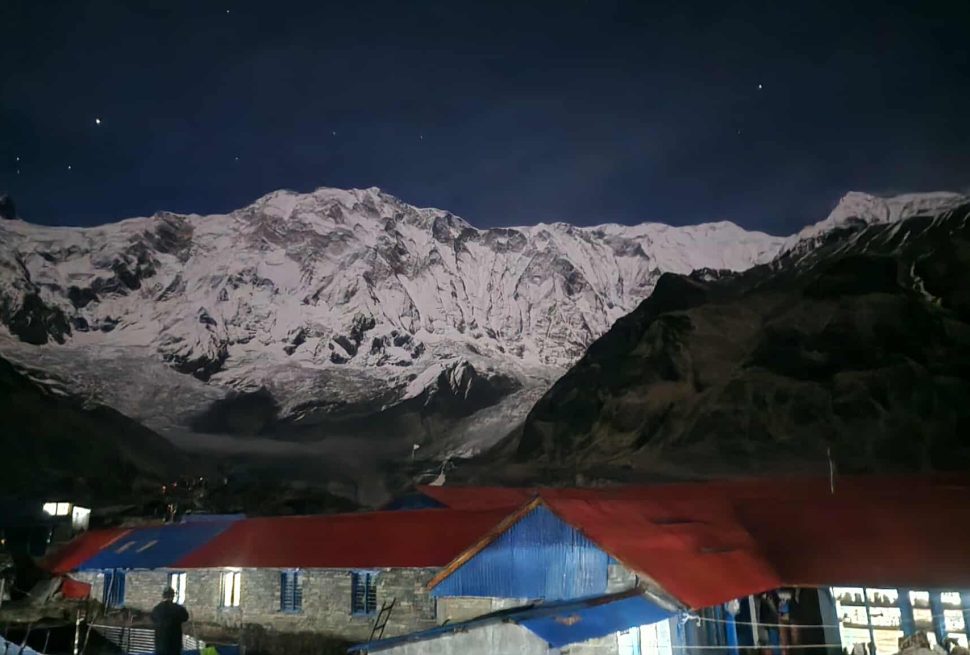
As you climb higher, through Dovan, Himalaya Hotel, Deurali, Machapuchare Base Camp, and, the accommodation becomes more basic. At these elevations, everything must be carried in, so facilities are simpler and rooms are spartan. Heating is minimal, attached bathrooms are rare, and you should expect shared facilities.
But what the upper teahouses lack in luxury they make up for in setting. Falling asleep at Annapurna Base Camp surrounded by 7,000 and 8,000-metre peaks, and waking to a sunrise over the Annapurna massif, is an experience no five-star hotel can offer.
Room Types and Costs
Most teahouse rooms are twin-share, with two single beds. Single rooms are sometimes available at lower elevations but become scarce higher up, especially in peak season.
Room costs range from approximately USD 5 to USD 15 per night at lower elevations, and USD 5 to USD 12 at higher elevations. A very common practice is that teahouses offer rooms cheaply, or even free, on the understanding that you eat your meals at the same lodge. This is the standard arrangement on the trek, and it works well for everyone. Taking your dinner and breakfast where you sleep is both economical and convenient.
Booking and Availability
In the peak seasons of spring and autumn, particularly in October, popular teahouses can fill up, especially in the upper sections where space is limited. Trekking with a guide or agency helps, as they often call ahead to reserve rooms. Independent trekkers should aim to arrive at each stop by early afternoon to secure a room, particularly at Deurali, Machapuchare Base Camp, and Annapurna Base Camp.
Food on the Annapurna Base Camp Trek
Teahouse food on the Annapurna Base Camp Trek is hearty, filling, and more varied than many trekkers expect. While the menus become simpler at higher elevations, the lower and middle sections offer a genuinely diverse range of dishes.
Dal Bhat: Your Best Friend on the Trail
If there is one dish that defines trekking in Nepal, it is dal bhat. This is the classic Nepali meal of steamed rice, lentil soup, vegetable curry, and pickle, often served with a poppadum or greens. It is nutritious, filling, and perfectly suited to the demands of trekking.
The magic of dal bhat is the refill. At most teahouses, dal bhat comes with unlimited servings, meaning you can eat until you are genuinely full. There is a well-known trekking saying, dal bhat power, twenty-four hour, and it is true. For the energy it provides and the value it offers, dal bhat is unbeatable on the trail. Most experienced trekkers eat it at least once a day.
Other Menu Options
Beyond dal bhat, teahouse menus typically offer a range of comfort foods. You will find noodle dishes and noodle soups, fried rice, pasta, momos (Nepali dumplings), Tibetan bread, pancakes, eggs in various styles, porridge and muesli for breakfast, soups, potatoes, and vegetable dishes.
The variety is widest at lower elevations and narrows as you climb. Vegetarian options are abundant throughout, and in fact eating vegetarian on the trek is wise, as meat must be carried long distances without refrigeration and is best avoided at higher elevations for food safety reasons.
Drinks
Hot drinks are a central part of teahouse life. Tea is everywhere, from simple black tea to milk tea, ginger tea, lemon tea, and the popular ginger lemon honey, a soothing drink that trekkers swear by for warmth and sore throats. Coffee is available, usually instant. Hot chocolate is a treat at the end of a cold day.
For water, bring a reusable bottle and use purification tablets or a filter to treat tap and stream water. Buying bottled water is expensive and creates plastic waste, and many areas discourage or ban plastic bottles for environmental reasons.
Meal Costs
Meal prices rise with altitude, reflecting the effort required to carry supplies up the trail. At lower elevations, a main dish costs approximately USD 3 to USD 6. At higher elevations like Deurali andbase camp, the same dish may cost USD 5 to USD 8 or more.
A realistic daily food budget, covering breakfast, lunch, dinner, and a couple of hot drinks, is approximately USD 20 to USD 30 per person per day. Snacks, soft drinks, and treats add a little more. Over a six-day trek, budget roughly USD 120 to USD 180 for food if it is not included in a package.
Hot Showers, WiFi, and Charging
These small comforts are available at most teahouses for a small fee, and understanding them helps you plan.
Hot showers are available at many teahouses, particularly in the lower and middle sections, usually for a fee of around USD 2 to USD 5. At higher elevations, hot water may be limited, solar-heated, or unavailable, and a hot shower may involve a bucket of warm water. Take advantage of hot showers lower down, as they become scarcer as you climb.
WiFi is available at many teahouses, often for a small fee, though the connection is slow and unreliable at higher elevations. Mobile data, particularly on the NTC network, works in many areas up to around Machapuchare Base Camp, though signal is patchy. Do not rely on a strong connection in the upper sections.
Charging your devices is possible at most teahouses, again usually for a fee, often around USD 2 to USD 3 per device. Charging can be unreliable at higher elevations, so a power bank is a valuable item to carry and keep topped up at the lower stops.
Practical Tips for Food and Accommodation
- Eat where you sleep. The standard teahouse arrangement offers cheap or free rooms in exchange for eating your meals at the lodge. This is convenient and economical, so embrace it.
- Order dal bhat for value and energy. With unlimited refills, it is the best-value and most sustaining meal on the trail.
- Eat vegetarian at altitude. Meat is carried long distances without refrigeration, so vegetarian dishes are safer, especially in the upper sections.
- Carry snacks bought in Pokhara. Energy bars, nuts, and chocolate are far cheaper in Pokhara than on the upper trail, and they provide quick energy between meals.
- Treat your own water. A reusable bottle and purification tablets save money and reduce plastic waste compared to buying bottled water.
- Use hot showers and charging at lower elevations. These services become scarcer and more expensive as you climb, so make the most of them while you can.
- Carry enough cash. There are no ATMs on the trail. Withdraw enough Nepalese Rupees in Pokhara to cover all your food, drinks, showers, charging, wifi, and tips for the entire trek.
- Arrive early in peak season. Teahouses fill up in spring and autumn, especially in the upper sections. Arriving by early afternoon helps you secure a room.
- Bring a sleeping bag. Teahouse blankets help, but a good sleeping bag rated to at least minus 10 degrees Celsius makes the cold upper nights far more comfortable.
Food and Accommodation by Village
- At Jhinu Danda and Chhomrong, expect the best facilities on the route, with quality lodges, varied menus, hot showers, and attached bathrooms in some lodges.
- At Bamboo and Sinuwa, expect good forest teahouses with solid menus and comfortable rooms, set in peaceful surroundings.
- At Dovan and Himalaya Hotel, expect simpler lodges, often used as lunch stops, with more basic facilities as the altitude increases.
- At Deurali, expect basic but welcome accommodation in a steep upper-valley setting, with limited but adequate menus and facilities.
- At Machapuchare Base Camp and Annapurna Base Camp, expect the most basic accommodation of the trek, simple rooms, shared facilities, minimal heating, and narrowing menus, but with the most extraordinary mountain settings imaginable.
Food and accommodation on the Annapurna Base Camp Trek are part of what makes this journey so special. The teahouse system means you can trek in comfort, sleeping in warm lodges and eating hot, hearty meals every day, without carrying camping gear. The dal bhat will fuel your climbs, the ginger lemon honey tea will warm your evenings, and the communal dining rooms will introduce you to fellow trekkers from around the world.
FAQ: Food and Accommodation on the Annapurna Base Camp Trek
1. What kind of accommodation is available on the trek?
Teahouses, which are local family-run lodges offering simple twin-share rooms and a shared dining area. They range from comfortable lodges at lower elevations to basic shelters at base camp.
2. How much does accommodation cost?
Teahouse rooms cost approximately USD 5 to USD 15 per night, and many teahouses offer cheap or free rooms if you eat your meals at the same lodge.
3. What food is available on the trek?
A range of dishes including dal bhat, noodles, fried rice, pasta, momos, Tibetan bread, pancakes, eggs, soups, and vegetable dishes. Menus are widest at lower elevations and simpler higher up.
4. What is dal bhat and why do trekkers love it?
Dal bhat is the classic Nepali meal of rice, lentil soup, vegetable curry, and pickle. Trekkers love it because it is nutritious, filling, comes with unlimited refills, and provides excellent energy for the trail.
5. How much should I budget for food per day?
Approximately USD 20 to USD 30 per person per day, covering breakfast, lunch, dinner, and hot drinks. Prices rise with altitude.
6. Are hot showers available on the trek?
Yes, at many teahouses for a small fee of around USD 2 to USD 5, though they become scarcer and more basic at higher elevations.
7. Is there wifi and mobile signal on the trek?
WiFi is available at many teahouses for a fee, though slow and unreliable higher up. Mobile data works in many areas up to around Machapuchare Base Camp but is patchy. Bring a power bank and do not rely on a strong connection.
8. Can I charge my devices on the trek?
Yes, at most teahouses for a fee of around USD 2 to USD 3 per device, though charging can be unreliable at higher elevations. A power bank is strongly recommended.
9. Is the food safe to eat on the trek?
Yes, teahouse food is generally safe. For the best food safety, eat vegetarian dishes at higher elevations, as meat is carried long distances without refrigeration. Treat your drinking water with purification tablets or a filter.
10. Do I need to book accommodation in advance?
In peak season, especially October, popular teahouses fill up, particularly in the upper sections. Trekking with a guide or agency helps secure rooms, and independent trekkers should arrive early in the afternoon.
11. Can I get vegetarian or vegan food on the trek?
Vegetarian food is widely available and recommended at altitude. Vegan options are more limited but possible, especially dal bhat and vegetable dishes, though you may need to specify no dairy or eggs.
12. Is there ATM access on the trek?
No. There are no ATMs on the trail. Withdraw enough Nepalese Rupees in Pokhara before starting to cover all your trail expenses.
Understand how the teahouses work, budget sensibly, embrace the dal bhat, and the practical side of the trek takes care of itself, leaving you free to focus on the extraordinary mountains and the unforgettable experience of reaching Annapurna Base Camp.